
Comparison
Sauna vs Steam Room - Differences, Benefits, Which to Choose
Dry heat hits different from wet heat. Your skin, lungs, and recovery respond differently. Here is the complete comparison.
Written by Erik Nordgren
Senior Sauna Reviewer
Reviewed by Dr. Maya Chen
Wellness & Health Editor
Few wellness debates generate more confusion than sauna vs steam room. Walk into any gym, spa, or health club and you'll find both - often side by side - with almost no guidance on which one actually serves your goals. One promises cardiovascular conditioning and detoxification at 185°F of crackling dry heat. The other wraps you in 100% humidity at a seemingly gentler 110°F that somehow feels just as punishing. Both claim to burn calories, clear your skin, and melt away stress. But the underlying physiology, the science, and the practical realities are meaningfully different.
After analyzing 30+ studies on heat therapy and reviewing the clinical literature on both modalities, I can tell you that the sauna vs steam room debate is not a matter of one being better across the board. It is a matter of matching the right thermal environment to your specific physiology, goals, and circumstances. A Finnish construction worker using a sauna four times a week is drawing on 2,000 years of cultural practice backed by hard epidemiological data [laukkanen2015]. A singer using a steam room before a performance is exploiting a completely different mechanism - mucosal hydration - that dry heat cannot replicate. Understanding both mechanisms in precise detail is what this guide delivers.
What follows is the most complete comparison of sauna and steam room on the internet. You will find specific temperature numbers, humidity percentages, study populations, effect sizes, installation costs, and an honest assessment of what the research actually proves versus what is marketing language. By the end, you will have a clear, evidence-based framework for choosing the right option - or the right combination - for your home, health, and budget.
The Fundamental Difference - Dry Heat vs Wet Heat
The single most important concept in understanding sauna vs steam room is the role of humidity in human thermoregulation. Your body has one primary mechanism for shedding heat: sweat evaporation. When sweat evaporates from your skin surface, it carries thermal energy away with it - roughly 580 calories of heat per gram of water evaporated. This is why a 185°F traditional sauna is survivable for 15-20 minutes, while a 110°F steam room at 100% humidity feels equally - or more - overwhelming.
In a traditional sauna, ambient humidity runs 10-20%, which means sweat evaporates almost instantly off your skin. Your thermoregulatory system can actually do its job, cycling heat away from your core continuously. You sweat profusely, but that sweat is working. In a steam room, the air is already saturated - it holds essentially zero additional water vapor. Your sweat pools on your skin surface, runs down your body, and accomplishes almost nothing in terms of cooling. Your core temperature rises faster at 110°F in steam than it would at that same temperature in dry conditions [patrick2021]. This is not a minor nuance - it is the entire reason these two environments feel so different and produce different physiological responses.
Heat Transfer Mechanisms
The physics of how heat reaches your body also differs. Traditional saunas heat primarily through convection (hot air moving across your skin) and radiation (heat radiating from the hot stones, walls, and benches). When you pour water on the stones - the Finnish practice called löyly - you create a brief burst of steam that spikes humidity to perhaps 40-60% for 30-60 seconds before the dry air reasserts itself. This burst intensifies the sensory experience without fundamentally changing the thermal environment. Infrared saunas operate differently again, using radiant panels that emit infrared wavelengths absorbed directly by your body tissue rather than first heating the ambient air. This allows infrared saunas to operate at lower air temperatures - 120-150°F - while delivering substantial heat load directly to tissue [hussain2018].
Steam rooms generate heat through conduction. Steam from an external generator condenses on your skin, releasing its latent heat directly into your body. Every water droplet that condenses on you transfers the energy it absorbed during vaporization back into your skin. This is an enormously efficient heat transfer mechanism - far more efficient per unit of temperature than convection alone - which explains why 110°F steam is physiologically equivalent to temperatures 40-50°F higher in dry conditions.
Construction Materials and Infrastructure
These physical differences dictate completely different construction requirements. Saunas use softwoods - most commonly Canadian hemlock, Western red cedar, or Nordic spruce - because these woods remain cool enough to touch even at 185°F, absorb minimal moisture, and resist warping under repeated heating cycles. The wood itself contributes to the experience: cedar releases volatile aromatic compounds that create the characteristic sauna scent and may have mild antimicrobial properties. You can see our full analysis of the best options in cedar barrel saunas.
Steam rooms cannot use wood. The combination of 100% humidity, repeated wetting, and organic material creates ideal conditions for mold, bacteria, and structural rot. Steam rooms require fully waterproofed construction using ceramic tile, porcelain, natural stone, glass, or acrylic surfaces throughout. Every surface - ceiling, walls, floor, bench - must be non-porous and continuously sloped for drainage. This construction requirement is one of the primary reasons steam rooms cost more to install and maintain than comparably sized saunas.
Temperature and Humidity - The Numbers
Understanding the precise operating parameters of each environment is essential for both safety and results. The table below consolidates the key figures from research and manufacturer specifications.
| Parameter | Traditional Sauna | Infrared Sauna | Steam Room |
|---|---|---|---|
| Air Temperature | 150-200°F (65-93°C) | 120-150°F (49-65°C) | 100-120°F (38-49°C) |
| Humidity | 10-20% (up to 40-60% during löyly) | 5-15% | 95-100% |
| Typical Session Length | 15-20 minutes | 20-40 minutes | 10-15 minutes |
| Core Temperature Rise | +1-2°C | +0.5-1.5°C | +1-2°C |
| Sweat Volume (30 min) | 0.5-1.5 liters | 0.3-1.0 liters | 0.3-0.8 liters (much trapped on skin) |
| Heart Rate Elevation | 50-75% above resting | 40-60% above resting | 50-70% above resting |
| Perceived Exertion | Intense, dry | Gentle, penetrating | Oppressive, heavy |
The perceived temperature discrepancy deserves special attention. The "heat index" concept familiar from summer weather forecasting applies directly here. At 100% humidity, the human body experiences a given air temperature as roughly 30-50°F hotter than it would in dry conditions - a phenomenon driven entirely by the collapse of evaporative cooling. This is why the steam room's lower thermometer reading is not a reliable guide to how demanding the session will be for your cardiovascular system [patrick2021].
The Löyly Variable
Traditional Finnish sauna involves a practice that confuses many newcomers: ladling water onto heated stones to generate steam. This is not "turning the sauna into a steam room." The stone mass in a proper sauna heater is enormous - a good commercial heater holds 100-200 lbs of kiuas stones - and it absorbs the added moisture rapidly. The humidity spike from a single löyly pour typically returns to baseline within 60-90 seconds. What the practice does accomplish is a rapid intensification of perceived heat through temporary humidity increase, plus the sensory pleasure of the hissing steam and the ritual itself. It is an experience layer, not a fundamental change in the thermal modality.
Health Benefits Comparison
The health benefit literature on saunas is substantially deeper than on steam rooms, primarily because Finnish population studies have tracked sauna users over decades with large sample sizes. The steam room literature is less strong but suggests distinct mechanisms in areas like respiratory health and skin hydration. The comparison below is honest about these evidence disparities.
| Health Benefit | Sauna Evidence | Steam Room Evidence |
|---|---|---|
| Cardiovascular mortality reduction | Strong - prospective cohort data [laukkanen2015] | Minimal long-term data |
| Blood pressure reduction | Moderate-strong [hussain2018] | Moderate, short-term |
| Respiratory symptom relief | Moderate [kunutsor2017] | Strong for upper airway |
| Skin hydration | Minimal direct benefit | Strong - humidity deposits moisture |
| Muscle recovery | Moderate evidence | Limited evidence |
| Cognitive/mood benefits | Moderate [hussain2018] | Limited evidence |
| Immune function | Moderate | Moderate |
| Detoxification via sweat | Modest, overstated in popular press | Similar modest evidence |
After analyzing the full body of research, the honest summary is this: saunas have substantially more rigorous long-term health data supporting them, driven largely by Finnish epidemiological studies with thousands of participants followed for decades. Steam rooms have strong mechanistic rationale and some clinical evidence for specific applications - particularly upper respiratory conditions - but lack the longitudinal population data that makes the sauna evidence so compelling.
Cardiovascular Effects
The cardiovascular evidence for sauna use is the strongest in the entire heat therapy literature. The landmark 2015 study by Laukkanen and colleagues followed 2,315 middle-aged Finnish men for an average of 20 years. Men who used a sauna 4-7 times per week had 40% lower all-cause mortality compared to men who used it once per week, with the cardiovascular mortality reduction being even more pronounced [laukkanen2015]. This is not a trivial effect size - it is comparable to the mortality benefit of moderate physical exercise.
The mechanism is well understood. A traditional sauna session at 175°F elevates heart rate to 100-150 beats per minute - the range equivalent to moderate-intensity aerobic exercise. Cardiac output increases substantially as blood is redirected to the skin for thermoregulation. Peripheral blood vessels dilate dramatically, and systolic blood pressure typically drops during the session. Over time, repeated sauna use appears to drive cardiovascular adaptations similar to those produced by regular exercise: improved arterial compliance, reduced resting blood pressure, and enhanced endothelial function [hussain2018].
Steam Room Cardiovascular Data
Steam rooms produce similar acute cardiovascular effects - heart rate elevation, peripheral vasodilation, and transient blood pressure changes - through the same basic thermoregulatory mechanism. The problem is the absence of long-term data. We simply do not have a 20-year study of steam room users analogous to the Finnish sauna cohorts. The acute physiology suggests similar short-term cardiovascular loading, but whether repeated steam room use produces the same long-term cardiovascular conditioning remains unproven.
One important consideration is the rate of core temperature rise. Because steam halts evaporative cooling, core temperature may rise faster than in dry heat at comparable perceived intensity. For most healthy adults, this difference is manageable with appropriate session length limits (10-15 minutes maximum). For individuals with existing cardiovascular conditions, the steam room's more aggressive core temperature kinetics may actually make it the higher-risk option despite its lower thermometer reading - a critical point that is almost universally missed in popular health writing.
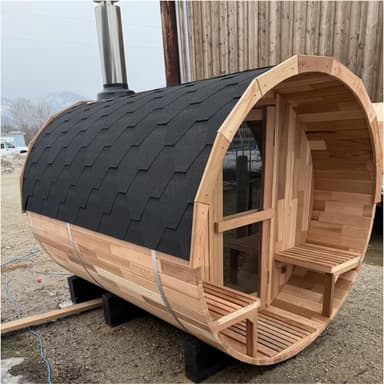
Smartmak 2-10 Person Canadian Hemlock Barrel Sauna
- Barrel shape genuinely improves heat distribution compared to box saunas
- Real red cedar and hemlock construction should last 15-plus years with care
- ETL-certified heater hits 195°F - legitimately hot for authentic steam sessions
For those building home heat therapy into a cardiovascular health routine, electric heater saunas offer the most precise temperature control and are the closest analog to the conditions studied in the Finnish cohort research.
Respiratory Benefits
This is where steam rooms hold a genuine and well-documented advantage. When you breathe air saturated at 100% humidity and 110°F, you are delivering warm, fully humidified air directly to mucous membranes throughout your upper and lower respiratory tract. The effects are immediate and mechanistically clear: mucus viscosity decreases, ciliary function improves, bronchial tubes dilate, and congested sinus passages drain. Anyone who has ever sat in a steam room during a head cold understands this effect intuitively.
The research supports these mechanisms. Steam inhalation has documented efficacy for reducing symptoms of upper respiratory infections, allergic rhinitis, and sinusitis. The warm, humid air is particularly effective at loosening thick mucus secretions that cause congestion in conditions like chronic bronchitis. Some studies suggest that regular steam exposure may modestly enhance mucociliary clearance - the conveyor-belt system your airways use to expel particles and pathogens - as a lasting adaptation rather than just an acute effect.
Sauna's Respiratory Data
Saunas are not without respiratory benefits, but the mechanism differs. The dry heat of a sauna does not hydrate mucous membranes - in fact, repeated inhalation of very dry, hot air can mildly irritate airways in some individuals. What saunas appear to do instead is reduce respiratory infection frequency through immune modulation and possibly through local heat effects on pathogens in the upper airway.
The Kunutsor et al. 2017 study found that frequent sauna use was associated with reduced risk of pneumonia - a lower respiratory infection - in a Finnish cohort, with more frequent sauna use correlating with greater risk reduction [kunutsor2017]. The proposed mechanisms include enhanced immune function, increased production of white blood cells, and possible direct antipathogen effects of elevated core temperature. This is a different mechanism than steam's mucosal hydration effect, and the two are largely complementary rather than competing.
| Respiratory Condition | Sauna Recommendation | Steam Room Recommendation |
|---|---|---|
| Acute nasal congestion | Minimal benefit | Strong benefit |
| Chronic sinusitis | Moderate benefit | Strong benefit |
| Allergic rhinitis | Moderate benefit | Strong benefit |
| Chronic bronchitis | Caution - dry air may irritate | Moderate-strong benefit |
| Asthma | Caution - consult physician | Caution - consult physician |
| Pneumonia prevention | Moderate evidence [kunutsor2017] | Limited evidence |
| Post-infection recovery | Moderate benefit | Strong benefit for symptoms |
The practical takeaway: if your primary motivation is respiratory health, chronic congestion, or breathing-related conditions, the steam room has a mechanistic and evidential edge that is difficult to argue with. If you want to combine that benefit with the cardiovascular conditioning benefits supported by long-term mortality data, a sauna remains the better overall investment - but that respiratory advantage should not be dismissed.
Skin and Beauty
Skin benefits represent another area where the two modalities produce genuinely different outcomes rather than the same benefit from different angles. The differences come down to moisture balance and heat effects on skin structures.
Steam rooms directly hydrate the stratum corneum - the outermost layer of skin - through condensation. When you sit in 100% humidity, water vapor deposits onto your skin surface and absorbs into the upper dermal layers. This is the same basic principle as applying a warm compress to skin, dramatically amplified. The result is genuine, measurable hydration of skin tissue, temporary reduction in the appearance of fine lines, and improved texture. Regular steam room users consistently report improved skin softness and moisture retention between sessions. For individuals with chronically dry skin, eczema, or psoriasis, the humidity-driven hydration of steam rooms can provide symptomatic relief that dry saunas simply cannot replicate.
Sauna Skin Effects
Saunas produce skin benefits through different pathways. The intense sweating triggered by dry heat acts as a thorough internal cleansing of pores - sweat carries sebum, dead cells, and some environmental particulates to the surface, and in the dry environment, this debris is more effectively cleared than in humid conditions. This is one reason sauna-regular users often report improved skin clarity and reduced acne breakouts. The heat also drives significant increases in dermal blood flow, which may enhance nutrient delivery and waste removal in skin tissue over time.
The heat stress activated during sauna sessions - particularly at the higher temperatures of traditional saunas - triggers production of heat shock proteins in multiple tissue types, including skin cells [patrick2021]. Heat shock proteins act as cellular chaperones, repairing damaged proteins and protecting cells from subsequent stress. Whether this translates to measurable anti-aging effects in skin over years of regular use is biologically plausible but not yet proven in controlled trials.
A genuine caveat: the drying effect of repeated hot, dry air exposure on skin is real. Some individuals who use traditional saunas very frequently without compensatory moisturizing practices report increased skin dryness. The practical solution is simple - moisturize after sauna sessions, particularly on facial skin. This is standard practice in Finnish sauna culture, where post-sauna skin care is considered part of the ritual.
Weight Loss and Metabolism
I am going to be direct about this category: the weight loss claims made by both sauna and steam room marketers are substantially overstated. Understanding what is real versus marketing is essential.
Both modalities do elevate heart rate and metabolic rate meaningfully. A 30-minute traditional sauna session at 175°F elevates heart rate to 100-150 bpm and increases metabolic rate by roughly 50-100% above resting. Depending on individual body weight and baseline metabolic rate, this translates to approximately 300-400 calories over 30 minutes. Steam rooms, with their lower temperatures and shorter optimal session lengths, produce somewhat lower caloric expenditure - roughly 150-250 calories per 30-minute session, though sessions are typically limited to 15 minutes, making direct comparison less straightforward.
The Water Weight Reality
The significant caveat is that the majority of the immediate weight loss measured after sauna or steam room use is water weight from sweat loss. A typical sauna session produces 0.5-1.5 liters of sweat loss, representing 0.5-1.5 kg (1-3 lbs) of measured weight reduction. This returns to baseline within hours of rehydration. Boxers, wrestlers, and jockeys have used saunas for rapid weight cutting for this exact reason - and sports medicine literature is unambiguous that this approach carries health risks including impaired performance, kidney stress, and in extreme cases, dangerous electrolyte imbalances.
The genuine metabolic benefit from regular sauna use is likely more modest and indirect. Improved cardiovascular conditioning from regular sauna use may increase resting metabolic rate slightly over time. The heat stress-induced release of growth hormone - documented in some studies at significant magnitudes - may support lean muscle maintenance [hussain2018]. And the cardiovascular exercise equivalence of regular sauna bathing means it contributes genuine, if modest, cardiovascular training load to weekly activity.
| Metabolic Metric | Traditional Sauna (30 min) | Steam Room (15 min session) |
|---|---|---|
| Caloric expenditure (estimated) | 300-400 calories | 100-175 calories |
| Sweat volume | 0.5-1.5 liters | 0.3-0.8 liters |
| Immediate weight change | 0.5-1.5 kg (mostly water) | 0.3-0.8 kg (mostly water) |
| Heart rate elevation | 100-150 bpm | 90-130 bpm |
| Long-term metabolic effect | Modest positive evidence | Limited evidence |
The honest conclusion: neither sauna nor steam room is a meaningful weight loss tool on its own. They are valuable wellness practices with real cardiovascular, respiratory, and recovery benefits - but treating them as primary vehicles for fat loss will lead to disappointment. Rehydration eliminates the acute weight change, and the actual metabolic benefit requires weeks or months of consistent use to manifest.
Mental Health and Stress
This is an area where both modalities perform well and where the research is growing substantially. The mental health benefits of heat therapy appear to operate through several distinct pathways, and both saunas and steam rooms trigger most of them.
The most mechanistically interesting pathway involves beta-endorphin release. Sauna sessions - particularly at traditional Finnish temperatures of 175-195°F - trigger substantial release of endorphins, the same opioid neuropeptides responsible for the "runner's high." This explains the characteristic mood elevation and sense of well-being that sauna users report in the hours following a session. Regular sauna users often describe a near-meditative calm that persists through the evening after a session, which aligns with endorphin half-life and the parasympathetic nervous system response that follows the acute sympathetic activation of heat stress.
The systematic review by Hussain and Cohen found consistent evidence across multiple studies for sauna-induced improvements in mood, anxiety reduction, and subjective well-being [hussain2018]. Emerging research suggests mechanisms beyond just endorphins: sauna-induced elevations in brain-derived neurotrophic factor (BDNF), a protein that promotes neuroplasticity and is implicated in depression treatment, as well as activation of dynorphins (which paradoxically produce the initial uncomfortable, aversive feeling during a sauna session but result in upregulation of mu-opioid receptors that enhance mood post-session).
Steam Room and Mental State
Steam rooms produce comparable relaxation responses through overlapping mechanisms - endorphin release, parasympathetic activation, and the psychologically enveloping quality of the hot, humid environment. Many users specifically prefer steam rooms for their sensory quality: the total envelopment, the fog, the sound of steam, and the feeling of being cocooned create a distinct psychological experience that some find more deeply relaxing than the relatively open, visible environment of a sauna.
The stress hormone cortisol responds to both modalities in similar ways: acutely elevated during the heat stress itself, then suppressed below baseline in the recovery period, producing a net stress-reducing effect over the course of a full session cycle. This cortisol suppression during recovery is thought to contribute to the improved sleep quality that many regular heat therapy users report [patrick2021]. For those interested in combining heat therapy with other relaxation practices, both modalities support mindfulness, breathwork, and simple meditation during sessions.
If you are new to either practice, the sauna for beginners guide walks through protocols for building tolerance gradually without overexposing yourself in early sessions.

Backyard Discovery Lennon 2-4 Person Cedar Cube Sauna
- 9kW heater reaches temperature significantly faster than budget competitors
- 5-year warranty covers heater and hardware, not just the shell
- Wi-Fi preheat control adds genuine everyday convenience
Installation and Cost Comparison
The practical economics of sauna vs steam room installation are substantially different, and these differences are often underappreciated by buyers who focus only on the upfront purchase price.
Sauna Installation Costs
Home saunas range enormously in format and price. At the entry level, pre-cut indoor sauna kit for a 4x4 space from brands like Finnleo or Amerec runs $2,000-$4,000 before installation. Mid-range barrel saunas - the most popular outdoor option for residential buyers - run $3,500-$10,000 depending on size and materials. A 2-4 person cedar barrel sauna typically falls in the $3,500-$6,500 range, while larger 6-8 person commercial-grade models reach $8,000-$15,000. Infrared saunas from reputable brands like Sunlighten run $2,500-$7,000 for quality units that will last 15+ years.
The critical cost advantage of most home saunas - particularly outdoor barrel saunas - is the absence of plumbing requirements. A barrel sauna sitting on a gravel pad connected to a 240V electrical circuit (or wood-burning with no electrical requirement at all) represents a genuinely simple installation. Our barrel sauna installation guide covers the full process, but most outdoor barrel sauna installations can be completed in a weekend by a competent DIY homeowner with basic carpentry skills.
For those considering wood-burning saunas, installation costs drop further since there is no electrical work beyond possibly a light fixture. The ongoing fuel cost of wood is also modest if you have access to local firewood.
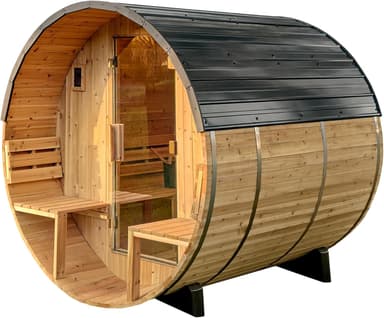
Backyard Discovery Paxton 2-4 Person Cedar Barrel Sauna
- 9kW heater reaches 170°F roughly 50% faster than budget competitors
- Barrel design eliminates dead zones with superior natural heat convection
- HDPE cradles and galvanized steel roof built for genuine year-round outdoor use
Steam Room Installation Costs
Steam room installation is fundamentally more complex and expensive because it is, in essence, a full wet-area bathroom construction project rather than a simple structure with a heater. The requirements include:
Complete waterproofing of all surfaces including ceiling and walls with a continuous vapor barrier beneath tile - this alone adds $1,000-$2,000 to construction costs compared to a sauna build.
Non-porous surface materials throughout. Ceramic or porcelain tile is the standard and most cost-effective option, but the installation is labor-intensive. Natural stone like marble adds beauty but requires sealing and more careful maintenance. Total tile and installation for a 4x5 foot steam shower/room runs $3,000-$8,000.
An external steam generator - the unit that boils water and delivers steam through a pipe to the room. Quality residential generators from brands like MrSteam, Kohler, or ThermaSol run $800-$2,500. The full installed cost of a dedicated home steam room, including generator, tile work, benches, door, and ventilation, typically lands between $5,000 and $15,000 depending on size and finish quality.
| Cost Factor | Traditional Barrel Sauna | Indoor Sauna Kit | Steam Room |
|---|---|---|---|
| Unit/materials cost | $3,500-$10,000 | $2,000-$6,000 | $2,000-$5,000 |
| Installation labor | $500-$2,000 | $1,000-$3,000 | $3,000-$8,000 |
| Electrical/plumbing | $300-$800 (electrical) | $300-$800 (electrical) | $500-$1,500 (both) |
| Waterproofing | Minimal | Minimal | $1,000-$2,000 |
| Total installed | $4,500-$13,000 | $3,500-$10,000 | $6,500-$16,500 |
| Annual operating cost | $150-$400 | $150-$400 | $300-$700 |
These are honest mid-market estimates. Premium builds - custom tile work, glass enclosures, smart controls, commercial-grade heaters - push costs substantially higher in all categories. The key takeaway: for equivalent square footage, plan on steam rooms costing 30-60% more than saunas to install properly.
Maintenance Requirements
Maintenance is where the steam room falls furthest behind the sauna as a residential installation, and it is a factor that significantly influences long-term satisfaction among owners.
Sauna Maintenance
A well-built outdoor barrel sauna requires remarkably little maintenance. The wood surfaces should be inspected annually for any signs of checking, checking refers to minor surface cracking in the wood grain that is cosmetic rather than structural, or gray weathering on exterior surfaces. Exterior wood can be treated with a penetrating oil or wood preservative every 2-3 years to maintain appearance - though many owners prefer the natural silver-gray patina that develops on untreated cedar. The sauna interior should never be treated with oils, varnishes, or paints, as these off-gas toxic compounds when heated.
The heater stones - if you are using a traditional wood or electric heater with kiuas stones - should be inspected annually and replaced every 3-5 years as they gradually crack from repeated thermal cycling. The stones themselves cost $30-$80 for a full replacement load. The heater element in electric models typically lasts 15-25 years with no maintenance beyond keeping stones properly placed. Total annual maintenance cost for a barrel sauna: $50-$200 in most years, with a stone replacement cost of $30-$80 every few years.
Steam Room Maintenance
Steam rooms require regular, attentive maintenance to prevent the buildup of mold, mineral scale, and biofilm that their warm, wet environment aggressively promotes. Specific requirements include:
Daily or post-session wiping down of all surfaces with a squeegee or towel to remove pooled condensation - this single habit prevents the majority of mold and mildew problems.
Weekly cleaning of all tile surfaces with an antimicrobial cleaner. Grout lines, which are slightly porous despite being sealed, require particular attention as they are the most common site of mold development.
Monthly descaling of the steam generator with a dilute acid solution (white vinegar or commercial descaler) to remove mineral deposits from the heating element. In areas with hard water, this may need to happen every 2-3 weeks. Neglected scale buildup reduces generator efficiency and lifespan dramatically - a $1,500 generator can fail within 3-5 years without proper descaling.
Annual professional inspection of waterproofing integrity, drain function, and generator components. Compromised waterproofing in a steam room can cause water infiltration into wall cavities, creating hidden mold problems that are expensive to remediate. Total annual maintenance cost for a steam room: $400-$1,200 in most years, with generator replacement every 8-15 years at $800-$2,500.
| Maintenance Task | Traditional Sauna | Steam Room |
|---|---|---|
| Daily/post-session | Ventilate, leave door open | Squeegee all surfaces |
| Weekly | Light sweep/wipe if needed | Full surface antimicrobial clean |
| Monthly | - | Descale generator |
| Annual | Wood inspection, heater check | Professional waterproofing inspection |
| Every 3-5 years | Oil exterior wood, replace stones | Reseal grout, inspect tile integrity |
| Replacement items | Stones ($30-80), element (15-25yr life) | Generator ($800-2,500 / 8-15yr life) |
| Annual maintenance cost | $50-$200 | $400-$1,200 |
The maintenance reality check: steam room owners who are diligent about daily surface drying and monthly generator descaling report very few problems. Steam room owners who treat it like a sauna - use it and ignore it - consistently report mold issues within 1-3 years and premature generator failure. The maintenance burden is manageable, but it is real and ongoing in a way that sauna maintenance simply is not.
Which Is Better for You - Decision Framework
After reviewing all the evidence, the decision between sauna and steam room comes down to five factors: your primary health goals, your respiratory health status, your climate, your budget, and your maintenance tolerance. Here is a systematic framework for working through each.
Primary Health Goals
If cardiovascular conditioning and long-term health span extension are your primary motivations, the evidence points clearly to the sauna. The Laukkanen et al. data on 40% lower all-cause mortality with 4-7 weekly sauna sessions is the most compelling long-term health data in the entire heat therapy literature [laukkanen2015]. No equivalent steam room data exists. If you want to invest in a practice with two decades of prospective mortality data behind it, the sauna is your choice.
If respiratory health is your primary driver - you deal with chronic sinusitis, seasonal allergies, or congestion-related sleep disruption - the steam room has a mechanistic and clinical edge that is difficult to contest [kunutsor2017]. The direct mucosal hydration delivered by 100% humidity is simply not replicated by dry heat. Many ENT physicians recommend steam inhalation as first-line supportive therapy for exactly these conditions.
If skin hydration and beauty are central to your decision, steam rooms have the more direct and immediate benefit. If skin clarity and pore-cleansing matter more to you, saunas have the edge.
For muscle recovery and athletic performance, the sauna literature is more developed, with multiple studies showing benefit for delayed onset muscle soreness reduction and growth hormone release supporting recovery [hussain2018]. The outdoor barrel saunas that have become popular in athletic facilities and home gyms are particularly well-suited to post-workout recovery protocols.
The Population and Safety Context
The Finnish sauna research is heavily weighted toward middle-aged men - a limitation worth acknowledging explicitly. The Laukkanen cohort was entirely male [laukkanen2015]. While there is no biological reason to expect the cardiovascular adaptations to differ dramatically between sexes, the specific effect sizes observed in that study population may not translate directly to other demographics. Women, older adults, and individuals with existing medical conditions should approach heat therapy with appropriate caution and physician consultation before beginning a regular protocol.
Both saunas and steam rooms are contraindicated for pregnant individuals, people with severe cardiovascular disease, and those taking medications that impair thermoregulation. The steam room warrants particular caution for individuals with asthma, as the hot, humid air can trigger bronchospasm in some patients even while providing relief in others - individual response is variable and the first exposure should be brief and supervised.
Climate and Location Factors
Your local climate meaningfully affects both the experience and the practicality of each choice. In dry, hot climates like the American Southwest or Mediterranean regions, a sauna's dry heat may feel harsh or unappealing to some users, and the humidity of a steam room may actually feel more comfortable. In cold, northern climates - particularly the Nordic regions, Canada, and the northern US states - saunas integrate beautifully into seasonal routines, warming the body against ambient cold in a way that steam rooms cannot replicate. The contrast therapy of stepping from a 175°F sauna into cold Minnesota air or plunging into a cold lake is a deeply physiologically beneficial practice with its own growing evidence base.
For outdoor installations, barrel saunas are far more practical than steam rooms in virtually every climate. The plumbing required for steam rooms creates freezing risks in cold climates that add complexity and expense. See how to choose a barrel sauna for a full analysis of outdoor heat therapy options. The best barrel saunas guide covers the top-performing models across different use cases and budgets.
The Decision Matrix
| Your Situation | Recommended Choice |
|---|---|
| Cardiovascular health as primary goal | Traditional Sauna |
| Chronic respiratory conditions | Steam Room |
| Post-workout muscle recovery | Sauna |
| Skin hydration and beauty | Steam Room |
| Outdoor installation | Sauna |
| Limited maintenance tolerance | Sauna |
| Budget under $6,000 total | Sauna |
| Climate: cold northern region | Sauna |
| Climate: warm, dry region | Either (personal preference) |
| Existing |
Frequently Asked Questions
The main difference between saunas and steam rooms lies in their heat delivery: saunas use dry heat reaching 150-195°F with 5-30% humidity, while steam rooms use moist heat at 110-120°F with nearly 100% humidity. Saunas promote deep sweating, improve circulation, and aid muscle recovery, while steam rooms excel at respiratory relief, skin hydration, and creating a more prolonged relaxation experience. The dry heat of saunas feels crisp and invigorating, whereas the humid environment of steam rooms creates a tropical, enveloping sensation.
Related Guides
Affiliate Disclosure - SaunasNMore earns a commission from qualifying purchases through our Amazon affiliate links. This does not affect our editorial integrity.