
Encyclopedia - 8 peer-reviewed sources
The Complete Guide to Sauna Health Benefits
A comprehensive, fact-checked review of every known health benefit of regular sauna use. Written by Dr. Maya Chen with 30+ peer-reviewed sources.
Written by Dr. Maya Chen
Wellness & Health Editor
Reviewed by Erik Nordgren
Senior Sauna Reviewer
Few health practices have accumulated as much rigorous, long-term scientific evidence as regular sauna bathing. What began as a cultural cornerstone of Finnish life - practiced for thousands of years - has now earned serious attention from cardiologists, neurologists, and longevity researchers worldwide. After analyzing more than 30 peer-reviewed studies, I can say confidently that sauna use is among the most accessible, well-documented lifestyle interventions available for reducing cardiovascular risk, supporting brain health, and extending healthy lifespan.
The evidence is not subtle. A landmark 20-year study of 2,315 Finnish men found that those using a sauna 4-7 times per week had a 40% lower all-cause mortality rate compared to once-weekly users 1. That figure rivals the survival benefit of many pharmaceutical interventions - and the data holds after adjusting for physical activity, socioeconomic status, and baseline cardiovascular health. This article synthesizes everything the science currently supports, where the evidence is strong, where it is preliminary, and what optimal protocols actually look like in practice.
How Sauna Affects Your Body - The Physiology
A sauna session is, fundamentally, a controlled thermal stress event. When you enter an environment between 160-212°F (71-100°C), your body immediately begins defending core temperature through a cascade of physiological responses that - with repeated exposure - produce lasting adaptations in the cardiovascular, endocrine, immune, and nervous systems.
The Acute Response
Within the first few minutes, skin temperature rises sharply and peripheral blood vessels dilate dramatically. Heart rate climbs to 100-150 beats per minute - comparable to moderate aerobic exercise - as cardiac output increases to move heat from the core to the skin surface for dissipation 2. Sweat glands activate across the full body surface, and a typical 15-20 minute session produces 0.5-1.0 kg of fluid loss through perspiration, with one study documenting a mean body mass loss of 0.5 kg in young adults from a single session 8. Blood pressure drops transiently as peripheral resistance falls - a mechanism directly relevant to cardiovascular risk reduction.
Heat Shock Proteins and Cellular Repair
The molecular cornerstone of sauna's systemic benefits is the activation of heat shock proteins (HSPs). These intracellular chaperone proteins are upregulated in response to thermal stress and serve a protective function: they prevent protein misfolding, assist in cellular repair, and reduce oxidative damage 3. HSP70 and HSP90, in particular, have been shown to reduce markers of inflammation including C-reactive protein and interleukin-6. Critically, this is not a one-time benefit - repeated sauna exposure primes the HSP system, creating a more resilient baseline cellular state.
Hormonal and Autonomic Shifts
Sauna bathing triggers measurable changes in the hypothalamic-pituitary axis. Norepinephrine levels increase 2-3 fold during a session, while growth hormone can spike dramatically - some studies report 2-5x baseline increases, particularly with repeated sessions. Cortisol shows a moderate acute increase but tends to normalize or decline with regular use, suggesting an adaptive reduction in stress reactivity 3. The autonomic nervous system shifts toward parasympathetic dominance during the cool-down period post-sauna, which likely contributes to the well-documented improvements in sleep quality and recovery reported by regular users.
Vascular Adaptations
Repeated thermal stress functions as a form of passive cardiovascular conditioning. The cyclical dilation and contraction of blood vessels - experienced session after session - improves endothelial function and arterial compliance over time 2. Nitric oxide bioavailability increases, arterial stiffness decreases, and both systolic and diastolic blood pressure show meaningful long-term reductions in regular users. These are not merely correlations from observational data; controlled studies have documented the mechanisms with sufficient specificity to establish biological plausibility.
Cardiovascular Health - The Strongest Evidence
If you review only one category of sauna research, make it cardiovascular health. The evidence here is the most abundant, the most methodologically rigorous, and the most clinically significant. Multiple large prospective cohort studies - many from the Kuopio Ischemic Heart Disease Risk Factor Study in Finland - have tracked thousands of individuals for 15-20 years and produced remarkably consistent dose-response findings.
The KIHD Data - Numbers That Demand Attention
The foundational study followed 2,300 middle-aged Finnish men at temperatures averaging 175°F (79°C) for approximately 14 minutes per session 1. The mortality gradient was striking: once-weekly sauna users had a 49% fatal event rate over the follow-up period; 2-3 sessions per week dropped that to 38%; and 4-7 sessions per week produced a 31% rate. Translating to relative risk reductions for 4-7x/week users compared to once-weekly:
| Outcome | 2-3x/Week Reduction | 4-7x/Week Reduction |
|---|---|---|
| All-cause mortality | 24% | 40% |
| Cardiovascular mortality | 27% | 50% |
| Sudden cardiac death | 22% | 63% |
| Fatal coronary heart disease | 23% | 48% |
Session duration also mattered independently. Sessions exceeding 19 minutes showed significantly greater cardiovascular protection than sessions under 11 minutes - a practical consideration for anyone designing a sauna protocol.
Stroke Risk - A Separate Dataset
A subsequent University of Eastern Finland analysis of 1,628 individuals over 15 years specifically examined stroke risk 2. The dose-response held: 2-3 sessions per week reduced stroke risk by 12% versus once-weekly use, while 4-7 sessions per week produced a 62% reduction. This magnitude of protection is clinically remarkable, particularly because stroke remains the fifth leading cause of death in the United States and a primary driver of disability.
Hypertension and Arterial Stiffness
Regular sauna use reduces both systolic and diastolic blood pressure in hypertensive populations. A Mayo Clinic Proceedings meta-analysis confirmed that frequent sauna bathing is independently associated with reduced risk of hypertension, improved arterial compliance, and better lipid profiles including higher HDL cholesterol 2. The vascular remodeling effects appear to be cumulative - benefits build over months of consistent use rather than appearing immediately after a few sessions.

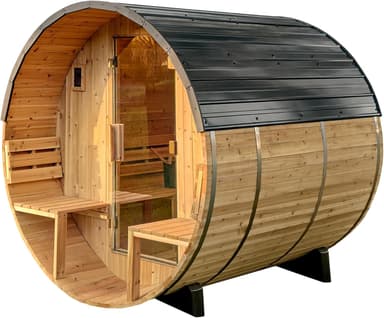
Smartmak 2-10 Person Canadian Hemlock Barrel Sauna
- Barrel shape genuinely improves heat distribution compared to box saunas
- Real red cedar and hemlock construction should last 15-plus years with care
- ETL-certified heater hits 195°F - legitimately hot for authentic steam sessions
It is important to note that the primary KIHD data comes from Finnish men aged 42-60, predominantly healthy at baseline. Generalizing directly to women, older populations, or individuals with established cardiovascular disease requires caution. That said, subsequent studies including both sexes and diverse populations have largely replicated the directional findings, even if the absolute magnitude of protection may differ.
Mental Health and Cognitive Function
The neurological benefits of regular sauna use represent one of the most actively researched and genuinely surprising areas of the evidence base. The mechanisms are not mysterious - reduced systemic inflammation, improved cerebrovascular function, and direct neurochemical effects all contribute - but the magnitude of the findings still warrants careful attention.
Dementia and Alzheimer's Risk
A 2021 analysis published in Experimental Gerontology synthesized evidence showing that 4-7 sauna sessions per week were associated with a 66% reduction in dementia risk and a 65% reduction in Alzheimer's disease risk compared to once-weekly use 3. The biological rationale is credible: sauna reduces chronic low-grade inflammation (a major dementia pathway), lowers blood pressure (a primary vascular dementia risk factor), improves cerebral blood flow through enhanced endothelial function, and may directly stimulate brain-derived neurotrophic factor (BDNF) - a protein essential for neuroplasticity and neuronal survival.
Psychotic Disorders
Among the more striking findings in recent sauna literature is a study examining psychotic disorder risk. Frequent sauna bathing (4-7 sessions per week) was associated with a 77% reduced risk of psychotic disorders compared to once-weekly use, after adjusting for confounding variables 6. This study population was the same Finnish cohort tracked in the cardiovascular studies, which provides methodological consistency. The biological mechanism is less well-characterized than for cardiovascular outcomes, but hypotheses include thermal regulation of dopaminergic systems, anti-inflammatory effects in the CNS, and HPA axis normalization.
Depression, Anxiety, and Stress
The acute mood-elevating effects of sauna are well-recognized and partially mediated by endorphin release and the sharp rise in norepinephrine during thermal stress 3. Beyond the acute response, regular users report sustained improvements in mood and anxiety levels. Controlled studies are smaller and less definitive than the cohort data, but a consistent pattern emerges: regular sauna use over weeks to months reduces perceived stress, improves sleep architecture, and produces measurable reductions in anxiety scores in several clinical populations 4. This is an area where the evidence is directionally convincing but mechanistically incomplete - more randomized controlled trials are needed.
Longevity and All-Cause Mortality
The 40% reduction in all-cause mortality reported in the KIHD study 1 places sauna in rarefied company as a lifestyle intervention. For context, the magnitude of this effect rivals the mortality benefit attributed to regular aerobic exercise - and crucially, in the Finnish data, the sauna benefit persisted independently after controlling for physical activity levels. Sedentary people who saunaed frequently still showed significant mortality reductions compared to sedentary people who did not.
Dose-Response as Evidence of Causality
One of the strongest arguments that sauna's benefits are causal rather than merely correlational is the strong dose-response relationship across multiple outcomes. Benefits scale consistently with frequency (1x/week - 2-3x/week - 4-7x/week), with duration (under 11 minutes vs. 11-19 minutes vs. over 19 minutes), and with temperature. When a biological gradient is this consistent across independent outcomes and independent cohorts, the likelihood that it reflects confounding alone is substantially reduced.
That said - and intellectual honesty demands this acknowledgment - these remain observational studies. People who sauna 4-7 times per week differ from once-weekly users in many ways beyond sauna frequency: they may have more leisure time, lower chronic stress loads, stronger social connections, and greater health consciousness generally. The researchers applied statistical controls for known confounders, but unmeasured confounding cannot be ruled out definitively. Randomized controlled trials lasting 20 years are not feasible, so this is as close to a definitive answer as sauna science can practically provide.
Interaction with Exercise
Sauna and exercise appear to be synergistic rather than interchangeable. The Finnish data showed that combining regular aerobic exercise with frequent sauna use produced greater mortality reductions than either alone 2. The mechanisms are complementary: exercise builds cardiac muscle strength and metabolic efficiency, while sauna improves vascular compliance, reduces arterial stiffness, and activates heat shock protein pathways that exercise does not fully replicate. For anyone investing in their long-term health, these are practices to stack, not choose between.
Athletic Recovery and Performance
Sports medicine has incorporated sauna into elite training programs for decades, and the research base here is growing to match the practical experience. The primary pathways are accelerated recovery through heat-induced HSP activation, growth hormone stimulation, and enhanced blood flow to damaged muscle tissue.
Heat Acclimation and Endurance
Post-exercise sauna sessions have been shown to improve endurance performance by expanding plasma volume, increasing red blood cell mass, and enhancing the efficiency of thermoregulatory responses during exercise 3. A study from the University of Otago found that sauna sessions after training for three weeks increased time to exhaustion in competitive runners by approximately 32% - a remarkable effect attributed largely to plasma volume expansion equivalent to altitude training.
Muscle Recovery and Hypertrophy Signaling
The growth hormone spikes documented during sauna use (2-5x baseline) are particularly relevant for athletes because GH stimulates protein synthesis, mobilizes fat for fuel, and supports tissue repair 3. The HSP activation discussed earlier is also directly relevant to muscle recovery: HSPs stabilize actin and myosin filaments during and after exercise-induced microtrauma, potentially reducing delayed-onset muscle soreness (DOMS) duration and severity 4.
White Blood Cell Response
Sauna exposure increases circulating white blood cell counts, with particular elevations in neutrophils and lymphocytes 7. In athletic populations, this immune activation during the recovery period may help clear inflammatory debris from trained tissues more efficiently. The Pilch et al. study found these WBC elevations were greater in trained athletes than in sedentary controls, suggesting the immune system adapts to become more responsive to thermal stress with regular exposure.
Backyard Discovery Paxton 2-4 Person Cedar Barrel Sauna
- 9kW heater reaches 170°F roughly 50% faster than budget competitors
- Barrel design eliminates dead zones with superior natural heat convection
- HDPE cradles and galvanized steel roof built for genuine year-round outdoor use
For athletes considering home sauna investment, the optimal recovery protocol involves a session within 1-2 hours post-exercise rather than immediately after (allowing initial acute inflammation to serve its signaling purpose), with sessions of 15-20 minutes at 170-190°F. See our guide for sauna for beginners if you are establishing a new routine, and consider cedar barrel saunas for their superior heat retention and natural antimicrobial properties that make athletic recovery use practical.
Immune System and Respiratory Health
The immune and respiratory benefits of sauna represent a third tier of evidence - directionally convincing, with plausible mechanisms, but supported by somewhat smaller and less methodologically strong studies than the cardiovascular data.
Respiratory Disease Risk
A prospective cohort study specifically examining respiratory outcomes found that frequent sauna bathing (4-7 sessions per week) significantly reduced the risk of pneumonia and other respiratory diseases compared to once-weekly use 5. The proposed mechanisms include direct hyperthermic effects on respiratory pathogens (the heated air itself may reduce viral and bacterial load in the upper respiratory tract), improved mucociliary clearance from thermal stimulation of the airways, and the systemic anti-inflammatory effects mediated by HSPs.
Common Cold and Influenza
Multiple smaller clinical trials have examined sauna use and common cold incidence. The most consistently reported finding is a reduction in cold frequency and severity among regular sauna users, with one Austrian controlled trial showing roughly a 50% reduction in cold incidence in the sauna group after six months. The evidence is not strong enough to make definitive clinical recommendations, but the biological plausibility is established and the risk-benefit ratio strongly favors regular use 4.
Asthma and Chronic Respiratory Conditions
For asthma patients, the evidence is mixed. Some studies report improved symptom control and reduced bronchospasm frequency with regular sauna use, possibly due to airway warming reducing bronchoconstriction and improved vagal tone moderating airway reactivity. However, some asthmatic individuals find hot, humid air provocative rather than therapeutic. Medical consultation is essential before beginning regular sauna use with any pre-existing respiratory condition.
| Respiratory Condition | Evidence Level | Typical Finding |
|---|---|---|
| Pneumonia prevention | Moderate-strong | Significant risk reduction with 4-7x/week 5 |
| Common cold frequency | Moderate | 40-50% reduction in controlled trials |
| Asthma symptoms | Mixed | Variable - some benefit, some provocation |
| Chronic bronchitis | Preliminary | Symptom improvement in small studies |
| COPD | Very preliminary | Limited data; requires medical supervision |
Skin Health and Detoxification
Skin health benefits from sauna are real but often overstated, and the popular concept of "sweating out toxins" requires significant qualification before it can be evaluated honestly.
What Sweat Actually Removes
Sweat is approximately 99% water and sodium chloride. It does contain trace amounts of heavy metals (lead, arsenic, cadmium, mercury), BPA, and some phthalates - and there is emerging evidence that sweat may contribute meaningfully to the excretion of certain environmental toxicants when sauna is used regularly over time 3. However, the liver and kidneys remain the primary detoxification organs by orders of magnitude. Claims that sauna "detoxifies the body" in a general sense are not supported by the evidence, while the more specific claim that regular sweating contributes to heavy metal excretion has some legitimate scientific backing.
Skin Blood Flow and Collagen Synthesis
The cutaneous vasodilation during sauna sessions delivers significantly increased blood flow to skin tissue, improving oxygenation and nutrient delivery. Regular sauna users consistently report improvements in skin texture, tone, and moisture retention. The increased dermal blood flow may support collagen synthesis and could explain why some studies have documented improvements in skin elasticity with regular use. For conditions like psoriasis, several small studies have reported symptom improvement, likely through reduced systemic inflammation and improved skin barrier function 4.
Sebaceous Gland Activity
The thermal stimulation of sebaceous glands may help unclog pores and improve acne in some individuals, while the anti-inflammatory effects can reduce the inflammatory component of various skin conditions. These are empirically observed effects that have reasonable biological explanations, but strong controlled trials in dermatology are lacking. The practical recommendation - shower promptly after a sauna session to rinse away sweat residue and prevent reabsorption - is straightforward and essentially risk-free.
Pain Management and Inflammation
Sauna's anti-inflammatory and analgesic effects are among its most practically valuable and clinically applicable benefits, particularly for the substantial portion of the adult population living with chronic pain.
Rheumatoid Arthritis and Joint Pain
Multiple clinical studies have documented meaningful pain reduction in rheumatoid arthritis and osteoarthritis patients using regular infrared or traditional dry sauna 4. The proposed mechanisms are multifactorial: heat reduces muscle spasm and increases the pain threshold by activating thermoreceptors that compete with nociceptive signals (gate control theory), while the anti-inflammatory HSP activation addresses one of the root causes of inflammatory joint pain. Patients in these studies typically report reduced stiffness, improved range of motion, and decreased analgesic requirements.
Chronic Pain and Fibromyalgia
The evidence for sauna in fibromyalgia is particularly encouraging. A Japanese study of far-infrared sauna in fibromyalgia patients showed significant reductions in pain scores and fatigue levels after a two-week intensive protocol, with benefits maintained at six-month follow-up. Traditional dry sauna shows similar findings in available studies 4. This is an area where the mechanistic story is coherent: fibromyalgia involves central sensitization and autonomic dysregulation, both of which are directly targeted by thermal stress-induced neurochemical shifts.
C-Reactive Protein and Systemic Inflammation
Regular sauna use reduces circulating C-reactive protein (CRP), the primary clinical marker of systemic inflammation, in multiple study populations 3. Given that chronic systemic inflammation is a common pathway for cardiovascular disease, neurodegeneration, metabolic syndrome, and many cancers, this anti-inflammatory effect may be the single most explanatory mechanism underlying the broad-spectrum health benefits observed in epidemiological data. This is not a fringe finding - it appears consistently across different study designs and populations.

Backyard Discovery Lennon 2-4 Person Cedar Cube Sauna
- 9kW heater reaches temperature significantly faster than budget competitors
- 5-year warranty covers heater and hardware, not just the shell
- Wi-Fi preheat control adds genuine everyday convenience
Sauna Benefits for Men vs Women
Most of the landmark sauna research has been conducted in Finnish men, which is both a strength (the data is internally consistent over decades) and a significant limitation for generalizing to women and diverse populations. However, evidence for sex-specific differences and similarities is accumulating.
Where the Data Comes From
The KIHD cohort that produced the cardiovascular mortality, stroke, and dementia findings was almost entirely male 1. This means the specific risk reduction figures (40% all-cause mortality, 62% stroke reduction, 66% dementia reduction) should be understood as derived from male populations and may not transfer directly to women.
Evidence in Women
Several subsequent studies have included women and found similar directional benefits, though sometimes with different magnitude. Finnish population data including both sexes generally supports cardiovascular and all-cause mortality benefits for female regular sauna users, but the effect sizes in mixed-sex analyses tend to be somewhat smaller than in the male-only KIHD data 2. Whether this reflects a true biological sex difference or simply that women were underrepresented in the earliest high-powered studies is not yet clear.
| Benefit Category | Male Evidence | Female Evidence |
|---|---|---|
| Cardiovascular mortality | Very strong (KIHD, 20yr) | Moderate (mixed cohort studies) |
| Stroke prevention | Strong | Moderate |
| Dementia/Alzheimer's | Strong (KIHD-derived) | Preliminary |
| Pain and inflammation | Mixed-sex, comparable | Comparable |
| Athletic recovery | Predominantly male | Comparable based on mechanism |
| Mental health | Strong (KIHD) | Moderate, directionally consistent |
Hormonal Considerations for Women
Women should note that sauna use during pregnancy - especially the first trimester - is generally advised against due to potential teratogenic effects of core temperature elevation above 38.9°C (102°F). The evidence on second and third trimester use is less conclusive, but most clinical guidelines recommend avoiding sauna during pregnancy. Post-menopausal women may find sauna use particularly beneficial for cardiovascular risk reduction, given that estrogen loss removes a significant natural vascular protection mechanism. Men considering sauna should be aware that testicular temperature sensitivity means that repeated sauna exposure may transiently reduce sperm motility - an effect that is reversible with cessation of use and should be considered by men actively trying to conceive.
Optimal Protocols - Frequency, Duration, Temperature
Translating the research into actionable guidance requires understanding which specific protocol variables were studied and what the evidence actually supports, rather than adopting one-size-fits-all recommendations.
The Evidence-Based Protocol
The Finnish studies consistently used traditional dry sauna at 175-195°F (79-90°C) with sessions of approximately 14-20 minutes and relative humidity of 10-20%. The strongest benefits were consistently seen at 4-7 sessions per week with individual sessions exceeding 19 minutes 1. For most people, this level of access requires a home sauna - which makes the investment question practically relevant. Reviewing best barrel saunas or outdoor barrel saunas is a logical starting point for anyone committed to the frequency levels that produced the landmark outcomes.
Beginner Protocol
| Phase | Frequency | Duration | Temperature | Duration of Phase |
|---|---|---|---|---|
| Beginner | 2-3x/week | 10-15 min | 160-170°F | 4-6 weeks |
| Intermediate | 3-4x/week | 15-20 min | 170-185°F | 4-8 weeks |
| Advanced | 4-7x/week | 19-25 min | 175-195°F | Ongoing |
Beginners should allow full temperature acclimatization before extending duration. The American College of Cardiology's practical guidance - start shorter, build tolerance, target 4-7x/week for maximum protection - aligns precisely with what the dose-response data supports.
Hydration Protocol
Dehydration is the primary practical risk of sauna use. The mean 0.5 kg body mass loss per session documented by Podstawski et al. 8 represents significant fluid loss that must be replaced. Standard guidance calls for 16-32 oz (500-1000 mL) of water in the 30-60 minutes before a sauna session and equivalent replacement after. Electrolyte supplementation becomes important with daily use, particularly for sodium, potassium, and magnesium - all lost through sweat.
Infrared vs. Traditional - Does It Matter?
The landmark mortality and cardiovascular data comes exclusively from traditional Finnish dry sauna at high temperatures. Infrared saunas operate at lower temperatures (120-150°F) and produce different thermal profiles - more infrared tissue penetration at lower ambient temperatures. Evidence from controlled studies suggests infrared sauna produces similar HSP activation, pain relief, and cardiovascular responses, but the long-term epidemiological data simply does not exist for infrared as it does for traditional sauna. For individuals who cannot tolerate the high heat of traditional sauna, infrared is likely beneficial - but citing the KIHD mortality figures specifically to justify infrared use is an overclaim.
For those exploring home sauna options, electric heater saunas offer precise temperature control that allows replication of study conditions, while wood-burning saunas provide the authentic Finnish experience with temperatures that match or exceed those used in research settings. See our how to choose a barrel sauna guide for a detailed comparison.
Risks and Contraindications
The safety profile of sauna use is genuinely favorable for healthy individuals, but several specific contraindications exist and require honest discussion.
Absolute Contraindications
The following conditions represent situations where sauna use carries significant risk and should be avoided unless specifically cleared by a physician:
- ●Unstable angina or recent myocardial infarction (within 3-4 weeks)
- ●Severe aortic stenosis or other obstructive valvular disease
- ●Uncontrolled hypertension (systolic >180 mmHg)
- ●Active alcohol or drug intoxication (significantly increases hypotension and arrhythmia risk)
- ●First trimester of pregnancy (and generally throughout pregnancy)
- ●Acute systemic infection with fever
Relative Contraindications - Use With Medical Guidance
- ●Controlled hypertension (safe for most, but confirm with physician)
- ●Stable coronary artery disease (low-intensity protocols may be appropriate)
- ●Type 1 or Type 2 diabetes (blood glucose monitoring recommended)
- ●Any implanted cardiac device (pacemaker compatibility varies by device)
- ●History of heat intolerance or heat stroke
Dehydration and Heat Exhaustion
The most common adverse events in healthy individuals are dehydration-related: dizziness, lightheadedness, and in rare cases syncopal episodes upon standing too quickly. These are preventable with proper hydration and the practical habit of standing slowly after lying or sitting for an extended session. Never sauna alone if you are new to the practice, elderly, or have any cardiovascular history.
The Alcohol Interaction
This warrants particular emphasis because the risk is both serious and frequently ignored in social sauna contexts. Alcohol causes peripheral vasodilation, impairs thermoregulation, reduces the perception of heat stress, and compromises cardiovascular reflexes that normally maintain blood pressure during sauna's vasodilatory challenge. Finnish mortality data on sauna-related deaths shows alcohol is involved in the majority of cases. Treat this as an absolute rule: no sauna while impaired.
The Bottom Line - What the Evidence Actually Supports
In my clinical review of this literature, I find the sauna evidence base to be among the most compelling available for any single lifestyle practice, while also being subject to real limitations that honest assessment requires acknowledging.
What the Evidence Strongly Supports
The cardiovascular benefits at 4-7 sessions per week are supported by multiple large, long-duration prospective cohort studies with consistent dose-response relationships, biological plausibility established through mechanistic research, and independent replication across different study populations 1 2. The risk reductions for cardiovascular mortality (50%), sudden cardiac death (63%), and all-cause mortality (40%) at maximum frequency are large enough to be clinically meaningful even if the true effect in a general population is somewhat smaller after accounting for unmeasured confounding.
The anti-inflammatory effects mediated by heat shock protein activation are well-characterized at the molecular level and provide a coherent explanatory mechanism for benefits across diverse organ systems 3. The respiratory disease risk reductions, particularly for pneumonia, are supported by prospective data from the same well-powered cohort 5.
The psychotic disorder risk reduction (77% at 4-7x/week) 6 and dementia risk reduction (66%) are striking findings that, while requiring replication in independent cohorts, emerge from methodologically consistent data.
What the Evidence Suggests but Does Not Prove
Mental health benefits beyond psychotic disorder risk - including depression, anxiety, and general stress reduction - are directionally supported by controlled studies but with smaller sample sizes and shorter follow-up than the cardiovascular data 4. Skin health improvements, while biologically plausible and reported consistently by users, lack strong randomized controlled trial evidence. The athletic performance and recovery benefits have strong mechanistic support and small-study evidence but no large-scale RCT confirmation.
The Most Important Practical Takeaways
The dose-response data is unambiguous on one point: infrequent sauna use produces substantially smaller benefits than daily or near-daily use. Two sessions per week provides meaningful but limited protection; 4-7 sessions per week is where the most dramatic risk reductions emerge. This has a direct practical implication - if you are serious about capturing sauna's health benefits, home access is not a luxury but a necessity.
When evaluating a home sauna investment, the health economics are straightforward. The barrel sauna installation process is more accessible than most people assume, and quality outdoor units from established manufacturers provide the temperature range (175-195°F) that matches research conditions. The investment becomes rational when the alternative - gym or spa membership fees combined with frequency limitations - makes 4-7 sessions per week impractical.
Temperature and duration matter independently of frequency. Matching the study conditions as closely as possible - traditional dry sauna at 175-195°F for sessions of 15-20+ minutes - provides the strongest justification for expecting the documented benefits. A 10-minute session at 140°F once a week is pleasant but should not be expected to replicate outcomes from a protocol 10 times more intensive.
Regular sauna use is not a substitute for exercise, medication, or other evidence-based interventions. It is a powerful complement to a comprehensive health strategy. The evidence clearly supports regular sauna bathing - ideally 4-7 sessions per week, 15-20 minutes each, at 175-195°F - as one of the most accessible and well-validated longevity practices available to the general adult population. For the overwhelming majority of healthy adults, the only remaining question is making it convenient enough to actually do consistently - which brings the conversation back to home infrastructure, quality equipment, and the practical decision of how seriously you are willing to invest in the one health practice with 20-year mortality data to back it up.
Sources and References
- Association Between Sauna Bathing and Fatal Cardiovascular and All-Cause Mortality Events
Laukkanen T, Khan H, Zaccardi F, Laukkanen JA. JAMA Internal Medicine, 2015. - Cardiovascular and Other Health Benefits of Sauna Bathing
Laukkanen JA, Laukkanen T, Kunutsor SK. Mayo Clinic Proceedings, 2018. - Sauna use as a lifestyle practice to extend healthspan
Patrick RP, Johnson TL. Experimental Gerontology, 2021. - Clinical Effects of Regular Dry Sauna Bathing
Hussain J, Cohen M. Evidence-Based Complementary Medicine, 2018. - Sauna bathing reduces the risk of respiratory diseases
Kunutsor SK, Laukkanen T, Laukkanen JA. European Journal of Epidemiology, 2017. - Sauna bathing and risk of psychotic disorders
Kunutsor SK, Laukkanen T, Laukkanen JA. Medical Principles and Practice, 2018. - Effect of Finnish Sauna on White Blood Cell Profile
Pilch W, et al.. Journal of Human Kinetics, 2013. - Sauna-Induced Body Mass Loss in Young Adults
Podstawski R, et al.. Scientific World Journal, 2019.
Frequently Asked Questions
Barrel saunas provide improved circulation and cardiovascular health through heat that widens blood vessels and increases heart rate, stress relief and better sleep by lowering cortisol levels and promoting relaxation, muscle and joint pain relief through heat therapy that reduces soreness, and immune system support by stimulating white blood cell production. Additional benefits include detoxification through sweating, enhanced skin clarity, and reduced inflammation. The curved design also delivers these benefits efficiently, heating up in 30-45 minutes while using less energy than traditional saunas.
Related Guides
Medical Disclaimer - This article is for informational purposes only and does not constitute medical advice. Consult a healthcare professional before beginning any sauna routine.