
Installation - 1 peer-reviewed sources
How to Install a Barrel Sauna - Foundation to First Heat
Licensed contractor Jake Morrison walks you through barrel sauna installation from site prep to your first session. No experience needed.
Written by Jake Morrison
Installation & DIY Expert
Reviewed by Erik Nordgren
Senior Sauna Reviewer
Few home projects deliver as much long-term satisfaction as a barrel sauna installed correctly the first time - and as much frustration as one that wasn't. The cylindrical form is deceptively simple from the outside, but every stage from foundation choice to first heat involves decisions that compound on each other. Get the site level and drainage right, and the stave assembly goes smoothly, the bands tension evenly, and the heater performs exactly as specified. Skip those steps, and you're chasing problems for years.
After analyzing dozens of manufacturer installation manuals, contractor field reports, and homeowner accounts, I've put together what I believe is the most thorough barrel sauna installation guide available online. This article covers every phase: planning and permits, foundation construction, stave assembly, heater installation for both electric and wood-burning options, ventilation design, weatherproofing, and the critical first-heat protocol that protects your wood investment. Whether you're installing a Canadian hemlock kit from a major retailer or sourcing materials for a custom build, the principles here apply directly.
One honest caveat before we begin: barrel sauna installation sits at the intersection of carpentry, electrical work, and in some municipalities, permitted construction. The mechanical steps are well within most DIYers who are comfortable with basic tools. The electrical and chimney components carry real safety stakes, and I'll be explicit about where professional involvement is worth every dollar.
Before You Start - Planning Checklist
The planning phase saves you money, time, and the specific misery of discovering mid-build that your site doesn't meet code. Work through this checklist completely before ordering materials or breaking ground.
Confirm Your Measurements
Standard barrel saunas range from 1.8 meters (6 feet) to 2.4 meters (8 feet) in diameter, with lengths typically between 2.1 meters (7 feet) and 6 meters (20 feet). A 4-person unit commonly measures roughly 2.1 meters diameter by 3.7 meters long. Before ordering, measure your proposed site with those numbers plus clearance: you need at minimum 0.6 meters (2 feet) of working space on each side and end for assembly, band tightening, and ongoing maintenance. Wood-burning models need significantly more clearance at the chimney end - we'll get specific about that in the stove section.
Weight matters for foundation planning. A fully assembled cedar barrel sauna for 4 persons typically weighs 600-900 kilograms dry. Add water-saturated wood after regular use and that number climbs. A Canadian hemlock unit at the larger end of the market can approach 1,200-1,500 kilograms. These weights are manageable on almost any properly prepared surface, but they rule out soft soil, decking with marginal joist sizing, or any surface that slopes more than a few degrees.
Tools Required
| Tool | Purpose | Notes |
|---|---|---|
| Rubber mallet | Stave assembly | Never use metal hammer on wood staves |
| 4-foot spirit level | Foundation and assembly verification | Required at multiple stages |
| Tape measure (7.5m+) | Layout and spacing | |
| Power drill with bits | Cradle and heater mounting | Pilot holes prevent splitting |
| Band wrench or socket set | Tensioning steel bands | Typically 13mm or 1/2-inch |
| Circular saw | Foundation framing if deck option | |
| Shovel and tamper | Gravel foundation | |
| Chalk line | Site layout | |
| Screwdriver set | Hardware throughout | |
| Safety glasses and gloves | All stages |
Permit Research - Do This First
Pulling permits is the step most DIY installers skip and most regret. In the United States, an outdoor sauna structure typically falls under accessory structure regulations. Many jurisdictions exempt structures under a certain footprint - commonly 120 square feet or 200 square feet depending on the municipality - from building permits, but electrical permits are almost universally required for new circuits regardless of structure size. Wood-burning chimney installations often trigger separate mechanical permits.
Call your local building department before ordering your sauna. Ask specifically about: accessory structure permits, setback requirements from property lines and other structures, electrical permit requirements for 240V outdoor circuits, and any HOA restrictions if applicable. The 30-minute phone call costs nothing and can prevent fines or forced removal.
Budget for the Full Project
The sauna kit itself is rarely the complete cost. A realistic full installation budget includes foundation materials, electrical circuit installation (typically $500-$1,500 for a dedicated 240V outdoor run by a licensed electrician), any permit fees, and optional finishing like a deck or privacy screen. Factor these in before selecting your sauna model.
Site Selection and Zoning
Site selection involves four variables that interact: drainage, solar exposure, privacy, and proximity to utilities. Getting all four right means your sauna performs better and lasts longer.
Drainage as the Primary Filter
Start with drainage and eliminate sites that fail before considering anything else. A barrel sauna generates significant moisture - steam escapes during use, condensation forms on exterior surfaces, and the wood itself cycles through wet and dry states repeatedly. If the ground beneath the sauna can't drain that moisture away, you accelerate rot at the cradle points and create conditions for mold. Walk your yard during or immediately after heavy rain. Note where water pools or moves slowly. Cross those areas off the list entirely.
The ideal site has a slight natural grade - 1 to 2 degrees - that allows water to flow away from the structure in all directions, or at minimum away from the door end. Perfectly flat sites work with proper foundation drainage design, which we cover in the drainage section.
Setback Requirements
Most residential zoning codes require accessory structures to maintain minimum setbacks from property lines (commonly 3-5 feet), from the primary dwelling (varies widely, sometimes 6-10 feet), and from easements or utility corridors. Wood-burning sauna installations frequently face additional setback requirements - some codes require 10+ feet from any combustible structure for a wood-burning appliance. Your local building department is the authoritative source here, not online guides including this one.
Solar Exposure and Orientation
Door orientation affects your experience more than most installers realize. Facing the door south or east means morning sun helps dry condensation and makes the entry experience pleasant year-round. Facing north keeps the entry shaded, which can create a perpetually damp threshold in wet climates. In hot climates, some owners prefer north-facing doors to keep the changing area cooler. For outdoor barrel saunas used primarily in winter, southeast orientation optimizes solar warmth during the approach to the sauna.
Utility Proximity
For electric heater models, the cost of running a 240V circuit increases roughly linearly with distance from your electrical panel. At 30-50 meters, you're looking at significant additional wire costs plus conduit. Situate your sauna to minimize that run when possible. For wood-burning models, utility proximity matters less, but you still want reasonable proximity for a garden hose connection for emergency fire suppression and post-session cleanup.
Privacy Considerations
This is more practical than it sounds. A sauna you don't feel comfortable using because neighbors have a sightline to the entrance is a sauna you won't use. At the planning stage, identify natural screening from existing trees, fences, or structures. If none exists, a simple privacy screen or planted hedge can be incorporated into your site plan before installation rather than retrofitted awkwardly after.
Foundation Options - Gravel, Concrete, Deck
The foundation serves three functions simultaneously: distributing the sauna's weight evenly across stable ground, elevating the structure above moisture accumulation, and providing a permanent level reference that resists settling. Each foundation type achieves these functions differently with distinct tradeoffs.
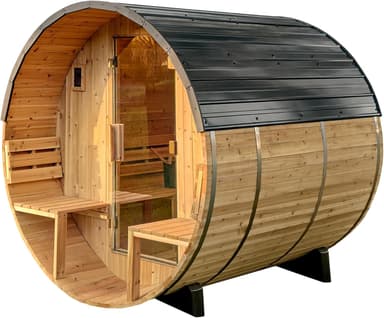
Backyard Discovery Paxton 2-4 Person Cedar Barrel Sauna
- 9kW heater reaches 170°F roughly 50% faster than budget competitors
- Barrel design eliminates dead zones with superior natural heat convection
- HDPE cradles and galvanized steel roof built for genuine year-round outdoor use
Compacted Gravel Foundation
Gravel is the most popular choice for barrel sauna installation, and for good reason. It's the fastest to install, the least expensive, drains exceptionally well, and can be releveled if the ground shifts over time. A properly built gravel pad involves more than dumping a load of stone, though.
Excavate the site to 150-200mm (6-8 inches) depth, extending at least 300mm (12 inches) beyond the sauna footprint on all sides. Remove all organic material - grass, roots, topsoil. Compact the exposed subsoil with a plate compactor or hand tamper. Lay a geotextile landscape fabric over the compacted base to prevent weed growth and prevent the gravel from working down into the soil over time. Then install the gravel in two layers: a base layer of 75-100mm of coarse crushed stone (often called 3/4-inch minus or road base), compacted firmly, followed by 50-75mm of smaller angular gravel or pea gravel on top.
The finished pad should be level within 5mm across the entire surface when checked with a 4-foot level. This precision matters because the sauna cradles rest directly on this surface, and any deviation translates directly into unlevel stave assembly. After compaction, check multiple points with your level and add or remove gravel as needed before proceeding.
Concrete Slab Foundation
Concrete provides the most permanent, dimensionally stable foundation. It's the right choice for permanent installations where you want zero ongoing maintenance and maximum structural confidence. The tradeoff is time - concrete requires a minimum curing period of 20 days before loading, which extends your project timeline significantly.
Excavate to 200-250mm depth. Compact the subgrade. Install 100mm of compacted gravel as a drainage sublayer. Set up formwork elevated 50-75mm above surrounding grade to ensure the finished slab sits above potential water accumulation. Install steel reinforcing mesh or rebar grid. Pour concrete to a minimum 100mm finished thickness - 150mm if you're in a freeze-thaw climate or anticipate the larger end of the sauna weight range. Finish the surface with a broom texture for traction rather than a smooth trowel finish.
The concrete slab should be slightly larger than the sauna footprint - add 600mm on each side to provide a standing surface outside the door and working space around the perimeter. Once cured, check for level before positioning cradles. Minor variations in a concrete slab can be corrected with rubber shims under the cradle contact points.
Deck Foundation
Mounting a barrel sauna on an existing or purpose-built deck introduces variables that gravel and concrete don't. Done correctly, a deck installation looks beautiful and integrates the sauna into a broader outdoor living space. Done incorrectly, it creates structural, drainage, and rot problems that are expensive to fix.
Before using an existing deck, verify the joist sizing and spacing against the sauna weight. A 900-kilogram sauna concentrated across two or three cradle contact points creates significant point loads. In most residential decking, 2x10 joists at 400mm (16-inch) centers will support this load adequately, but this requires verification, not assumption. Consult a structural engineer if you have any doubt - the consultation typically costs $150-300 and provides written documentation that may also satisfy local building departments.
For a purpose-built deck foundation, design the structure specifically for the sauna load. Use pressure-treated lumber rated for ground contact at any posts or beams within 300mm of grade. Ensure drainage gaps between decking boards to allow moisture escape - this is often neglected when decking is installed tight for a polished look. The deck surface should be level within the same 5mm tolerance as the gravel pad.
| Foundation Type | Cost | Installation Time | Drainage | Adjustability | Longevity |
|---|---|---|---|---|---|
| Compacted Gravel | Low | 1-2 days | Excellent | High | 10-20 years with maintenance |
| Concrete Slab | Medium-High | 3 days work + 20 days cure | Good if elevated | None | 30+ years |
| Pressure-Treated Deck | Medium | 2-4 days | Good with proper gapping | Low | 15-25 years |
| Screw-Pile with Platform | Medium | 1-2 days | Excellent | Low | 20+ years |
Drainage and Water Management
Drainage is where long-term installations succeed or fail. The barrel sauna interior generates substantial moisture: a typical session produces steam from water ladled onto hot rocks, condensation on cooler surfaces, and perspiration from occupants. All of that water ends up somewhere - ideally controlled and directed, not pooling under your foundation.
Interior Floor Drainage
The interior floor of a barrel sauna needs a drain. This seems obvious, but I've seen installations where the floor stave simply sits on the cradles with no drainage provision, and the accumulated water from post-session rinsing has nowhere to go. The floor should be sloped toward a central or end drain point - many barrel sauna kits include a drain stave with a pre-cut drainage channel. If yours doesn't, a 5mm slope toward a designated drain point is achievable during floor stave installation.
The drain connection runs through the foundation. In a gravel pad, this is simple: run a 50mm PVC pipe through the gravel to daylight at the downhill edge of the pad. In a concrete slab, the drain penetration needs to be formed before the pour - another reason to plan this carefully before concrete is placed. A deck installation routes the drain pipe through the deck framing to discharge below.
Connect the interior drain to a proper drainage point: a dry well, existing storm drainage, or a gravel-filled drainage trench leading away from the structure. Do not connect to sanitary sewer systems without local approval, and do not simply discharge onto the surface within a few feet of the sauna.
Exterior Water Management
Roof runoff from the barrel's curved surface concentrates at the two low points where the cylinder meets the end walls. In heavy rain, this creates two concentrated streams that erode the foundation edges and can undermine gravel pads over time. A simple solution is a strip of gravel or river rock at least 300mm wide running along both sides of the barrel where water discharges. This disperses the energy of the water flow and prevents erosion.
For permanent installations, consider a small French drain - a perforated pipe in a gravel trench - running along the uphill side of the sauna if the site receives runoff from higher ground. This intercepts water before it reaches the foundation.
Electrical Requirements
The electrical installation for a barrel sauna is non-negotiable territory for licensed electricians in most jurisdictions. I'll explain what's required so you can have an informed conversation with your electrician and verify the work is correct, but I'm not advising self-installation of the main circuit unless you hold the appropriate electrical license for your area.
Circuit Specifications
Most electric barrel sauna heaters in the 6-9 kW range require a dedicated 240V, 40A circuit. Larger heaters - 12 kW and above, appropriate for saunas over 10 cubic meters of interior volume - require 60A circuits. The "dedicated" requirement means no other appliances share the circuit breaker. The circuit run must use wire gauge appropriate to the amperage and run distance: typically 8 AWG copper for a 40A circuit up to approximately 30 meters, and 6 AWG for longer runs or 60A service.
All outdoor wiring must be run in appropriate conduit - Schedule 40 PVC or rigid metal conduit - or use UF-B (underground feeder) cable rated for direct burial if the run is underground. The transition from underground to above-ground requires a conduit riser protected from mechanical damage. A GFCI breaker at the panel, or a GFCI disconnect near the sauna, is required by most electrical codes for outdoor installations.
GFCI Requirements and Disconnect
A lockable outdoor disconnect switch, installed within sight of the sauna and accessible to the occupant, is required by the National Electrical Code in the United States. This allows the circuit to be de-energized without going to the main panel - an important safety feature in an environment combining water, heat, and electrical equipment. Your electrician will specify this, but knowing the requirement helps you verify it was done correctly.
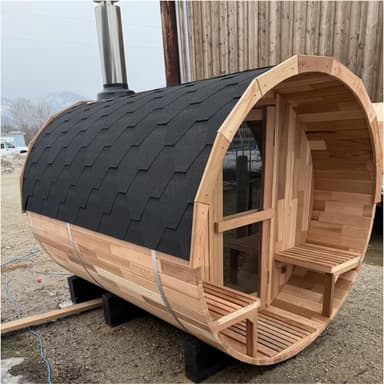
Smartmak 2-10 Person Canadian Hemlock Barrel Sauna
- Barrel shape genuinely improves heat distribution compared to box saunas
- Real red cedar and hemlock construction should last 15-plus years with care
- ETL-certified heater hits 195°F - legitimately hot for authentic steam sessions
Heater Control Wiring
The internal control wiring from the heater to its control panel (typically mounted inside at bench height for easy access, or externally depending on the model) uses lower-voltage wiring that you can typically run yourself once the main 240V circuit terminates in a junction box inside the sauna. Follow the specific heater manufacturer's wiring diagram exactly - color coding and terminal designations vary between manufacturers.
Refer to our guide on electric heater saunas for specific heater model recommendations that match common barrel sauna volumes.
Assembling the Barrel
The stave assembly process is where the barrel sauna transforms from a pile of wood into a coherent structure. Work methodically, check level repeatedly, and resist the temptation to rush.
Cradle Positioning
Most barrel sauna kits include two or three curved cradle supports that form the base the barrel rests on. For a typical 3.7-meter sauna, two end cradles and one center cradle are standard. Position the end cradles first, set back from each end by approximately 200-300mm (8-12 inches) to allow the barrel staves to extend slightly beyond the support point. Position the center cradle exactly midway between the two end cradles.
Measure diagonally between opposite corners of the cradle layout to verify they're square to each other - the two diagonal measurements should be within 5mm of each other. Parallel and square cradles are essential: even a small angular offset causes gaps between staves and makes door alignment difficult. Secure the cradles to your foundation surface - lag screws into a deck, concrete anchors into a slab, or staking spikes into a gravel pad.
Floor Stave Installation
The floor stave (sometimes called the drain stave) is typically wider than the wall staves and includes a drainage channel. It installs first, centered in the cradles and fastened with 50mm screws. The tongue-and-groove profile on its edges receives the first wall staves on each side. This first stave sets the reference for the entire assembly - take time to verify it's centered, level, and properly seated in all cradle notches before proceeding.
Stave-by-Stave Assembly
Work outward from the floor stave, alternating one stave to the left and one to the right to keep the structure balanced and prevent the partial assembly from tipping. Each stave's tongue fits into the groove of the previous stave. A rubber mallet applied to a scrap wood block (never directly to the stave face) drives each stave home with moderate taps - the joint should close completely with a few taps. If a joint requires excessive force, check for misalignment or debris in the groove before proceeding.
Every other stave should be fastened to each cradle with a 50mm screw driven through the pre-drilled pilot hole into the cradle notch. This prevents the staves from shifting during assembly before the steel bands are installed. Every stave must be verified perpendicular to the cradle - a small carpenter's square confirms this quickly.
Band Installation and Tensioning
Most kits include 4-6 steel bands that wrap the circumference of the barrel to hold the staves under compression. Install all bands loosely first, distributing them evenly along the barrel length. Then tighten them progressively in sequence - start at the center band and work outward - rather than fully tightening one band before moving to the next. This approach allows the staves to settle evenly under compression.
Tighten until the stave joints close completely and the bands sit firmly against the wood without visible gaps. Do not overtighten - the goal is compression that holds the staves together, not so much tension that the bands bite into the wood. After the first full heating and cooling cycle, bands typically need re-tensioning as the wood compresses further. Budget 30 minutes for band check and adjustment after session one through five.
End Wall Installation
Pre-assembled end walls (or end wall panels requiring on-site assembly) install after the barrel staves are complete and bands are tensioned. The end walls must be plumb vertically and square to the barrel axis. Clamp them in position and verify with a level before fastening. End walls typically attach with 4-6 long bolts that pull the wall tight against the end stave profile. The door frame mounts to or is integrated into the interior end wall.
Check door operation before finalizing the end wall installation. The door should swing freely and latch securely without force. If it sticks at any point, the end wall may be slightly out of plumb - adjust before fully tightening fasteners.
Heater Installation - Electric
Electric heater installation in a barrel sauna involves mechanical mounting, connecting to the pre-run 240V circuit, and configuring the control unit. The process is straightforward if the electrical rough-in was done correctly.
Mounting Position and Height
The heater must be elevated 125-175mm (5-7 inches) off the finished floor. This elevation serves two functions: it keeps the heater element clear of any floor-level moisture, and it allows air circulation beneath the unit for proper convection. Most electric sauna heaters include a mounting bracket that attaches to the wall - in a barrel sauna, this means the curved interior stave surface.
The standard position is centered between the two bench tiers on the end wall opposite the door, or on the interior end wall in a design where the heater is not on the entry end. Locate the studs or solid backing behind the wall surface. Drill pilot holes through the stave panel and fasten the mounting bracket with lag screws of sufficient length to engage solid wood - typically 50-75mm.
Sauna Stone Loading
Electric sauna heaters use a basket of sauna stones above the heating element to provide thermal mass - the stones absorb heat from the element and then release it gradually, and they're what you ladle water onto to produce steam. Use only stones specifically rated for sauna use. Common acceptable types include olivine diabase, vulcanite, and peridotite. Common field stones, river rocks, or decorative landscape stones can crack explosively when thermal-shocked by cold water - this is a genuine safety hazard, not theoretical.
Load stones to the fill line marked on the heater, typically placing larger stones at the bottom to support smaller stones while allowing air circulation between stones. Overfilling reduces airflow and causes the heater to overheat; underfilling reduces thermal mass and steam production.
Control Panel Configuration
Follow the manufacturer's wiring diagram to connect the control panel to the heater. Most modern electric sauna heaters use low-voltage control wiring (typically 12V DC) for the thermostat, timer, and temperature display, with the main 240V power directly connected to the heater element. Program the maximum temperature setting to your preference - most residential electric sauna heaters are factory-set to a maximum of 90°C (194°F), which is appropriate for standard use.
Stove and Chimney Installation - Wood-Burning
Wood-burning sauna installation is more complex than electric, involves fire safety considerations, and should not be rushed. The NFPA 211 standard provides the baseline safety requirements for chimney installations in the United States 1.
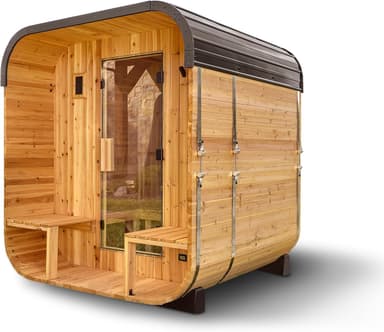
Backyard Discovery Lennon 2-4 Person Cedar Cube Sauna
- 9kW heater reaches temperature significantly faster than budget competitors
- 5-year warranty covers heater and hardware, not just the shell
- Wi-Fi preheat control adds genuine everyday convenience
Clearance Requirements
The NFPA 211 standard specifies minimum clearance distances between a wood-burning appliance and combustible materials 1. For a typical sauna wood stove installed through or adjacent to combustible wall panels, maintain a minimum of 18 inches (457mm) between the stove body and any unprotected combustible surface. This clearance can be reduced by installing a heat shield - a non-combustible panel with an air gap between shield and combustible surface - as specified in the clearance reduction tables in NFPA 211 1.
In a barrel sauna, where the stove is typically positioned at the entry end near the door, achieving adequate clearance from the curved stave wall requires careful positioning during the planning stage, not as an afterthought during installation.
Chimney Penetration
The chimney exits the barrel either through the end wall above the door or through the curved stave surface on the end wall section. An end wall penetration is simpler to execute and maintain - it's a straight, perpendicular penetration through a flat panel. A curved roof penetration requires a specialized flashing boot and is more prone to leakage if not executed carefully.
Use listed double-wall or triple-wall insulated chimney pipe rated for the application throughout the installation. For a wood-burning sauna stove, minimum chimney height is typically 3 feet (914mm) above the highest point of the roof penetration and 2 feet above any structure within 10 horizontal feet - these are the NFPA 211 minimum requirements 1. A taller chimney creates stronger draft, which generally improves combustion and reduces smoke backdraft.
Install a listed chimney thimble at the wall penetration point. This provides the proper firestop clearance between the chimney pipe and the combustible wall material. Seal the exterior flashing with high-temperature silicone rated for chimney applications - standard silicone caulk degrades rapidly near the thermal cycling of a chimney installation.
Draft Verification
Before the first fire, verify the chimney draws properly by holding a lit match or small piece of paper near the firebox opening. The flame should draw inward and smoke should exhaust without backdraft. If draft is poor, the chimney may be too short, have too many direction changes, or have an opening that's too large relative to the chimney diameter. These issues are easier to correct before the first fire than after.
For wood-burning sauna guidance and heater selection, see our wood-burning saunas reference guide.
Ventilation Design
Sauna ventilation design is often the least understood aspect of installation, and poor ventilation is the most common cause of unsatisfactory sauna experiences. The goal is a specific airflow pattern: fresh air enters low, circulates through the occupant space, and exits high, creating continuous oxygen replenishment without drafts at bench level.
The Two-Opening Principle
Every properly designed sauna needs two openings: a fresh air inlet and an exhaust outlet. They should never be on the same wall at the same height, or the air will short-circuit directly from inlet to outlet without circulating through the space.
The inlet should be positioned low on the wall near the heater - within 200mm (8 inches) of the floor, and on the same wall as or near the heater. This allows incoming cool air to immediately contact the heat source and begin rising through convection. A 10cm x 10cm (4 inch x 4 inch) opening is adequate for saunas up to approximately 6 cubic meters. Scale up proportionally for larger spaces.
The exhaust outlet should be on the opposite wall from the inlet, positioned at the highest practical point - ideally within 300mm of the ceiling peak on the interior. For a barrel sauna, this places the exhaust near the curved apex of the end wall. The exhaust opening should be equal to or larger than the inlet. A simple adjustable vent with a damper allows control of the exhaust rate to maintain temperature while ensuring adequate fresh air.
Calculating Ventilation for Your Volume
A useful rule of thumb: the ventilation system should provide 3-6 complete air changes per hour in the sauna space. For a 6 cubic meter sauna (a typical 2-person barrel unit), that requires 18-36 cubic meters per hour of airflow. At typical natural convection rates with properly sized openings, this is achievable without mechanical ventilation.
If your sauna feels stuffy, oxygen-depleted, or accumulates excessive condensation on surfaces during use, inadequate ventilation is the likely cause. Increasing the inlet size or opening the damper further are the first corrections to try.
Carbon Monoxide Considerations for Wood-Burning
Wood-burning sauna stoves installed in enclosed spaces carry a carbon monoxide risk if combustion air is inadequate. In addition to the occupant ventilation described above, a wood-burning sauna needs a dedicated combustion air supply to the firebox - ideally ducted from outside the building envelope rather than drawing from the occupied space. This separation prevents the scenario where the stove and occupants compete for available oxygen. Install a battery-powered carbon monoxide detector inside any wood-burning sauna, positioned at bench height where occupants sit.
Weatherproofing and Sealing
Cedar and hemlock, the most common barrel sauna woods, are naturally resistant to moisture and decay compared to other species, but "naturally resistant" is not the same as "maintenance-free." Weatherproofing extends the lifespan of exterior surfaces, prevents water infiltration at joints, and maintains the structural integrity of the wood over decades of seasonal cycling.
Exterior Wood Treatment
Leave the interior sauna surfaces completely untreated - stain, paint, or sealant on interior wood surfaces off-gas when heated, creating unpleasant odors at best and potentially harmful vapor exposure at worst. The interior wood should remain natural and unfinished.
Exterior surfaces are a different matter. A breathable exterior sauna oil or UV-protective treatment extends the life of exposed wood significantly. Products specifically formulated for exterior sauna use (often labeled as sauna exterior oil or outdoor wood treatment) penetrate the wood surface rather than forming a film, which allows the wood to breathe through its moisture cycling while protecting against UV graying and surface checking.
Apply the first exterior treatment before the barrel is assembled if possible - coating individual staves on the exterior face is easier than working around the assembled barrel. After assembly, apply a second coat to ensure all joint areas are protected. Reapply every 1-2 years depending on your climate and sun exposure.
Joint Sealing
The tongue-and-groove stave joints in a properly assembled and tensioned barrel sauna are inherently tight - the compression from the steel bands creates the primary weather seal. Do not apply caulk or sealant to interior stave joints. The wood needs to move slightly with seasonal moisture changes, and rigid sealant would crack and fail.
Exterior joint treatment is different. The exposed edges of the end wall perimeter where it meets the stave ends benefit from a thin bead of appropriate outdoor sealant to prevent water infiltration at that transition point. Use a flexible exterior sealant rated for wood-to-wood applications, and apply it to allow wood movement rather than bridging rigidly across the joint.
Door and Window Weatherstripping
The door is the primary point of heat loss and weather infiltration in a barrel sauna. The door seal should compress fully against the door frame when closed, with no visible light gaps when viewed from inside with the lights off. Most barrel sauna kits include foam or EPDM weatherstripping. If the original material compresses poorly or shows gaps, replacing it with high-temperature EPDM weatherstripping rated to 120°C (250°F) or higher is a direct improvement that pays back in reduced heat-up time.
Glass windows, if your design includes them, should use tempered glass - standard glass can crack from thermal stress. The frame seals around window glass should be verified for integrity before first use.
First Heat Protocol
The first heat session is not a normal sauna session - it's a controlled break-in process that stabilizes the wood, allows the heater to cure any manufacturing residues, and lets you identify any assembly issues before they become problems. Do not skip or abbreviate this protocol.
Checking Before You Light
Walk through this verification list before the first heat: verify all band tensions are correct and bands are seated against the wood without gaps; confirm all end wall fasteners are fully tightened; verify the door latches securely and opens freely; confirm all heater mounting hardware is tight; and for electric heaters, confirm the thermostat reads ambient temperature accurately and the heater element doesn't show visible damage.
For wood-burning installations, confirm all chimney sections are fully seated and locked, the chimney cap is installed, and there are no visible gaps at the wall penetration. Have a fire extinguisher and garden hose accessible before lighting any fire in or near the sauna.
Electric Heater First Heat
Set the thermostat to a low temperature - around 60°C (140°F) - for the first session. Run the heater for a full 30-minute warm-up at this setting. You may notice a slight burning smell during the first heat as the heater element cures any manufacturing oils or protective coatings. This is normal and typically dissipates within the first 1-2 sessions. Do not ladle water on the stones during this first session - allow the stones to heat dry.
After 30 minutes at 60°C, increase to your normal target temperature - typically 75-85°C (167-185°F) for most users. Hold this temperature for another 30 minutes. Inspect the stave joints, bands, and end walls for any signs of movement or gaps. Tighten any loose bands. Allow the sauna to cool completely before the next session.
Wood-Burning First Heat
The first fire in a wood-burning sauna stove should be a small one - roughly half the wood volume you'd use for a normal session. Use dry, well-seasoned hardwood: oak, ash, or birch are ideal. Avoid resinous softwoods for interior fires as they produce more creosote. Light the fire and allow it to burn at moderate intensity for 45-60 minutes. Inspect all chimney connections for smoke leaks while the fire is burning - any visible smoke infiltration into the sauna space from a chimney joint indicates a problem that must be corrected before normal use.
After the first small fire, allow full cooling, then run a normal-sized fire. After this second session, recheck and retighten all chimney connections - thermal expansion and contraction on the first cycle often loosens connections slightly.
Post-First-Heat Inspection
After the first full heat and complete cooling (allow 12-24 hours for the wood to equilibrate), conduct a thorough inspection. Check every band for tension - cool, dried wood often contracts and loosens bands that felt tight when warm. Check the door alignment and seal. Inspect the floor stave and drain for proper water flow. For wood-burning, inspect the chimney interior with a flashlight for creosote buildup (minimal after one or two fires is normal; heavy buildup indicates poor combustion air supply or wet wood).
Your sauna is now ready for regular use. For an introduction to optimal session protocols and temperature guidelines, see our sauna for beginners guide.
Common Installation Mistakes
After
Sources and References
- NFPA 211 Standard for Chimneys and Fireplaces
National Fire Protection Association. NFPA Standards, 2022.
Frequently Asked Questions
Main steps for barrel sauna installation include preparing a flat, level base like a concrete slab or crushed stone pad that supports at least 1,000 pounds and extends 12 inches beyond the sauna on all sides, ensuring good drainage and 3 feet of clearance. Assemble the barrel by laying out cradles, placing the first bottom stave, adding curved staves vertically with 1/8-inch gaps for expansion, securing with stainless steel bands, and installing end pieces, door, benches, and heater using basic tools like a rubber mallet, level, drill, and wrench. Finish by wiring the heater (hire an electrician), sealing the wood exterior, and testing for safe operation; DIY kits require basic carpentry skills and 1-2 helpers for heavy parts. Professional installation costs $500-1,500 and handles everything to avoid errors.
Related Guides
Medical Disclaimer - This article is for informational purposes only and does not constitute medical advice. Consult a healthcare professional before beginning any sauna routine.