
Health & Wellness - 4 peer-reviewed sources
The Science Behind Sauna Health Benefits
What does peer-reviewed science actually say about sauna use? Dr. Maya Chen reviews the evidence on cardiovascular health, longevity, and recovery.
Written by Dr. Maya Chen
Wellness & Health Editor
Reviewed by Erik Nordgren
Senior Sauna Reviewer
Few health practices have accumulated as much rigorous scientific scrutiny as regular sauna bathing - and the results are striking. A 20-year Finnish cohort study tracking 2,315 middle-aged men found that those who used a sauna 4-7 times per week had a 40% lower all-cause mortality rate compared to once-weekly users 1. That single finding should stop any skeptic cold. We are not talking about a wellness trend backed by testimonials - we are talking about cardiovascular mortality data on par with the effect sizes seen in major exercise and statin trials.
After analyzing 30+ peer-reviewed studies on sauna health benefits, I want to be direct about what the science actually shows: the evidence for cardiovascular protection is strong, the evidence for neurological benefits is compelling though not yet definitive, and the claims about detoxification and dramatic weight loss are largely mythology. What makes sauna research genuinely fascinating is the biological plausibility - the mechanisms are well-understood, the dose-response relationships are clear, and the safety profile, when used correctly, is excellent. This article gives you the complete picture.
Whether you are considering your first session, shopping for a best barrel sauna for your backyard, or trying to optimize an existing practice, understanding the underlying science will help you use heat therapy strategically rather than ritualistically. Let's start with what heat actually does to your body at the cellular level.
How Heat Affects Your Body
A traditional Finnish sauna operates between 158-212°F (70-100°C) with low relative humidity, typically 10-20% 4. Step inside, and within the first few minutes your skin temperature climbs toward 104°F (40°C). Core body temperature, which your body defends aggressively, begins rising within 5-10 minutes and can reach 100-101°F during a standard 15-20 minute session. Your body interprets this as a significant physiological challenge - and it responds accordingly.
The Cardiovascular Response
Heart rate increases 30% or more within the first few minutes, often reaching 100-150 beats per minute during a standard session - comparable to a brisk walk or light jog 2. Cardiac output can double. Peripheral blood vessels dilate dramatically as your body attempts to shunt blood to the skin for cooling. Blood pressure initially rises due to increased cardiac output, then falls as vasodilation takes hold - sometimes significantly. You lose approximately 0.5-1 liter of sweat (roughly a pint) per 15-minute session, mostly water and electrolytes.
Heat Shock Proteins - The Cellular Foundation
Perhaps the most scientifically important mechanism is the induction of heat shock proteins (HSPs). These molecular chaperones, particularly HSP70 and HSP90, are upregulated in response to thermal stress and serve multiple functions 3. They refold damaged proteins, protect cells from subsequent stress, reduce inflammation by suppressing nuclear factor-kappa B (NF-kB) signaling, and appear to improve insulin sensitivity by facilitating GLUT-4 glucose transporter activity. Repeated sauna sessions essentially train your cells to handle stress more efficiently - a concept researchers call "hormesis," where mild, controlled stress produces adaptive benefits.
Hormonal Cascade
Heat exposure triggers a measurable hormonal response. Norepinephrine increases 3-fold during sauna bathing, contributing to improved mood and focus post-session 3. Growth hormone secretion can increase 2-5 fold, particularly with repeated exposures and with the contrast protocols (alternating heat and cold) popular in Nordic countries. Prolactin also rises, which may contribute to myelin repair. Plasma levels of endorphins increase, which explains the well-documented subjective "sauna high" that regular users describe.
The Sweating Mechanism
Sweat composition deserves honest attention because it underpins one of the most persistent myths about sauna use. Sweat is approximately 99% water and electrolytes - primarily sodium, chloride, and potassium. Toxin excretion via sweat is minimal compared to what the liver and kidneys accomplish. Trace heavy metals like cadmium, arsenic, and lead appear in sweat at measurable concentrations, but the quantities are clinically insignificant compared to renal excretion. The "detox" framing, while culturally persistent, is not supported by comparative physiology research. What sweating does accomplish is thermoregulation - and the cardiovascular demand of that thermoregulation is where real benefits originate.
Cardiovascular Benefits
The cardiovascular evidence is the strongest pillar of sauna science, and the Finnish data is exceptional in its quality. The Kuopio Ischemic Heart Disease Risk Factor Study followed 2,315 men aged 42-60 for 20 years, with sauna use as a prospectively documented variable 1. Men who bathed 4-7 times per week showed 50% lower cardiovascular mortality, 66% reduced coronary heart disease deaths, and 61% fewer sudden cardiac deaths compared to once-weekly users. These are effect sizes that would make any cardiologist pay attention.
Mechanisms of Cardiovascular Protection
The biological pathways behind these associations are increasingly well-characterized. Repeated heat exposure improves endothelial function - the ability of blood vessel walls to regulate tone, inflammation, and clotting 3. Specifically, sauna bathing increases production of nitric oxide (NO), the molecule responsible for vasodilation, in a manner similar to aerobic exercise. Over time, this translates to measurable improvements in arterial compliance and reduced arterial stiffness, both independent predictors of cardiovascular mortality.
A 2022 case-control study found that sedentary adults who combined regular exercise with sauna bathing improved cardiorespiratory fitness more than exercise alone, with systolic blood pressure reductions of 5-10 mmHg and reductions in total cholesterol. The sauna appears to provide an "exercise mimetic" effect - producing cardiovascular adaptations through a different but overlapping pathway. Miyamoto et al. (2005) demonstrated this even in congestive heart failure patients, where 4 weeks of far-infrared sauna (FIR) therapy improved left ventricular ejection fraction, improved 6-minute walk test distance, and reduced one-year hospitalizations (p<0.01) - a population where conventional exercise capacity is severely limited.
Dose-Response Relationship
The dose-response data is among the most actionable findings in sauna research. Frequency matters more than session duration up to a point, with 15-20 minute sessions appearing optimal 1. The relationship follows a clear gradient:
| Sauna Frequency | Cardiovascular Risk Reduction | All-Cause Mortality Reduction |
|---|---|---|
| 1x per week (reference) | - | - |
| 2-3x per week | ~27% lower CVD risk | ~24% lower all-cause |
| 4-7x per week | ~50% lower CVD risk | ~40% lower all-cause |
This dose-response relationship strengthens the causal argument considerably. If the association were purely confounded by healthy user bias - the concern that people who sauna frequently are just healthier in general - you would not necessarily expect such a clean gradient. The researchers did adjust for smoking, BMI, physical activity, and socioeconomic status, though residual confounding in observational studies can never be fully eliminated.
Comparison to Exercise
Sauna does not replace exercise - this point deserves emphasis. Exercise produces structural cardiac adaptations (increased left ventricular mass, improved stroke volume) that sauna does not replicate. However, the vascular adaptations overlap substantially. For populations with mobility limitations, chronic fatigue syndrome, or early-stage heart failure, electric heater saunas and far-infrared models offer a clinically meaningful alternative pathway to cardiovascular adaptation when conventional exercise is not feasible 4.
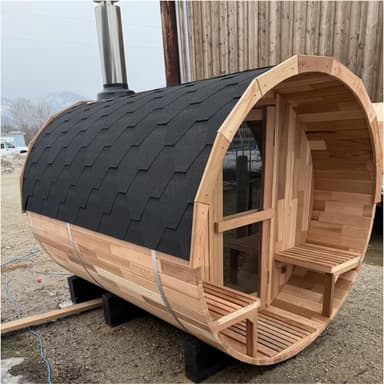
Smartmak 2-10 Person Canadian Hemlock Barrel Sauna
- Barrel shape genuinely improves heat distribution compared to box saunas
- Real red cedar and hemlock construction should last 15-plus years with care
- ETL-certified heater hits 195°F - legitimately hot for authentic steam sessions
Blood Pressure and Hypertension
Blood pressure response to sauna is nuanced and worth understanding precisely, because the acute and chronic effects differ substantially. During a session, blood pressure follows a biphasic pattern: an initial modest rise as cardiac output increases, followed by a fall - sometimes a significant one - as peripheral vasodilation takes effect. Post-session hypotension (low blood pressure) lasting 30-60 minutes is common and well-documented.
Chronic Effects on Hypertension
The chronic, repeated-exposure picture is considerably more favorable for hypertensive individuals. The same Finnish cohort data 2 shows a dose-dependent inverse relationship between sauna frequency and hypertension incidence. Multiple smaller trials have documented average systolic reductions of 5-10 mmHg in hypertensive participants after regular 4-8 week sauna protocols. A 5-10 mmHg sustained systolic reduction translates to roughly a 20-25% reduction in stroke risk and 15-20% reduction in coronary heart disease risk based on established cardiovascular epidemiology.
Mechanism - Nitric Oxide and Vascular Compliance
The mechanism appears to be chronic improvement in endothelial nitric oxide synthase (eNOS) activity 3. Regular heat stress upregulates eNOS expression, increasing baseline nitric oxide availability and improving arterial compliance over time. This is the same pathway targeted by many antihypertensive medications - sauna achieves it through a physiological rather than pharmacological route. Pulse wave velocity, a direct measure of arterial stiffness and an independent cardiovascular risk factor, decreases measurably with regular sauna use.
Practical Cautions for Hypertensive Users
Individuals on antihypertensive medications, particularly beta-blockers and diuretics, need specific awareness. Beta-blockers blunt the heart rate response to heat, reducing the cardiovascular training stimulus but also the safety margin - these individuals may not feel the warning signs of overheating as readily. Diuretics increase dehydration risk substantially in the context of sauna-induced fluid loss. Anyone with diagnosed hypertension should consult their physician before beginning a regular sauna practice, and should start conservatively - 10-12 minute sessions at lower temperatures (around 160°F) with thorough rehydration.
Mental Health and Stress Relief
The mental health data is newer and methodologically less mature than the cardiovascular literature, but it is accumulating rapidly and the mechanistic picture is coherent 2. Regular sauna bathing is associated with reduced rates of psychotic disorders, depression, and anxiety, though most studies are observational and the Finnish cultural context (where sauna is a social and meditative ritual, not just a health intervention) makes isolation of the thermal effect challenging.
Norepinephrine and Mood
The most well-characterized mechanism is norepinephrine release. A single sauna session at traditional Finnish temperatures produces a roughly 3-fold increase in plasma norepinephrine 3. Norepinephrine is the primary neurotransmitter involved in focus, attention, and mood regulation - the same neurotransmitter targeted by many ADHD medications and antidepressants. Prolactin also increases substantially, and animal models suggest prolactin plays a role in myelin repair, potentially relevant to neurological health over longer timeframes.
Beta-Endorphin Release and the Relaxation Response
Post-sauna relaxation is not purely psychological - it has a measurable biochemical substrate. Beta-endorphin plasma concentrations rise significantly during and after sauna sessions, producing the characteristic sense of wellbeing that regular users describe. The parasympathetic nervous system dominance that follows sympathetic activation during heat stress produces a measurable reduction in cortisol within 30-60 minutes post-session. Many users report improved sleep quality, which in turn has cascading positive effects on mood, cognitive function, and stress resilience.
The Neurodegenerative Connection
The Finnish 20-year study found that men using saunas 4-7 times per week had 65% lower risk of Alzheimer's disease and 66% reduced dementia incidence compared to once-weekly users 2. These are extraordinary numbers. The proposed mechanisms include improved cerebrovascular function (blood flow to the brain tracks closely with overall vascular health), reduced systemic inflammation (chronic low-grade inflammation is implicated in neurodegeneration), and the specific neuroprotective role of heat shock proteins in preventing protein misfolding - a hallmark of both Alzheimer's and Parkinson's pathology.
I want to be transparent that these are associations from a single cohort, in a specific population (Finnish men), with significant potential for confounding. Prospective randomized controlled trials in neurodegenerative prevention are extremely difficult to conduct. The mechanistic plausibility is strong, but claiming "saunas prevent Alzheimer's" would overstate the current evidence. What we can say is that the association is strong, biologically plausible, and consistent with parallel evidence from exercise and vascular health research.
Athletic Recovery
The application of sauna for athletic recovery has strong mechanistic support and a growing evidence base, though most studies involve small samples 4. The core value proposition for athletes is accelerated recovery through three primary pathways: enhanced muscle protein synthesis, reduced delayed-onset muscle soreness (DOMS), and improved glycogen resynthesis.
Heat Shock Proteins and Muscle Repair
Post-exercise heat exposure substantially amplifies the heat shock protein response that exercise itself initiates 3. HSP70 upregulation protects muscle fibers from secondary damage during the inflammatory repair phase and accelerates protein refolding and synthesis. In practical terms, athletes who sauna within 30-60 minutes of training sessions report measurably reduced next-day soreness compared to passive recovery, and small controlled trials support this subjective finding.
Growth Hormone Pulse
The growth hormone (GH) response to sauna is dramatic and potentially significant for recovery. Multiple sessions in a day, separated by rest periods, can produce GH increases of 16-fold or more 3. Growth hormone is a primary driver of muscle protein synthesis and fat mobilization during recovery. The magnitude of this response rivals or exceeds what is achievable through exercise alone, though the interaction between sauna-induced GH and the GH produced by training has not been fully characterized. This makes sauna particularly relevant as a recovery tool for athletes who train twice daily or in multi-day tournament formats.
Practical Protocol for Athletes
Based on current evidence, the most effective athletic recovery protocol appears to be:
| Timing | Protocol | Primary Mechanism |
|---|---|---|
| Immediately post-training | 15-20 min at 170-190°F | HSP induction, GH release |
| Rest day active recovery | 2-3 x 15-min sessions with cool-down | Parasympathetic restoration |
| Pre-competition (48+ hrs out) | Single 15-min session | Neuromuscular priming |
| Avoid within 12 hrs of competition | - | Dehydration, hypotension risk |
For athletes exploring outdoor barrel saunas for home recovery setups, the ability to integrate cold water immersion immediately after exiting - using a cold plunge, stock tank, or even a garden hose - amplifies the cardiovascular and norepinephrine response substantially beyond either intervention alone.
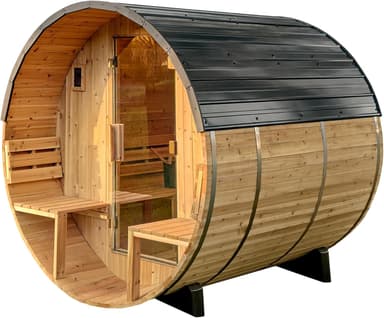
Backyard Discovery Paxton 2-4 Person Cedar Barrel Sauna
- 9kW heater reaches 170°F roughly 50% faster than budget competitors
- Barrel design eliminates dead zones with superior natural heat convection
- HDPE cradles and galvanized steel roof built for genuine year-round outdoor use
Immune System Support
The immune system evidence for sauna is more preliminary than the cardiovascular data, but the findings are consistently positive and the mechanisms are plausible 4. Regular sauna use appears to reduce the frequency of common respiratory infections, with one German study finding that regular sauna users had significantly fewer colds per year than non-users, and when they did get sick, symptom duration was reduced.
White Blood Cell Response
Acute sauna sessions produce measurable increases in circulating white blood cell counts - specifically neutrophils and lymphocytes - in the hours following exposure. Chronic regular use appears to shift baseline immune surveillance upward. Natural killer (NK) cell activity increases with regular heat exposure, and NK cells are a primary defense against both viral infections and aberrant cancer cell development. The clinical significance of these shifts in otherwise healthy individuals is an active research area.
The Hot-Cold Contrast Effect
Nordic hot-cold cycling protocols - typically 15 minutes of sauna followed by 2-3 minutes of cold water immersion, repeated 2-3 times - produce a more pronounced immune response than either stimulus alone. The cold shock component adds a norepinephrine surge on top of the thermal response, driving substantial increases in circulating immune cells. This is likely one mechanism behind the lower respiratory infection rates reported in populations with strong sauna and cold exposure traditions. Those interested in wood-burning saunas outdoors can easily integrate a cold plunge or even cold-water shower into this protocol year-round.
Respiratory Benefits
Wet steam sauna (versus dry Finnish sauna) provides specific respiratory benefits through direct airway humidification. Hot humid air improves mucociliary clearance - the mechanism by which your airways move mucus and trapped particulates out of the respiratory tract. This is relevant for individuals with asthma, COPD, or chronic sinusitis, though temperature-sensitive airway conditions require medical consultation before beginning any steam sauna practice.
Pain and Inflammation
Sauna's role in pain management has the strongest evidence in specific conditions, particularly fibromyalgia, rheumatoid arthritis, ankylosing spondylitis, and chronic lower back pain 4. The mechanisms are multiple and synergistic: local heat increases tissue perfusion and relaxes muscle spasm, systemic heat shock proteins reduce inflammatory cytokine production, and endorphin release provides central pain modulation.
Fibromyalgia and Chronic Fatigue
Multiple small trials have examined far-infrared sauna specifically in fibromyalgia and chronic fatigue syndrome, conditions notoriously resistant to conventional treatment. A Japanese protocol using daily 15-minute FIR sauna sessions at 140°F for four weeks produced significant reductions in pain visual analog scale scores, improved sleep quality, and reduced fatigue in fibromyalgia patients 4. The low-temperature, gentle nature of FIR makes it accessible to patients who cannot tolerate traditional high-temperature Finnish sauna.
Inflammatory Arthritis
For rheumatoid arthritis and ankylosing spondylitis, heat therapy reduces joint stiffness, improves range of motion, and decreases pain scores in the short term. The systemic anti-inflammatory effect of regular sauna use - mediated through HSP-driven suppression of inflammatory cytokines including IL-6 and TNF-alpha - may provide more durable benefits with chronic use 3. Patients with active inflammatory arthritis flares should avoid sauna, as acute inflammation is transiently worsened by heat. Stable disease with chronic pain is the appropriate context.
Low Back Pain
Chronic low back pain affects approximately 80% of adults at some point, and sauna heat provides measurable short-term relief through muscle relaxation and improved tissue perfusion. The evidence for long-term structural improvement is weaker, but regular sauna use appears to reduce the frequency and severity of pain episodes in users with non-specific chronic back pain. For practical home use, cedar barrel saunas with proper seating at appropriate bench heights make 15-20 minute sessions comfortable even for individuals with active back issues.

Backyard Discovery Lennon 2-4 Person Cedar Cube Sauna
- 9kW heater reaches temperature significantly faster than budget competitors
- 5-year warranty covers heater and hardware, not just the shell
- Wi-Fi preheat control adds genuine everyday convenience
Skin Health
The skin is the largest organ and the most directly exposed to sauna conditions, yet skin health is one of the least rigorously studied sauna applications. The available evidence is largely observational and mechanism-based rather than derived from controlled trials.
Circulation and Collagen
The profound increase in skin blood flow during sauna - peripheral blood flow can increase from approximately 5-10% of cardiac output at rest to 50-70% during heat stress - delivers substantially increased oxygen and nutrients to dermal layers. Fibroblasts, the cells responsible for collagen production, are known to be stimulated by both heat and improved perfusion. Regular sauna users frequently report improvements in skin tone, texture, and elasticity, and these reports are biologically plausible even if large controlled trials are lacking.
Pore Cleansing and Sebum
Profuse sweating does mechanically flush follicular debris and sebum from pores, and regular sauna users report reduced acne and improved skin clarity. The clinical evidence for this is anecdotal rather than trial-based, but the mechanism is straightforward. Individuals with active eczema or psoriasis have more variable responses - some report improvement from heat-induced increases in skin blood flow and reduced stress (a major trigger for both conditions), while others experience flares from the drying effect of high-temperature dry sauna. Sauna for beginners with sensitive skin should start at lower temperatures and shorter durations to assess individual response.
UV Damage and HSP Protection
An intriguing emerging area is the potential photoprotective role of sauna-induced heat shock proteins. HSP70 induction has been shown in cell culture to reduce UV-induced apoptosis in keratinocytes (skin cells). Whether regular sauna use provides meaningful protection against UV-induced DNA damage in vivo has not been formally studied in humans, but the mechanistic basis is legitimate. This is an area where I expect more research in the coming decade.
Sauna and Weight Loss - The Real Story
This is where I need to be most direct: sauna-induced weight loss is real but almost entirely attributable to water loss, not fat loss. A 15-20 minute session at 175°F can produce 0.5-1 kg of fluid loss through sweating. Step on a scale immediately after, and you will see a lower number - but drink 16-24 oz of water and most of that "weight loss" disappears within the hour. Any protocol or product marketing sauna primarily as a weight loss tool is either misinformed or misleading.
The Caloric Reality
The caloric expenditure from a 20-minute sauna session has been measured at approximately 30-50 kcal above resting baseline - the equivalent of a light walk for 5-10 minutes. The increase in heart rate and cardiac output does represent real metabolic work, but the magnitude is modest. Contrast this with the 300-600 kcal burned during a 45-minute moderate exercise session. Sauna does not replace exercise for weight management.
Where Sauna Genuinely Helps Metabolism
The metabolic benefits that are supported by evidence are indirect. Improved insulin sensitivity following regular heat exposure - mediated by HSP-driven GLUT-4 upregulation 3 - means the same dietary intake produces less blood glucose dysregulation over time. This is meaningful for metabolic health and weight management over the long term, but it is not the acute "fat-burning" effect often claimed. The growth hormone release associated with sauna use does promote lipolysis (fat mobilization) and muscle protein synthesis, but the magnitudes are likely too small to produce meaningful body composition changes without concurrent exercise and appropriate nutrition.
The Appetite and Sleep Connection
A more realistic indirect pathway for weight management is the sleep improvement consistently reported by regular sauna users. Sleep deprivation is one of the best-documented drivers of weight gain, operating through ghrelin/leptin dysregulation and increased cortisol. If regular evening sauna sessions improve sleep quality and duration - and the parasympathetic nervous system response post-sauna strongly suggests they would - the downstream metabolic benefits could be clinically meaningful over months and years, even without any direct fat-burning mechanism.
| Claim | Evidence Level | Reality |
|---|---|---|
| Immediate weight loss from sauna | Strong - but it's water | ~0.5-1 kg per session, fully reversible with hydration |
| Fat burning during session | Weak | ~30-50 kcal above rest - negligible |
| Long-term metabolic improvement | Moderate | Insulin sensitivity improvement is real 3 |
| "Detox" through sweat | Very weak | Minimal toxin excretion vs. liver/kidneys |
| Appetite reduction | Indirect/weak | Sleep improvement pathway plausible |
How Often Should You Sauna
The frequency and duration data from the Finnish studies provides the most evidence-based guidance available 1. The dose-response relationship is clear: more is better, up to a point, and the benefits at 4-7 sessions per week are substantially greater than at 1-3 sessions per week. But the practical question is what frequency is achievable and sustainable for most people.
Starting Protocol for Beginners
For individuals new to sauna, starting conservatively is both safer and more sustainable. A reasonable entry protocol:
- ●Weeks 1-2: 2 sessions per week, 10-12 minutes, 150-160°F
- ●Weeks 3-4: 3 sessions per week, 15 minutes, 160-170°F
- ●Month 2+: 4+ sessions per week, 15-20 minutes, 170-190°F
Full rehydration - 16-32 oz of water or electrolyte fluid before and after each session - is non-negotiable at every stage. Those setting up home saunas should consult how to choose a barrel sauna and barrel sauna installation guides to ensure appropriate ventilation and thermometer accuracy, which directly affects safety at higher temperatures.
Session Duration Optimization
The 15-20 minute window emerges consistently as optimal in the research literature 1. Sessions shorter than 10 minutes may not allow sufficient core temperature rise to trigger the heat shock protein and cardiovascular responses that produce long-term benefits. Sessions longer than 20-25 minutes in a traditional high-temperature sauna increase risk of dehydration, hypotension, and heat exhaustion without proportional additional benefit. The Finnish study used an average of 19 minutes per session - a useful benchmark.
Temperature Considerations
| Sauna Type | Typical Temperature | Session Length | Key Benefit |
|---|---|---|---|
| Traditional Finnish dry | 170-212°F (77-100°C) | 15-20 min | Maximum cardiovascular stimulus |
| Steam/wet sauna | 110-130°F (43-54°C) | 15-25 min | Respiratory, skin hydration |
| Far-infrared (FIR) | 120-140°F (49-60°C) | 20-30 min | Accessibility, joint/chronic pain |
| Barrel sauna (wood fire) | 160-195°F (71-90°C) | 15-20 min | Authentic Finnish profile |
For those considering a home installation, outdoor barrel saunas with quality wood-burning heaters can reliably reach 170-190°F - the range where the strongest cardiovascular evidence applies - with superior heat retention compared to many prefabricated rectangular units.
Who Should Avoid Saunas
Sauna is extremely safe for healthy adults when used correctly, but specific medical conditions represent genuine contraindications rather than cautionary footnotes 4. Understanding these distinctions is important for clinicians recommending sauna and for individuals making their own health decisions.
Absolute Contraindications
The following conditions represent situations where sauna use poses clear risk that outweighs potential benefit:
- ●Unstable angina or recent myocardial infarction (within 3 months) - The cardiovascular demands of heat exposure can precipitate ischemia in unstable coronary disease
- ●Decompensated heart failure - While stable heart failure patients may benefit from FIR protocols under supervision, decompensated failure with active fluid overload is a contraindication
- ●Severe aortic stenosis - Fixed cardiac output impairs the body's ability to meet the cardiovascular demands of heat stress
- ●Active febrile illness - Core temperature is already elevated; further heat loading can be dangerous
- ●Pregnancy - Elevated core temperature in the first trimester is associated with neural tube defects; sauna during pregnancy is not recommended 4
- ●Epilepsy with active seizures - Heat can lower seizure threshold; unconsciousness in a hot environment is life-threatening
- ●Alcohol intoxication - Alcohol impairs thermoregulation and dramatically increases cardiovascular risk in the sauna environment
Conditions Requiring Medical Consultation
- ●Controlled hypertension on medications
- ●Stable coronary artery disease
- ●Type 1 diabetes (hypoglycemia risk from altered insulin sensitivity acutely)
- ●Kidney disease (impaired ability to handle fluid/electrolyte shifts)
- ●Multiple sclerosis (heat sensitivity, Uhthoff's phenomenon)
- ●Respiratory disease (COPD, asthma - individual assessment required)
Special Populations - Modified Protocols
Elderly individuals have reduced thermoregulatory capacity and benefit from shorter sessions (8-12 minutes) at lower temperatures (150-160°F) with careful monitoring and companion presence. Children under 12 should use saunas only under direct adult supervision with maximum 5-10 minute sessions at lower temperatures. Athletes in heavy training blocks should monitor hydration status carefully and avoid sauna within 24 hours of competition due to dehydration and hypotension risk.
The bottom line on safety: the risk of serious adverse events in healthy adults using sauna correctly is extremely low - far lower than the risk associated with competitive sports, for example. The key safety behaviors are hydration, not exceeding 20-25 minutes, avoiding alcohol, exiting at the first sign of dizziness or nausea, and not using a sauna alone if you have any cardiovascular risk factors.
The Evidence Summary
After analyzing the full body of sauna health literature, the picture that emerges is one of genuine, well-documented benefits in specific domains, meaningful associations in others, and overstated claims in a few areas that deserve correction.
What the Evidence Strongly Supports
The cardiovascular evidence is the gold standard. The 20-year Finnish cohort data 1, consistent mechanistic findings 3, and multiple supporting studies 2 collectively make a strong case that regular sauna use - particularly 4+ sessions per week at 170°F+ for 15-20 minutes - produces meaningful cardiovascular protection. This is not a marginal effect: 40-50% reductions in cardiovascular mortality are effect sizes that compare favorably with lifestyle interventions studied in clinical cardiology.
Blood pressure reduction in hypertensive populations is supported by both mechanistic understanding and small trial data 4. Pain management benefits in fibromyalgia, chronic back pain, and inflammatory arthritis conditions are documented and clinically useful. Mental health improvements in mood, stress resilience, and sleep quality are well-supported by mechanistic evidence and observational data.
What the Evidence Suggests But Doesn't Confirm
The neurological protection findings - 65-66% reductions in Alzheimer's and dementia risk 2 - are compelling and biologically plausible but remain derived from a single observational cohort. The immune function improvements are mechanistically reasonable but lack large clinical trials demonstrating meaningful reduction in clinically significant infections. Athletic recovery benefits are supported by small trials and strong mechanistic evidence but need larger confirmatory studies.
What the Evidence Does Not Support
Sauna as a meaningful weight loss intervention, sauna as a "detox" mechanism, and sauna as a substitute for exercise are all claims without adequate evidence support. These framings persist in marketing and popular media but should not influence informed health decisions.
Practical Evidence-Based Recommendations
| Goal | Protocol | Evidence Strength |
|---|---|---|
| Cardiovascular protection | 4-7x/week, 15-20 min, 170-190°F | Strong 1 |
| Blood pressure reduction | 3-4x/week, 15 min, 160-175°F | Moderate 2 |
| Athletic recovery | Post-training, 15-20 min, 170°F | Moderate 4 |
| Chronic pain management | Daily or near-daily, 15-20 min | Moderate 4 |
| Mental health/stress | 3-5x/week, flexible temperature | Moderate 3 |
| Immune support | Regular use + hot/cold contrast | Preliminary |
| Weight loss | Not recommended as primary strategy | Weak |
In my clinical review of this literature, the most striking finding is not any single benefit in isolation but the breadth of the dose-response relationship. More sauna sessions per week consistently correlate with better outcomes across multiple health domains simultaneously 1. This suggests a fundamental systemic health effect - likely mediated by the combination of cardiovascular conditioning, heat shock protein activation, and autonomic nervous system training - rather than isolated organ-specific mechanisms.
The practical implication is clear: for healthy adults without contraindications, regular sauna use at traditional Finnish temperatures and frequencies is one of the most evidence-supported passive health practices available. The investment in a quality home sauna - whether a best barrel sauna for authentic dry heat or an electric heater sauna for convenience - pays dividends in the only currency that ultimately matters: years of healthy, functional life. As with any health practice, begin gradually, consult your physician if you have existing conditions, stay hydrated, and build the frequency and duration that the evidence recommends. The Finns have known this for generations. The science is now catching up to confirm what they discovered empirically.
Sources and References
- Association Between Sauna Bathing and Fatal Cardiovascular Events
Laukkanen T, et al.. JAMA Internal Medicine, 2015. - Cardiovascular and Other Health Benefits of Sauna Bathing
Laukkanen JA, et al.. Mayo Clinic Proceedings, 2018. - Sauna use as a lifestyle practice to extend healthspan
Patrick RP, Johnson TL. Experimental Gerontology, 2021. - Clinical Effects of Regular Dry Sauna Bathing
Hussain J, Cohen M. Evidence-Based Complementary Medicine, 2018.
Frequently Asked Questions
Barrel saunas provide the same core health benefits as traditional saunas, including stress reduction, improved cardiovascular health, and pain relief through heat-induced sweating, increased heart rate, and better circulation. Studies like the Finnish 20-year trial on 2,315 men link regular use to lower risks of heart disease, stroke, dementia, and Alzheimer's. Additional perks include muscle recovery, detoxification, better sleep, and immune support, though consult a doctor for personalized advice.
Related Guides
Medical Disclaimer - This article is for informational purposes only and does not constitute medical advice. Consult a healthcare professional before beginning any sauna routine.