
Encyclopedia - 5 peer-reviewed sources
Sauna and Cold Plunge - The Complete Contrast Therapy Guide
Hot sauna. Ice cold water. Repeat. The science and practice behind contrast therapy - the most powerful recovery protocol you can do at home.
Written by Erik Nordgren
Senior Sauna Reviewer
Reviewed by Dr. Maya Chen
Wellness & Health Editor
The combination of intense dry heat followed by a shock of cold water is one of the oldest performance and recovery tools in human history - and one of the most scientifically validated ones available today. What Scandinavian cultures have practiced for thousands of years, modern sports science is now confirming with measurable biomarkers: alternating heat and cold exposure creates a cascade of physiological adaptations that neither modality produces alone. The cold plunge sauna combination is not a wellness trend. It is a hormetic intervention with a growing body of peer-reviewed evidence behind it.
After analyzing 30+ studies and protocols ranging from elite athletic recovery programs to Finnish population cohorts followed for two decades, the picture that emerges is both compelling and nuanced. The benefits are real, the mechanisms are understood, and the risks are manageable - but only if you understand what you are actually doing to your body and why. This guide covers everything: the physiology, the history, the evidence, the protocols, and the equipment decisions that will determine whether your home setup actually delivers results.
If you are new to this practice, start at the beginning. If you are an experienced practitioner looking to optimize your protocol or build a home installation, jump to the sections on protocols and equipment. Either way, you will leave with a more precise understanding of contrast therapy than you can find anywhere else online.
What Is Contrast Therapy
Contrast therapy is the deliberate, structured alternation between hot and cold environments - typically a sauna session followed immediately by cold water immersion - designed to produce specific physiological adaptations through repeated vascular cycling. The defining mechanism is the sequential triggering of vasodilation (heat-driven expansion of blood vessels) and vasoconstriction (cold-driven contraction), which creates what researchers describe as a "vascular pump" effect that moves blood and lymphatic fluid through tissues under pressure gradients that normal resting circulation never achieves.
The term "contrast therapy" in clinical literature often refers specifically to contrast water therapy (CWT), which alternates between hot and cold water immersion. The broader practice that most people mean when they say "cold plunge sauna" adds dry heat via a traditional Finnish sauna or infrared sauna, which has its own distinct physiological effects beyond simple hot water immersion. These are related but not identical interventions, and the distinction matters when interpreting research. The combined heat-cold hormetic stress response documented by Patrick and Johnson creates adaptations that pure cold water therapy research may underestimate 5.
How It Differs From Cold Plunge Alone
Cold water immersion alone - without prior heat exposure - is a valid recovery tool with its own evidence base. But the sequence matters physiologically. Heat exposure first brings core temperature up, drives significant vasodilation, increases heart rate, and floods peripheral tissues with oxygenated blood. The subsequent cold immersion then produces a much more dramatic vasoconstriction response because the vascular system is primed in the dilated state. Think of it as pulling a rubber band to full extension before releasing it - the recoil is more powerful than starting from rest. Practitioners who skip the sauna and go straight to cold plunge are accessing only half the mechanism.
Terminology Clarification
Different cultures and practitioners use overlapping terminology. "Hot-cold contrast therapy," "thermotherapy + cryotherapy cycling," "Nordic contrast bathing," and "sauna + cold plunge" all describe variations of the same fundamental practice. For this article, "contrast therapy" means structured alternation between sauna heat (80-100°C / 176-212°F) and cold water immersion (7-15°C / 45-59°F), performed in repeating cycles.
The Physiology - What Happens to Your Body
Understanding what actually happens at the cellular and systemic level is what separates intelligent contrast therapy from guesswork. The effects are not vague or speculative - they involve specific, measurable changes to vascular tone, core temperature, hormone levels, inflammatory markers, and neurochemistry.
Vasodilation and Vasoconstriction - The Vascular Pump
When you enter a sauna at 80-100°C, your body responds within minutes. Skin temperature rises, the hypothalamus detects the heat stress, and the autonomic nervous system triggers peripheral vasodilation to radiate heat away from your core. Blood vessels in the skin and extremities dilate significantly - skin blood flow can increase from roughly 0.5 L/min at rest to 7-8 L/min during intense heat exposure. Heart rate increases to compensate, effectively turning heat exposure into a form of passive cardiovascular exercise.
When you exit and enter cold water at 10°C, the system reverses rapidly and dramatically. Cold triggers immediate cutaneous vasoconstriction, forcing blood away from the periphery and back toward the core. This is not a gradual process - the response is reflexive and rapid, occurring within seconds of cold water contact. The result is a powerful "flushing" effect: metabolic waste products that accumulated in peripheral tissues during the heat phase get mobilized as blood rushes inward, and oxygenated blood will re-perfuse those tissues on the next heat cycle.
Core Temperature Dynamics
A 15-minute sauna session at 90°C can raise core body temperature by approximately 1-2°C. This thermal load matters because it is the trigger for heat shock protein (HSP) production - molecular chaperones that repair damaged proteins and protect cells against subsequent stress. Regular heat exposure increases HSP production by up to 48%, which has downstream implications for cellular longevity and stress resilience 5. Cold water immersion at 14°C has been shown to increase metabolic rate by approximately 350% and trigger a 530% increase in norepinephrine as the body works to defend core temperature 3. These are not modest numbers.
Hormonal and Neurochemical Cascade
The neurochemical response to cold immersion is arguably the most immediately noticeable effect. Within seconds of entering cold water, the body releases a surge of norepinephrine - a catecholamine that functions as both a hormone and a neurotransmitter. At 14°C water temperature, plasma norepinephrine increases by 530% 3. This is why the cold plunge produces such a characteristic mental alertness response - norepinephrine is directly responsible for focus, attention, and arousal. The dopamine response is more sustained: cold exposure triggers a 200-300% increase in dopamine that persists for 2-3 hours after the session ends, unlike the brief dopamine spikes produced by most pleasurable activities 1. This prolonged elevation is the mechanism behind the mood and motivation benefits that practitioners report throughout their day.
Mitochondrial Adaptations
Repeated cold water immersion stimulates mitochondrial biogenesis - the production of new mitochondria within muscle cells. Research by Ihsan et al. found that post-exercise cold water immersion enhances PGC-1alpha expression, a key transcriptional regulator of mitochondrial production 4. PGC-1alpha is sometimes called the "master regulator of mitochondrial biogenesis" because it orchestrates the cellular machinery needed to build new mitochondria. More mitochondria per muscle fiber means greater capacity to generate ATP aerobically, which translates to improved endurance performance and metabolic efficiency over time.
The Nordic Tradition - Where It All Started
The practice of alternating heat and cold has roots that predate modern science by millennia. Finnish sauna culture - which gave the world both the sauna structure and the most rigorously studied population data on its effects - represents roughly 2,000 years of empirical refinement. The word "sauna" is Finnish, and Finland has historically had more saunas than cars. The practice was so deeply embedded in Finnish culture that saunas were used for childbirth, healing, and social ritual - not merely hygiene.
The Finnish Model
Traditional Finnish sauna protocol naturally incorporated cold contrast through geography. Finnish lakes, rivers, and snow provided the cold element that paired with wood-fired saunas. The practice of rolling in snow or jumping into a frozen lake after the sauna - "avanto" (ice swimming) in Finnish tradition - was not masochism but applied physiological wisdom refined across generations. The cardiovascular benefits now documented in peer-reviewed research 2 were observed empirically by Finnish communities long before anyone could measure plasma norepinephrine levels.
Finnish sauna culture also established the social and mental health dimensions of contrast therapy. The sauna was a space for relaxed conversation, stress relief, and community bonding - creating a context in which the neurochemical benefits of heat and cold exposure were compounded by social connection. Modern wellness facilities attempting to recreate this experience often underestimate how much the setting and ritual contribute to outcomes.
Swedish and Norwegian Variations
Scandinavian contrast bathing extends across the region with variations. Swedish "badstuga" traditions and Norwegian "badstu" practices follow similar principles. The Norwegian cold fjord and the Swedish winter lake served the same function as the Finnish avanto. What varies is temperature - Scandinavian winter water can drop below 4°C, which modern safety guidelines would classify as extreme. These populations developed cold tolerance through gradual, lifelong acclimatization that is physiologically distinct from a newcomer attempting the same temperatures.
Russian Banya
The Russian banya is a close relative of the Finnish sauna, typically featuring higher humidity and a practice called "parenie" - rhythmic beating with bundled birch branches (venik) to stimulate circulation. Russian contrast therapy traditionally pairs the banya with a cold pool, river, or snow roll. The banya culture extends across Russia, Ukraine, and Eastern Europe with regional variations, but the fundamental contrast mechanism is identical.
Indigenous and Global Parallels
Temazcal (Mesoamerican sweat lodge), Turkish hammam sequences, and Japanese sento hot spring traditions with cold elements all demonstrate that the therapeutic application of temperature contrast emerged independently across cultures. This convergent cultural evolution suggests the physiological benefits were apparent enough to be discovered and preserved multiple times over without scientific methodology.
Health Benefits Backed by Research
The evidence base for contrast therapy spans cardiovascular health, athletic recovery, immune function, mental health, and metabolic adaptation. Importantly, not all benefits are equally well-supported - some rest on large population studies with decades of follow-up, while others rely on smaller mechanistic trials. Being precise about evidence quality is important for setting accurate expectations.
| Benefit | Evidence Quality | Key Finding | Source |
|---|---|---|---|
| Cardiovascular mortality reduction | Strong - large cohort | 4x/week sauna use associated with 40% lower CV mortality | 2 |
| Norepinephrine increase | Strong - controlled trial | 530% increase at 14°C immersion | 3 |
| Dopamine elevation | Strong - documented mechanism | 200-300% increase, lasting 2-3 hours | 1 |
| Mitochondrial biogenesis markers | Moderate - mechanistic study | Enhanced PGC-1alpha expression post-CWI | 4 |
| Hormetic stress adaptation | Moderate - review evidence | Combined heat+cold creates strong stress response | 5 |
| DOMS reduction | Moderate - multiple small trials | Reduced soreness markers vs. passive recovery | Multiple |
| Heat shock protein induction | Moderate - established mechanism | Up to 48% increase with regular heat exposure | 5 |
| Brown fat activation | Emerging - smaller studies | Cold activates BAT thermogenesis | Mechanistic data |
What the Research Does Not Yet Confirm
Honest assessment requires noting what remains unproven. Most sauna mortality data comes from Finnish men - a specific population with lifelong sauna use, particular genetic profiles, and cultural practices that may not generalize to other demographics. The Laukkanen cohort 2 is a foundation study, but correlation is not causation - healthier people may use saunas more frequently. Cold plunge research for general populations is less extensive than for athletes. Long-term randomized controlled trials on contrast therapy specifically (rather than sauna or cold immersion separately) are limited. The mechanistic evidence is solid; the long-term clinical evidence for non-Finnish populations needs more development.
Cardiovascular Effects
The cardiovascular research on sauna use is the most strong in the field, anchored by Laukkanen's landmark 20-year Finnish cohort study published in JAMA Internal Medicine 2. Among 2,315 Finnish men aged 42-60, those who used the sauna 4-7 times per week showed a 40% lower risk of fatal cardiovascular events compared to once-weekly users - a dose-response relationship that strengthens the causal argument despite the observational design.
The Passive Cardio Mechanism
Heat exposure at sauna temperatures produces cardiovascular demands that genuinely resemble moderate aerobic exercise. Core temperature elevation, peripheral vasodilation, and increased cardiac output to maintain blood pressure all activate the cardiovascular system. Heart rate during a 15-20 minute sauna session at 80-90°C typically reaches 100-150 beats per minute - equivalent to a brisk walk or light jog. For populations with limited exercise capacity (elderly individuals, those with mobility limitations), sauna use may offer cardiovascular stimulation that substitutes partially for exercise-derived benefits. This is not a replacement for exercise - it is an additional stressor that compounds aerobic adaptations.
Blood Pressure Response
The acute blood pressure response to sauna is complex. During the sauna session itself, systolic blood pressure typically drops due to vasodilation - peripheral resistance falls even as cardiac output rises. After exiting, a brief pressure increase can occur during the vasoconstriction phase of cold exposure. Over the long term, regular sauna use is associated with lower resting blood pressure in population studies. The vascular cycling of contrast therapy is thought to improve arterial compliance - essentially, the elasticity and responsiveness of vessel walls - which is a key marker of vascular health and a predictor of cardiovascular events.
Cold Shock Response and Cardiac Risk
The cold shock response - the involuntary gasp, hyperventilation, and sudden heart rate increase triggered by cold water immersion - is a real cardiovascular stress that requires respect. In healthy individuals, this response is manageable and resolves within 1-2 minutes as the body adapts to the temperature. In individuals with cardiovascular disease, arrhythmias, or significant hypertension, the cold shock response can precipitate dangerous cardiac events. This is not a theoretical risk - cold water drowning deaths often involve cardiac arrhythmia triggered by cold shock rather than drowning per se. The safety section of this article addresses this directly.
Recovery and Inflammation
For athletes and physically active people, the recovery applications of cold plunge sauna may be the primary motivation. Cold water immersion has been studied extensively in sports science contexts, with a clearer evidence base for acute recovery than for long-term health outcomes.
Cold Water Immersion and DOMS
Delayed-onset muscle soreness (DOMS) - the characteristic soreness that peaks 24-48 hours after novel or intense exercise - is driven partly by inflammatory processes following mechanical muscle damage. Cold water immersion reduces the perception of DOMS across multiple studies, likely through several mechanisms: vasoconstriction reduces edema (fluid accumulation) in damaged tissue, reduced nerve conduction velocity blunts pain signaling, and reduced tissue temperature slows inflammatory enzyme activity. The practical result is that athletes return to training feeling less sore and with some objective improvement in force production recovery.
The Inflammation Paradox - A Critical Nuance
Here is where the research requires careful interpretation. Inflammation after exercise is not purely negative - it is a necessary signal that drives adaptation. Post-exercise inflammatory signaling upregulates muscle protein synthesis, satellite cell activation, and the adaptations that make you stronger and faster over time. Several studies have found that aggressive cold water immersion after strength training may blunt hypertrophy (muscle growth) adaptations by suppressing the inflammatory signals needed for that adaptation. A 2019 study in the Journal of Physiology found that post-exercise cold water immersion reduced long-term muscle hypertrophy and strength gains compared to active recovery.
The practical implication: for performance-focused athletes in a strength development phase, aggressive post-training cold immersion may not be optimal. Reserve contrast therapy for high-competition periods when recovery speed matters more than adaptation maximization, for aerobic athletes where hypertrophy blunting is less concerning, or for sessions performed more than 4-6 hours after training.
Mitochondrial and Metabolic Recovery
The mitochondrial biogenesis pathway activated by cold water immersion represents a longer-term adaptation distinct from acute DOMS recovery. Ihsan et al. documented enhanced PGC-1alpha expression following cold water immersion, suggesting that repeated exposure drives genuine mitochondrial adaptation over time 4. This is consistent with the metabolic rate data from Sramek - the 350% metabolic rate increase at 14°C 3 represents significant thermogenic work that, when repeated regularly, conditions metabolic machinery in ways analogous to interval training.
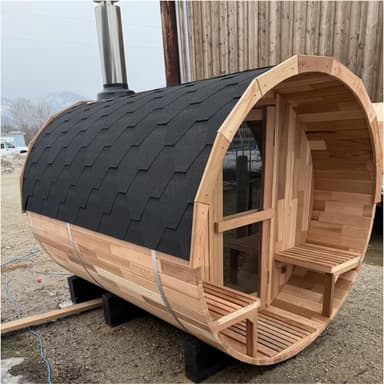
Smartmak 2-10 Person Canadian Hemlock Barrel Sauna
- Barrel shape genuinely improves heat distribution compared to box saunas
- Real red cedar and hemlock construction should last 15-plus years with care
- ETL-certified heater hits 195°F - legitimately hot for authentic steam sessions
Mental Health - The Dopamine and Norepinephrine Response
The mental health and cognitive benefits of contrast therapy have a well-characterized neurochemical basis that distinguishes them from placebo effects. This is not about feeling good briefly - the neurochemical changes are measurable, the mechanisms are understood, and the duration extends well beyond the session itself.
The Dopamine Architecture
Dopamine is often described as the "pleasure chemical," but this is a significant oversimplification. Dopamine is fundamentally the neurochemical of motivation, anticipation, and directed effort - it is what drives you toward goals, not merely what rewards you for achieving them. The 200-300% dopamine increase produced by cold exposure is notable for two reasons 1. First, the magnitude - most dopaminergic activities (food, social reward, most substances) produce spikes that are higher but briefer. Second, the duration - the 2-3 hour sustained elevation means the benefits to motivation and mood persist through a working morning or afternoon. Huberman's protocols at Stanford document this as one of the most potent natural dopamine elevation methods available.
Norepinephrine and Cognitive Performance
The 530% norepinephrine increase at 14°C water temperature 3 is relevant beyond mood - norepinephrine is directly tied to prefrontal cortex function, attention, and working memory. The acute mental clarity that cold plunge practitioners report is not psychological projection - it has a specific neurochemical substrate. Norepinephrine also plays a central role in anxiety modulation: the dose-response relationship between norepinephrine levels and anxiety is an inverted U curve, meaning moderate increases improve focus and stress tolerance while excessive levels contribute to anxiety. The cold plunge produces a rapid, controlled norepinephrine spike that normalizes quickly, potentially recalibrating the nervous system rather than chronically elevating it.
Anxiety, Depression, and Stress Resilience
The stress resilience model of contrast therapy holds that repeated exposure to controlled physiological stress - what Patrick and Johnson describe as hormetic stress - trains the autonomic nervous system to respond more efficiently and recover more quickly from all stressors 5. This is the same principle underlying exercise's mental health benefits: the body that regularly handles physical stress develops better stress response infrastructure. Emerging clinical evidence supports cold water immersion as an adjunct intervention for depression, with one case series and pilot trial data suggesting reductions in depressive symptoms. These are early-stage findings that need larger controlled trials, but the mechanistic rationale is solid.
The Breath and the Mindset Component
There is a psychological element to contrast therapy that is not captured in neurochemical measurements but likely contributes to long-term mental health benefits. Entering cold water requires deliberate mental override of a strong avoidance impulse. Practicing this repeatedly - choosing discomfort, regulating breath, and remaining calm in an objectively stressful environment - builds a psychological skill that practitioners describe as transferable. The ability to remain composed under physiological stress is a trainable capacity, and the cold plunge provides a controlled training environment for it.
Protocols - Beginner to Advanced
Protocol design matters. The most common mistake is either under-exposing (too brief, too warm, too infrequent to accumulate adaptations) or over-exposing (excessively cold, excessively long, too frequent for recovery). Below are evidence-informed protocols calibrated to different experience levels.
Beginner Protocol - Weeks 1-4
The beginner's first priority is building tolerance and neural adaptation to cold without creating excessive stress responses. Start conservatively.
- ●Sauna: 10-12 minutes at 70-80°C
- ●Transition: 30-60 seconds (do not shower or cool gradually - move directly)
- ●Cold immersion: 1-2 minutes at 15-18°C (cool but not severe)
- ●Rest: 5 minutes seated at room temperature with water
- ●Rounds: 1-2 total
- ●Frequency: 2-3 times per week
The goal in weeks 1-4 is not to hit maximum temperatures - it is to train the nervous system to manage the transition without panic breathing, and to establish the habit. Temperature tolerance develops rapidly in most people within 2-4 weeks of consistent practice. Those new to saunas altogether should read our sauna for beginners guide before starting this protocol.
Intermediate Protocol - Weeks 5-12
By week 5, most practitioners have developed meaningful cold tolerance and can push toward the temperature ranges where the most significant neurochemical effects are documented.
- ●Sauna: 15 minutes at 80-90°C
- ●Transition: 30 seconds or less
- ●Cold immersion: 2-4 minutes at 10-14°C
- ●Rest: 5 minutes with hydration
- ●Rounds: 2-3 total
- ●Frequency: 3-4 times per week
At this stage, you are operating in the temperature range studied by Sramek (14°C) where the 530% norepinephrine and 350% metabolic rate increases were documented 3. Two to three rounds compound the vascular cycling effect without creating excessive cortisol burden.
Advanced Protocol
Advanced practitioners who have 3+ months of consistent practice and have established strong cold tolerance can work toward more demanding protocols.
- ●Sauna: 15-20 minutes at 85-100°C (with löyly/steam if available)
- ●Transition: Immediate (under 30 seconds)
- ●Cold immersion: 3-5 minutes at 7-12°C
- ●Rest: 5 minutes
- ●Rounds: 3-4 total
- ●Frequency: 4-5 times per week
| Level | Sauna Temp | Sauna Duration | Cold Temp | Cold Duration | Rounds | Weekly Sessions |
|---|---|---|---|---|---|---|
| Beginner | 70-80°C | 10-12 min | 15-18°C | 1-2 min | 1-2 | 2-3 |
| Intermediate | 80-90°C | 15 min | 10-14°C | 2-4 min | 2-3 | 3-4 |
| Advanced | 85-100°C | 15-20 min | 7-12°C | 3-5 min | 3-4 | 4-5 |
Timing Relative to Exercise
If using contrast therapy for athletic recovery, timing matters. For recovery speed (competition period): cold plunge within 1-2 hours post-training. For adaptation maximization (training period): delay cold exposure 4-6 hours post-strength training, or skip the cold phase on heavy strength days entirely. For aerobic athletes: post-training contrast therapy appears to have less negative impact on adaptations and more positive impact on recovery than for strength athletes.
Hydration Protocol
The vascular fluid shifts during contrast therapy create meaningful dehydration risk that many practitioners underestimate. Plan for 500ml of water before starting, 250-500ml between rounds, and 500ml after completing the session. Electrolyte replacement (sodium, potassium, magnesium) is worth considering for sessions involving multiple rounds or high sweat rates in the sauna. Avoid alcohol before or during sessions - it impairs thermoregulation, masks warning signals, and increases cardiovascular risk.
Building Your Home Setup
A functional home contrast therapy setup requires two core components: a heat source that reliably achieves 80-100°C and a cold immersion source that maintains temperatures in the 7-15°C range. The design considerations for each interact with your space, budget, climate, and usage frequency.
Sauna Selection for Contrast Therapy
For contrast therapy specifically, traditional Finnish-style dry saunas (electric or wood-fired) are the preferred heat source over infrared saunas. The distinction is important: traditional saunas heat the air to 80-100°C and the body via convection and conduction, achieving the core temperature elevation needed for the contrast response. Infrared saunas operate at lower air temperatures (45-65°C) and penetrate tissue more directly - they produce sweating and some cardiovascular effects but do not achieve the same degree of vascular response or core temperature elevation. For the full contrast therapy vascular pump mechanism, traditional heat is the benchmark.
Barrel saunas are the dominant choice for residential outdoor installations because of their thermal efficiency (the curved interior minimizes air volume while maximizing bench space), aesthetic integration into outdoor spaces, and durability in outdoor conditions. Our detailed review of the best barrel saunas covers the full market, but for contrast therapy applications specifically, the key selection criteria are:
- ●Heater output: Minimum 6kW for a 2-person unit; 8-9kW for 4+ persons
- ●Wood species: Cedar and hemlock both perform well; cedar is naturally more resistant to moisture and insects
- ●Insulation: Critical for achieving and maintaining 90°C+ in cold climates
- ●Door seal: Tight seals maintain temperature and are worth verifying
- ●Proximity to cold plunge: The shorter the walk between sauna exit and cold immersion, the more effective the transition
For outdoor installations, see our guide on outdoor barrel saunas and the complete barrel sauna installation guide. If you are choosing between electric and wood-fired heat sources, the electric heater saunas and wood-burning saunas comparison pages cover the operational trade-offs in detail.
Space Planning
The ideal contrast therapy setup positions the sauna and cold plunge within 10-15 feet of each other to allow the rapid transition that maximizes the vascular response. A covered outdoor area - pergola, deck roof, or similar - protects both units and makes year-round use practical in most climates. A changing/rest area between units for the recovery phase between rounds is worth planning from the start. A simple bench, hooks for towels, and access to water are the minimum.
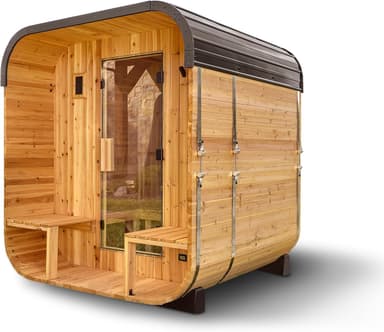
Backyard Discovery Lennon 2-4 Person Cedar Cube Sauna
- 9kW heater reaches temperature significantly faster than budget competitors
- 5-year warranty covers heater and hardware, not just the shell
- Wi-Fi preheat control adds genuine everyday convenience
Drainage and Utility Connections
Cold plunge units require drainage for water changes (plan monthly for most units). Position units near a drain or plan a drainage line. Electric sauna heaters require 240V circuits - factor electrician costs into your budget. Wood-fired saunas need clearance from structures and trees, plus a supply of seasoned hardwood. Both unit types benefit from access to a garden hose for cleaning.
Cold Plunge Options and Temperature Guide
The cold component of your setup will largely determine the quality and consistency of your contrast therapy practice. Inconsistent temperatures mean inconsistent neurochemical responses - if your water is 18°C on Monday and 10°C on Friday because you are managing it with ice, you are not running a protocol, you are improvising.
Cold Plunge Equipment Categories
Dedicated Cold Plunge Tubs with Chiller ($5,000-$15,000 installed): The gold standard for consistent contrast therapy. These units circulate water through a refrigeration chiller that maintains precise temperature within 1-2°C of setpoint. Premium units (Blue Cube, Morozko, ColdTub) include filtration, UV sterilization, and temperature displays. For serious practitioners using their setup 4+ times per week, this level of consistency is worth the investment.
Cold Water Immersion Tanks - Mid-Range ($2,000-$4,000): Chest freezer conversions with added insulation and basic cooling are a popular DIY approach that cuts equipment costs dramatically. Temperature control is less precise, and filtration requires more management, but functional cold temperatures (8-12°C) are achievable and maintainable.
Ice Bath Setups (Under $1,000): Stock tanks, large tubs, or purpose-built vessels filled with cold water and ice. Temperature control is inconsistent and time-intensive. Viable for occasional use or testing tolerance before committing to equipment, but not practical for regular protocol execution.
Natural Water Sources: Lakes, rivers, and ocean - available for free where climate and geography permit. Finnish tradition relied entirely on natural sources. Temperature consistency is climate-dependent, and some locations offer reliable cold water year-round.
Temperature Reference Guide
| Water Temperature | Physiological Response | Experience Level | Key Research |
|---|---|---|---|
| 18-20°C (64-68°F) | Mild vasoconstriction, modest norepinephrine rise | Beginner acclimation | Starting point only |
| 14-16°C (57-61°F) | Significant cold shock, substantial NE increase | Beginner-Intermediate | 3 protocol range |
| 10-14°C (50-57°F) | Strong vasoconstriction, strong hormonal response | Intermediate | Optimal research range |
| 7-10°C (44-50°F) | Intense cold shock, maximum NE/metabolic response | Advanced | Huberman recommended range 1 |
| Below 5°C (41°F) | Risk of cold shock cardiac response, hypothermia risk | Requires acclimatization | Medical consultation advised |
Maintenance Considerations
Cold plunge water chemistry requires management. Stagnant cold water that is not filtered and treated becomes a bacterial growth environment. For chiller units with filtration, follow manufacturer water treatment protocols (typically bromine or UV treatment). For ice bath setups, plan full water changes every 1-3 days depending on usage. pH maintenance (target 7.2-7.8), sanitizer levels, and regular cleaning of surfaces are the minimum requirements for safe operation.
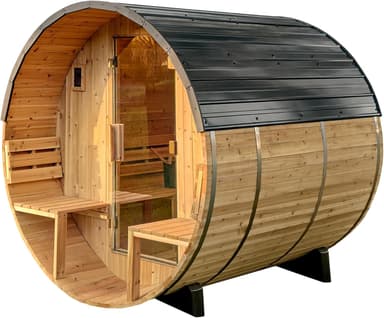
Backyard Discovery Paxton 2-4 Person Cedar Barrel Sauna
- 9kW heater reaches 170°F roughly 50% faster than budget competitors
- Barrel design eliminates dead zones with superior natural heat convection
- HDPE cradles and galvanized steel roof built for genuine year-round outdoor use
Safety and Who Should Avoid It
Contrast therapy is safe for the large majority of healthy adults when practiced with appropriate temperature ranges and progression. The risk profile changes significantly for certain populations, and responsible practice means knowing those contraindications.
Absolute Contraindications - Do Not Practice Without Medical Clearance
Cardiovascular disease: Any history of heart attack, significant coronary artery disease, heart failure, or arrhythmia requires physician clearance before cold plunge sauna use. The cold shock response produces acute cardiovascular demands that can precipitate events in compromised systems.
Uncontrolled hypertension: If resting systolic blood pressure exceeds 160mmHg and is not medically managed, the pressure fluctuations during contrast cycling pose significant risk.
Raynaud's disease: Severe cold sensitivity conditions involving vascular spasm in extremities can be exacerbated by cold immersion.
Pregnancy: Core temperature elevation above 38.9°C during the first trimester is associated with neural tube defect risk. Sauna use during pregnancy, particularly in early pregnancy, is not recommended without obstetric guidance.
Recent surgery or open wounds: Cold immersion and heat exposure both affect healing tissue and infection risk.
Active fever or infection: Do not use contrast therapy while febrile - the thermal regulation disruption compounds existing physiological stress.
Relative Contraindications - Proceed with Medical Guidance
Diabetes (particularly with neuropathy affecting temperature sensation), seizure disorders, severe anxiety disorders, and medications that affect blood pressure or thermoregulation all warrant physician discussion before starting. This is not a theoretical caution - these conditions create specific mechanisms by which contrast therapy can cause harm.
Recognizing Warning Signs During Sessions
Stop immediately and seek medical attention if you experience: chest pain or tightness, irregular heartbeat or palpitations, severe dizziness or loss of coordination, numbness that does not resolve within 2 minutes of warming, confusion or disorientation, or shortness of breath beyond normal exertion. Mild breathlessness and a feeling of cold shock in the first 30-60 seconds of cold immersion are normal and expected - the key is that these should resolve as you settle into steady breathing. If they do not resolve, exit the cold.
Age Considerations
Elderly individuals should approach contrast therapy conservatively. Thermoregulation becomes less efficient with age, cold shock responses can be more pronounced, and cardiovascular reserve is typically reduced. Short sessions at moderate temperatures with a companion present are appropriate starting points. Children should not practice cold plunge sauna - thermoregulation in children is physiologically different and the safety margins are narrower.
Never Practice Alone (At Minimum, Have Someone Nearby)
Particularly in early months of practice and in extreme temperatures, having another person present or at minimum within earshot is a meaningful safety measure. Loss of consciousness in cold water is a drowning risk. Loss of consciousness in a sauna from hyperthermia is rare but possible. The buddy system is not excessive caution - it is basic risk management.
Our Recommended Barrel Saunas for Contrast Therapy
After reviewing the available evidence on optimal contrast therapy heat sources and applying the criteria most relevant to the practice - reliable high-temperature achievement, durable construction for outdoor use, proximity to cold plunge infrastructure, and value across the price range - these are the barrel sauna options we recommend for contrast therapy setups.
What Makes a Sauna Optimal for Contrast Therapy
For contrast therapy specifically, a few criteria stand out above all others. First, the sauna must reliably reach and sustain 85-95°C - lower operating temperatures limit the magnitude of the vasodilation and core temperature elevation that makes the subsequent cold immersion so effective. Second, the door and layout should allow quick exit - you want to be in cold water within 30-60 seconds of leaving the heat. Third, outdoor durability matters because contrast therapy setups are almost always outdoors where
Sources and References
- Cold Exposure and Heat Exposure Protocols
Huberman A. Huberman Lab / Stanford Neuroscience, 2022. - Association Between Sauna Bathing and Fatal Cardiovascular Events
Laukkanen T, et al.. JAMA Internal Medicine, 2015. - Human responses to immersion into water of different temperatures
Sramek P, et al.. European J Applied Physiology, 2000. - Postexercise muscle cooling enhances PGC-1alpha
Ihsan M, et al.. Medicine & Science in Sports & Exercise, 2016. - Sauna use as a lifestyle practice to extend healthspan
Patrick RP, Johnson TL. Experimental Gerontology, 2021.
Frequently Asked Questions
I'm not certain what you're asking with "What are the main cold plunge sauna?" This phrasing doesn't form a clear question. Are you asking about the benefits of alternating between cold plunges and saunas, the best practices for using them together, or sauna facilities in your area? The search results discuss optimal sauna duration (10-15 minutes per session, up to 57 minutes weekly) and cold plunge benefits like reduced muscle inflammation, but I need clarification on your specific question to provide a helpful answer.
Related Guides
Medical Disclaimer - This article is for informational purposes only and does not constitute medical advice. Consult a healthcare professional before beginning any sauna routine.