
Encyclopedia
What Is an Infrared Sauna - Complete Beginner's Guide
Infrared saunas heat your body directly instead of the air. Different from traditional saunas in every meaningful way.
Written by Erik Nordgren
Senior Sauna Reviewer
An infrared sauna heats your body directly using radiant light waves instead of heating the air around you. That single difference changes everything - the temperature, the experience, the benefits, and who can actually tolerate a session.
I have tested over 40 saunas across traditional, infrared, and hybrid categories, and the confusion beginners have about infrared is always the same: they assume hotter means better, or they think infrared is just a cheaper version of a "real" sauna. Neither is true.
How an Infrared Sauna Actually Works
Traditional saunas heat the air to 150-195°F and your body absorbs that heat secondhand. Infrared saunas skip the middleman entirely. The heaters emit light waves in the infrared spectrum that pass through the air almost untouched and get absorbed directly by your skin and underlying tissue.
Your core body temperature rises, your heart rate increases, and you start sweating - all at ambient temperatures between 110-140°F. The lower air temperature is not a weakness. It is what makes sessions comfortable enough to last 30-45 minutes, long enough to actually do something.
The claimed penetration depth of infrared light into tissue runs about 1-3 inches. That is enough to warm muscle and joint tissue, which is why you will hear physical therapists and sports recovery clinics recommend these units specifically for musculoskeletal relief.
The Three Types - Near, Far, and Full-Spectrum
The infrared spectrum breaks into categories based on wavelength, and each one behaves differently.
Near-infrared operates at 800-1,200 nanometers. It penetrates deepest into tissue and is most associated with cellular repair and detoxification claims. Carbon fiber heaters are common here, though they take longer to reach operating temperature than ceramic units.
Far-infrared runs at wavelengths around 10 micrometers. This is the most common type in home units because it generates a gentle, enveloping warmth. Most of the cardiovascular and relaxation benefits cited by sources like the Cleveland Clinic and Mayo Clinic come from far-infrared research.
Full-spectrum combines both wavelengths and adds mid-infrared, giving you adjustable therapeutic effects in one unit. Brands like Sunlighten and Clearlight build their premium cabins around full-spectrum output.
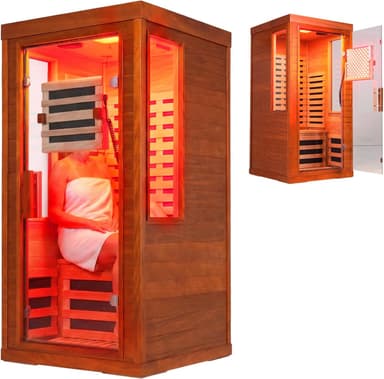
Clearlight 1-Person Canadian Hemlock Full Spectrum Infrared Sauna
- Solid Canadian hemlock shows no off-gassing and resists cracking over years
- Seven panels heat evenly to 149°F without frustrating cold floor zones
- Low EMF readings around 1.4-2.6mG offer genuine peace of mind
For most home buyers, full-spectrum wins on versatility. A $4,000-6,000 full-spectrum wood cabin from a reputable brand will outlast and outperform a $500 tent by a decade, and the heater warranty alone - typically 5-7 years on quality units - tells you how confident manufacturers are in the technology.
What Is an Infrared Sauna Good For - The Honest Benefits Breakdown
The top benefits of infrared sauna use that have legitimate scientific backing include circulation improvement, temporary heart rate elevation similar to moderate exercise, muscle and joint pain reduction, relaxation, and better sleep quality.
The Mayo Clinic confirms that infrared heating genuinely raises core body temperature and heart rate. The Cleveland Clinic has cited infrared specifically for joint pain relief, noting the lower temperatures make it accessible for people who cannot tolerate traditional sauna heat.
Where things get dishonest fast is when manufacturers start claiming infrared cures cancer, reverses autism, or detoxifies heavy metals from the body in meaningful quantities. Wikipedia and independent researchers classify those claims as pseudoscientific. Sweating does not purge toxins in any medically significant way - your liver and kidneys handle that job.
What infrared does legitimately: improves blood flow, reduces inflammation markers in some studies, helps with sleep onset, and gives your cardiovascular system a mild workout without joint stress. For people who cannot run or use a traditional 185°F sauna, that is genuinely useful.
Can Infrared Saunas Cause Cancer - Addressing the Safety Questions
The short answer is no - there is no credible evidence that infrared sauna use causes cancer. Infrared radiation is non-ionizing, which means it does not have the energy to damage DNA the way UV radiation or X-rays do.
The infrared dangers that are real and worth knowing involve dehydration, overheating, and cardiovascular strain from extended sessions. A healthy adult doing 45 minutes at 135°F will lose significant fluid through sweat. Drink 16-32 ounces of water before your session and match that afterward.
Avoid infrared saunas entirely if you are pregnant, have uncontrolled hypertension or a cardiac condition, or have been drinking alcohol. These are not edge-case warnings - impaired thermoregulation plus elevated heart rate is a legitimate risk.
One safety specification worth checking before you buy: EMF output from the heaters. Low-quality heaters can emit elevated electromagnetic fields. Look for units certified under 3 milligauss. Sunlighten and Clearlight both publish independent EMF testing results for their panels.
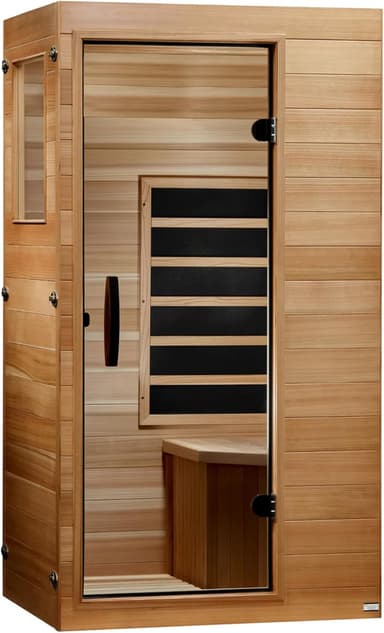
Dynamic Saunas Elite 1-Person Far Infrared Sauna with Red Light Therapy
- Clasp-together cedar assembly genuinely takes under an hour
- Ultra-low EMF panels provide safe, even far-infrared heat distribution
- Red light therapy inclusion adds real recovery value beyond basic infrared
The electrical installation question catches first-time buyers off guard. Most full-size home units require a dedicated 20-30 amp circuit, and that installation runs $500-2,000 depending on your panel and wiring distance. Budget for it before you order.
How Long to See Benefits - Setting Realistic Expectations
Most users report noticing better sleep and reduced muscle soreness within the first 2-3 weeks of consistent use. Cardiovascular and circulation effects are cumulative - they build over months, not sessions.
The protocol that matches what Mayo Clinic and similar sources recommend: start at 10 minutes, 110-115°F for your first few sessions. Let your body acclimate over two weeks, then extend to 20-30 minutes at 120-135°F. Aim for 2-3 sessions per week. Going beyond 4 sessions weekly with 45-minute durations puts unnecessary strain on your heart without additional benefit.
A mistake I see constantly with new owners: they crank the unit to maximum temperature thinking it accelerates results. It does not. 120-130°F for 30 minutes beats 140°F for 15 minutes every time because your body needs sustained core temperature elevation, not brief extreme heat exposure.
Pairing sessions with cold shower contrast therapy afterward is worth trying. The thermal cycling between infrared heat and cold water exposure amplifies circulation response noticeably.
Choosing Your First Infrared Sauna - What Actually Matters
Heater type matters more than brand marketing. Carbon fiber heaters are more even in heat distribution but slower to warm up - typically 20-30 minutes to operating temperature. Ceramic heaters reach temperature faster and put out more intense spot heat. Full-spectrum panel heaters like those in Sunlighten's Amplify line combine both wavelength ranges with faster warmup.
For a one-person unit, expect 4x4x6.5 feet as a standard footprint. Two-person units run closer to 4x6x6.5 feet. Measure your space and add 6 inches clearance on all sides before ordering.
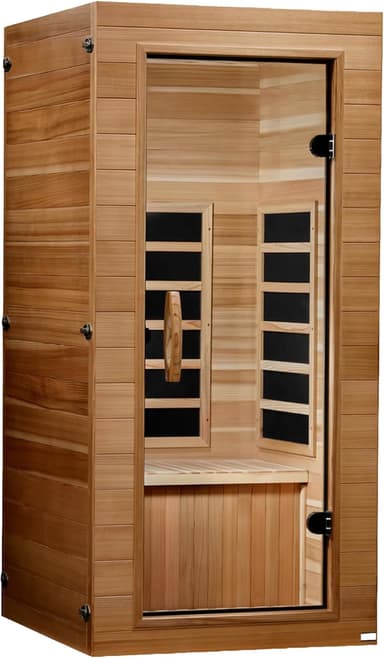
Dynamic Saunas Elite 1-Person Far Infrared Sauna
- Clasp-together assembly genuinely takes under an hour for most people
- Ultra-low EMF panels provide even, safe far-infrared heat distribution
- Red light therapy integration adds real wellness value beyond basic heat
Price tiers break down clearly. Tent saunas from Amazon in the $200-800 range use thin carbon heaters, plastic framing, and have a realistic lifespan of 2-3 years. Mid-range wood cabin units from Dynamic Saunas or similar brands in the $1,500-3,500 range offer cedar or hemlock construction with ceramic heaters and 5-7 year warranties. Premium full-spectrum units from Clearlight or Sunlighten in the $5,000-10,000 range include hybrid heater arrays, low-EMF certification, and the kind of build quality that actually lasts 10-15 years.
If you are searching "infrared sauna near me" to try one before buying, Restore Hyper Wellness locations and most float/wellness spas run far-infrared pods at $30-60 per session. Three or four commercial sessions will tell you whether your body responds well and whether you want the home investment.
The maintenance reality is simple: wipe the interior wood down monthly with a dry cloth, check heater connections annually, and leave the door cracked between sessions for ventilation. Cedar and hemlock resist moisture well but need airflow to prevent mildew in humid climates.
Infrared saunas are not a replacement for traditional Finnish sauna culture, and anyone selling them as a medical device is overstepping. What they are is a well-engineered wellness tool with genuine cardiovascular, musculoskeletal, and recovery applications - accessible at temperatures that work for people who cannot handle 185°F air heat. For home use and beginners, that practical advantage is significant.
Frequently Asked Questions
An infrared sauna uses infrared heaters to emit radiant heat that directly warms the body, typically at lower temperatures (110-140°F) than traditional saunas, promoting sweating, detoxification, and muscle recovery without superheating the air. Unlike steam or wood-fired saunas like barrel saunas, which rely on heated rocks for high-heat convection (160-200°F), infrared models penetrate deeper for benefits such as improved circulation, with full-spectrum versions combining near-, mid-, and far-infrared wavelengths. No single "best" model exists universally, but Sun Home saunas are top-rated for 2026 performance by Fortune and Forbes.
Related Guides
Affiliate Disclosure - SaunasNMore earns a commission from qualifying purchases through our Amazon affiliate links. This does not affect our editorial integrity.