
Installation
Sauna Installation Guide - Complete Setup Process
Installation mistakes cost thousands. This guide walks through every step I use for customer installations.
Written by Jake Morrison
Installation & DIY Expert
This guide walks you through a complete sauna installation from site prep to first heat. Whether you're assembling a pre-built kit or working through a more involved custom build, you'll finish knowing exactly what to do at each stage and what to watch out for along the way.
Before You Start
Time required: 2-4 hours for a pre-built kit with two people. Custom builds with framing, insulation, and electrical work take significantly longer - budget a full weekend minimum.
Tools you'll need:
- ●Tape measure
- ●4-foot level (minimum)
- ●Power drill with multiple bit sizes
- ●Circular saw or miter saw
- ●Staple gun
- ●Hammer or nail gun
- ●Pencil and marking tape
Materials typically included in kit packages:
- ●Bench lumber (pre-cut)
- ●Wall and ceiling boards (cedar or spruce)
- ●Foil vapor barrier
- ●Heater unit with control panel
- ●Approximately 100 pounds of stones for electric heaters
- ●Corner moldings and fasteners
Prerequisites: Confirm your installation area matches the kit's footprint dimensions exactly before delivery. Verify your electrical supply meets the unit's requirements - many 110-volt models like JNH Lifestyles saunas run on standard household current, but mid-range units often require a dedicated circuit installed by a licensed electrician before the sauna arrives.
Never attempt sauna installation alone. Two people are required for ceiling panel work and wall alignment throughout the process.
Step 1 - Prepare and Level the Foundation
The foundation is the most important part of the entire installation. Get this wrong and every step after it fights you.
Concrete is the best surface for sauna installation. It handles the weight, resists moisture from below, and stays stable through years of heat cycling. If you're working with an existing concrete slab, sweep it completely clean and check for cracks or low spots. Fill any gaps with hydraulic cement and let it cure fully before proceeding.
Use a 4-foot level to check the surface in at least four directions - north-south, east-west, and both diagonals. The acceptable tolerance is 1/8 inch over 10 feet. Anything beyond that causes door alignment failures and uneven bench gaps that are impossible to fix after assembly.
For barrel saunas specifically, leveling is non-negotiable. The circular end panels rely on precise horizontal alignment to seat the staves correctly. Even a 1/4-inch tilt throws the door operation off.
If you want flooring inside the sauna, install cedar or teak deck boards on top of the concrete now - before framing begins. These materials handle the heat and humidity without warping. Standard vinyl plank or laminate will fail within months under sauna conditions, so skip them entirely.
Mark the sauna footprint on the floor using painter's tape before bringing any panels inside. This gives you a clear boundary to work within and makes panel placement faster during assembly.
Step 2 - Frame the Structure
With the foundation ready, begin framing according to your kit's manual. Pre-built kits ship with pre-cut cedar or spruce framing members that simply need to be fastened together in sequence.
Cedar and spruce are the right materials here. Both resist moisture absorption naturally and hold up to the repeated heat cycles without warping or splitting the way pine does. If you're sourcing lumber for a custom build, use nothing else for interior framing.
Start with the floor frame. Lay out all four base members and square the corners using the 3-4-5 triangle method - measure 3 feet along one wall, 4 feet along the adjacent wall, and confirm the diagonal is exactly 5 feet. A square base frame makes every subsequent step easier.
Stand the corner posts and fasten them to the base. Corner moldings aren't just decorative - they add structural rigidity to the wall joints and should be installed at each corner as you build up the frame. Most kits include these as part of the package.
Check vertical plumb on each corner post with your level before moving forward. Fasten temporary diagonal bracing to hold posts plumb while you connect the remaining framing members. Remove the bracing only after the wall panels lock everything in place.
Pro tip: Dry-fit every framing component before driving a single fastener. Pre-built kits occasionally include miscut pieces, and discovering this before permanent assembly saves significant rework time.
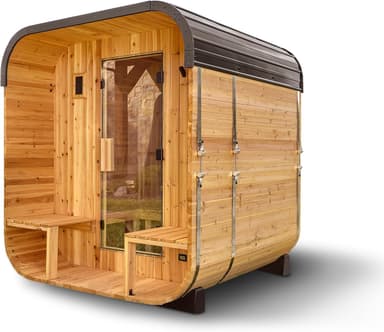
Backyard Discovery Lennon 2-4 Person Cedar Cube Sauna
- 9kW heater reaches temperature significantly faster than budget competitors
- 5-year warranty covers heater and hardware, not just the shell
- Wi-Fi preheat control adds genuine everyday convenience
Step 3 - Install Exterior Wall Panels and Route Electrical Cable
Exterior wall panels go up next, before any electrical, insulation, or interior work. This sequence matters because the electrical cable needs to run inside the wall cavity.
Stand each exterior panel into position and fasten it to the framing with the hardware provided. Most kits use tongue-and-groove panel systems that interlock along their edges. Align the grooves carefully - a misaligned panel creates a visible gap on the interior face that can't be fixed without disassembly.
Once the exterior walls are up, route your electrical cable through the designated conduit path shown in your kit manual. The cable runs from your electrical panel or dedicated outlet to the heater location. Use waterproof conduit rated for wet locations throughout this run - standard conduit degrades quickly in the moisture environment a sauna produces.
Leave 18-24 inches of excess cable at the heater location. You'll need this slack during heater installation and future maintenance access.
A dedicated circuit is required for sauna installation regardless of voltage. A 110-volt unit still needs its own 20-amp circuit rather than sharing with other loads. Higher-output heaters typically require 240-volt dedicated circuits at 30-60 amps depending on the heater's kilowatt rating. If you haven't already confirmed your electrical rough-in is complete, stop here and call a licensed electrician before proceeding.
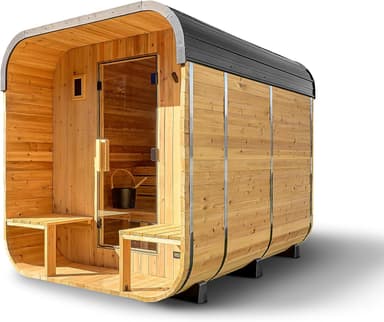
Backyard Discovery Lennon 4-6 Person Cedar Cube Sauna
- 9kW heater reaches target temperature significantly faster than competitors
- Tongue-and-groove cedar construction eliminates cold spots effectively
- Wi-Fi preheat lets you walk into a ready sauna every time
Step 4 - Install Insulation and Vapor Barrier
Insulation goes between the framing cavities after exterior panels are up and electrical is routed. Use mineral wool or fiberglass batt insulation sized to fit your stud spacing - typically 3.5 inches thick for 2x4 framing.
Press each batt firmly into the cavity with no gaps at corners or edges. Thermal bridging through air gaps reduces the sauna's efficiency and forces your heater to work harder to reach temperature.
The vapor barrier is the most skipped step in DIY sauna installation and one of the most damaging mistakes you can make. Without it, moisture migrates from the hot sauna interior into the wall cavity, soaks the insulation, and begins rotting the structural wood within 1-2 seasons.
Use a foil-faced vapor barrier, which most kits include. Staple it to the interior face of the framing members with a staple gun, pulling it taut to eliminate wrinkles. Overlap seams by at least 6 inches and seal them with foil tape - not standard duct tape, which fails at elevated temperatures.
Seal around every electrical penetration with acoustical caulk before moving to interior panels. These small gaps are where moisture infiltration starts in most failed installations.
Step 5 - Install Interior Wall and Ceiling Panels
Interior tongue-and-groove panels go up over the vapor barrier. Start with the ceiling - this is why two people are mandatory. One person holds the panel flush against the vapor barrier while the other blind-nails it through the tongue into the framing.
Use 1.5-inch finish nails for ceiling panels. Drive them at a 45-degree angle through the tongue so the groove of the next panel hides the fastener completely. Exposed nail heads will corrode rapidly in the heat and humidity.
Work across the ceiling in parallel runs, keeping each panel tight to its neighbor before nailing. Gaps between ceiling panels trap moisture and create visible seams that open further over time.
Wall panels follow the same blind-nailing technique. Start from the floor and work up, checking level every three or four panels. A panel that drifts out of level compounds the error across every panel above it.
Cut panels for the final row or column with a circular saw. Cedar cuts cleanly - just use a fine-tooth blade (40 TPI minimum) to prevent splintering on the face.
Install corner moldings over all interior corners after the panels are up. These cover any small gaps at transitions and add the finished appearance that separates a professional-looking installation from an amateur one.
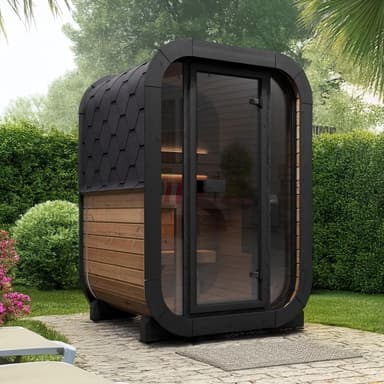
2-10 Person Canadian Cedar Outdoor Cube Sauna
- Deep customization covers size, wood, heater, windows, porch, and roofing
- Canadian red cedar offers genuine durability and natural aromatic quality
- HARVIA heater option is a trusted, proven choice for consistent heat
Step 6 - Hang the Door and Install Benches
Pre-hung sauna doors come with the frame already assembled. Lift the door unit into the rough opening and shim it level and plumb before fastening.
Check that the door swings freely through its full arc without rubbing the frame. The door should latch with light pressure and create a full perimeter seal when closed. Adjust shims until this is achieved before driving any permanent fasteners into the frame. Screw the frame into the rough opening at 16-inch intervals through the hinge and latch sides.
Bench assembly follows a straightforward order - build the bench frames first, then attach the slat tops. Most kits include pre-cut bench lumber with hardware. Use 1.25-inch deck screws rather than nails for bench fasteners. Screws hold better through the repeated expansion and contraction cycles that bench wood goes through during heating and cooling.
Standard bench configurations use two tiers - a lower bench at 18 inches height and an upper bench at 36-42 inches. Upper benches sit in significantly higher heat, typically 15-20°F warmer than lower positions.
Sand any sharp edges on bench surfaces with 120-grit sandpaper before the sauna's first use. Cedar splinters are unpleasant during a relaxing session.
Step 7 - Mount the Heater and Connect the Control Panel
Heater placement follows the manufacturer's required clearances exactly - there is no flexibility here. Typical clearances are 4 inches minimum from side walls, 8 inches from wooden elements above, and the specified distance from bench edges listed in your heater documentation.
Mount the heater bracket to the wall studs, not just to the interior paneling. Use lag screws at 3 inches minimum penetration into framing. The heater plus 100 pounds of stones is a significant load.
Load the stones into the heater basket in a staggered pattern, with larger stones on the bottom and smaller stones filling gaps above. Tightly packed stones block airflow and reduce heat output. Leave roughly 30% airspace throughout the basket.
Connect the heater's supply wires to the electrical cable you routed in Step 3. Match wire colors exactly and use wire nuts rated for the amperage your circuit carries. Tuck connections into the heater's junction box and secure the cover.
Install the control panel on the exterior wall beside the door at a comfortable reach height - typically 48-54 inches from the floor. Run the flat connector cable from the heater to the panel through the wall at the panel mounting location. Connect it following the sequence in your manual and secure the panel with the provided screws.
For WiFi-enabled models, download the manufacturer's app and sync the control panel before your first heat session. Confirm remote temperature control functions correctly.
Common Mistakes to Avoid
Skipping electrical confirmation before delivery. If your dedicated circuit isn't ready when the sauna arrives, the unit sits in your garage until an electrician can schedule a visit. Confirm electrical rough-in is complete before scheduling delivery.
Installing on an unlevel surface. A 1/4-inch slope across the floor causes door binding, uneven bench gaps, and structural racking over time. Level the foundation before any assembly begins.
Omitting the vapor barrier or leaving gaps. Moisture damage in sauna walls is invisible until the rot has spread significantly. Install the vapor barrier completely with sealed seams and penetrations.
Undersizing the electrical circuit. Sharing a sauna circuit with other loads causes repeated breaker trips and creates a fire risk from overloaded wiring. Dedicated circuits are not optional.
Installing alone. Ceiling panel installation requires two people. Attempting it solo results in misaligned panels, dropped components, and potential injury.
Ignoring heater clearances. Insufficient clearance from wooden elements is a fire hazard. Follow the manufacturer's clearance specifications exactly, with no exceptions.
Next Steps
Once assembly is complete, run a 30-minute empty preheat before your first use. This burns off any manufacturing residue from the heater stones and allows the wood to complete its initial heat cycle without occupants inside.
After the first session, go through every bench fastener and wall panel connection and tighten anything that has shifted. Wood movement during the first heat cycle is normal and often loosens initial fasteners.
Schedule a follow-up electrical inspection with your licensed electrician after the first week of regular use. Confirm all connections remain tight and no overheating is occurring at the panel or heater junction box.
Stock your sauna with a quality thermometer and hygrometer so you can monitor conditions accurately. Target 150-195°F with 10-30% relative humidity for traditional dry sauna use, or 110-120°F with 40-60% humidity for steam-assisted sessions.
Regular maintenance starts immediately - wipe down benches after each use and leave the door ajar after sessions to allow full drying. This one habit prevents the mold and staining that shortens bench wood lifespan significantly.
Frequently Asked Questions
The best sauna installation depends on your space and preferences: indoor saunas are more convenient and require minimal construction, while outdoor saunas offer a traditional experience but need dedicated electrical and plumbing systems. For heaters, electric heaters provide efficient heating at low operating costs (typically under $1 per 30-minute session), while wood-burning heaters suit classical sauna enthusiasts despite higher upfront costs. Key considerations include proper insulation, vapor barriers, adequate room height (2100-2300 mm), and hiring qualified electricians for all electrical connections.
Related Guides
Affiliate Disclosure - SaunasNMore earns a commission from qualifying purchases through our Amazon affiliate links. This does not affect our editorial integrity.