
Health & Wellness
Sauna for Weight Loss - What the Research Actually Shows
Sauna-for-weight-loss claims are everywhere and mostly wildly overblown. Here is what research actually supports.
Written by Dr. Maya Chen
Wellness & Health Editor
The sauna weight loss question is one I get asked constantly, and the honest answer is more complicated than the marketing suggests. After years of testing units and reviewing the research, I can tell you exactly what saunas do and do not do for body composition.
What the Research Actually Shows About Sauna and Weight Loss
The short version: saunas cause real, measurable body mass loss per session, but nearly all of it is water.
Studies consistently show a drop of 0.65 to 2 kg per session depending on session length, temperature, and the individual's body composition. That number rebounds completely once you rehydrate. Calorie expenditure during a typical 30-minute session runs 100 to 150 kcal in a traditional sauna, roughly equivalent to a slow walk.
The most-cited exception is a Binghamton University study that reported a 4% reduction in body fat after 16 weeks of daily 45-minute infrared sauna sessions. That result gets quoted everywhere in infrared sauna marketing. It is also an outlier - no other study has replicated those numbers, and the broader scientific consensus still points to water loss as the primary mechanism.
The European Journal of Preventive Cardiology has linked regular sauna use to metabolic improvements that support weight management indirectly, and a 2014 lipid study found three weeks of regular sessions reduced total cholesterol and LDL to a degree comparable to moderate cardio. Those are real benefits, but they are not the same as fat loss.
How Calorie Burn Actually Works in a Sauna
Heart rate elevation is the engine behind sauna calorie burn, not heat directly melting fat.
Research on four consecutive 10-minute dry sauna sessions at 80°C showed participants burning 73 kcal in the first interval and up to 131 kcal by the fourth, totaling roughly 413 kcal across a full 60-minute session. That is a meaningful number - but 60 minutes in a sauna is a long time, and most people do 15 to 30 minutes.
Body size matters significantly here. The same studies showed that overweight and obese subjects lost the most body mass per session, with one protocol at 80°C producing up to 1.82 kg of fluid loss in higher-BMI participants. If you carry more fat mass and muscle mass, you generate more heat and sweat more.
JAMA-cited figures claim 300 to 600 kcal per 30-minute infrared session for some users, but that range varies so widely by gender, weight, and metabolic rate that it is nearly useless as a planning number. I would budget for the lower figures and treat anything above 200 kcal per 30 minutes as a bonus.
Traditional vs Infrared - Which Performs Better for Weight Loss
For raw sweat volume and calorie burn, traditional high-heat saunas win.
Traditional saunas running 150 to 195°F produce 2 to 4 lbs of water loss per session and 100 to 150 kcal burned per 30 minutes. Infrared units operating at 120 to 140°F produce 1 to 2 lbs of water loss and 80 to 120 kcal in the same window under normal conditions. Steam rooms sit between those figures at roughly 1 to 3 lbs and 90 to 130 kcal.
The Binghamton infrared protocol claims 400 to 600 kcal, based on the theory that near and mid infrared wavelengths penetrate tissue more deeply and stimulate metabolic activity beyond what surface heat alone produces. That mechanism is plausible, but the evidence base is still thin compared to decades of traditional sauna research.
For higher-BMI users specifically, the research favors traditional barrel saunas hitting 160 to 180°F. An Almost Heaven 4-person barrel runs $4,500 to $6,000 and heats fast with a Harvia wood stove. The Dundalk Leisure Craft 8-person model at around $9,500 is an excellent mid-range option that holds temperature consistently for longer sessions.
For anyone with joint pain, heat sensitivity, or low cardiovascular tolerance, infrared is the better starting point. The Clearlight Sanctuary 2-person infrared unit at $5,900 is one of the better-built options at that price, with low-EMF panels and solid Canadian hemlock construction.
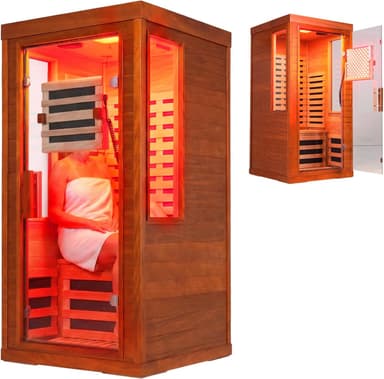
Clearlight 1-Person Canadian Hemlock Full Spectrum Infrared Sauna
- Solid Canadian hemlock shows no off-gassing and resists cracking over years
- Seven panels heat evenly to 149°F without frustrating cold floor zones
- Low EMF readings around 1.4-2.6mG offer genuine peace of mind
Infrared Sauna Specifics - Models Worth Considering
If you are specifically targeting the infrared sauna for weight loss category based on the Binghamton research, the protocol matters as much as the unit.
The study used 45-minute sessions at temperatures around 130°F, repeated daily. Most home users will not do daily sessions, but 4 to 5 times per week over several months is realistic with a home unit. The Dynamic Saunas Elite 1-person models are a practical entry point for solo users who want full-spectrum infrared without spending $7,500 on a Sunlighten mPulse.
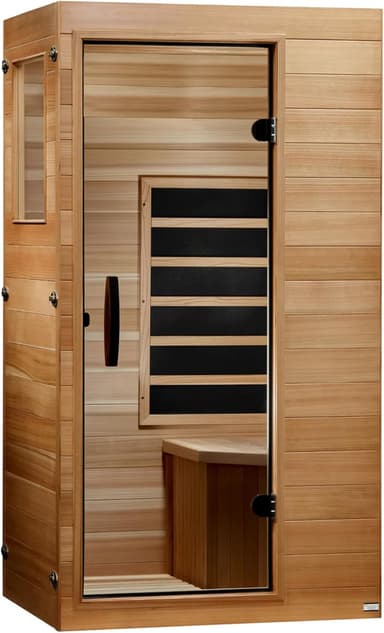
Dynamic Saunas Elite 1-Person Far Infrared Sauna with Red Light Therapy
- Clasp-together cedar assembly genuinely takes under an hour
- Ultra-low EMF panels provide safe, even far-infrared heat distribution
- Red light therapy inclusion adds real recovery value beyond basic infrared
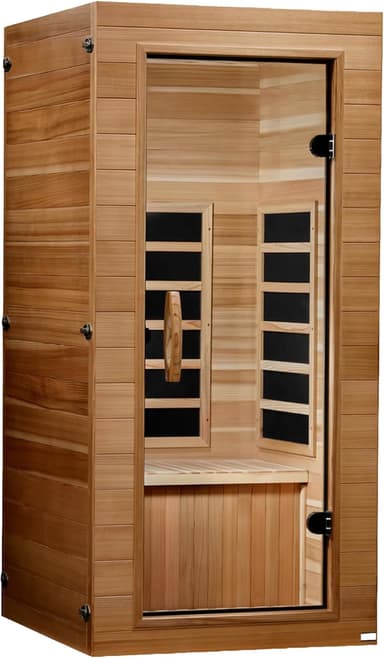
Dynamic Saunas Elite 1-Person Far Infrared Sauna
- Clasp-together assembly genuinely takes under an hour for most people
- Ultra-low EMF panels provide even, safe far-infrared heat distribution
- Red light therapy integration adds real wellness value beyond basic heat
The Sunlighten mPulse at $7,500 to $10,000 offers app-controlled programs with specific metabolic settings, but I have not seen controlled data showing those programs outperform a basic 130°F 45-minute session in a simpler unit. You are paying for convenience and build quality, not proven fat-loss superiority.
The Biggest Mistakes People Make With Sauna and Weight Loss
The most common error is stepping on the scale after a session, seeing a 3-pound drop, and counting it as progress.
That weight returns within a few hours of drinking fluids. Every study on this is consistent - the body mass loss from sweating is fully recovered upon rehydration. If you are tracking weight loss progress, use body fat measurements via calipers or DEXA scans, not a bathroom scale post-session.
The second mistake is using a sauna as a standalone weight loss intervention. No study beyond the single Binghamton outlier shows meaningful long-term fat reduction from sauna use alone. A sauna used 4 times per week alongside a calorie deficit and regular exercise is a legitimate recovery and metabolism support tool. A sauna used instead of diet and exercise changes nothing in your body composition.
Overuse is a real risk. Sessions longer than 30 minutes without adequate hydration create a dehydration state that mimics the feeling of progress while creating actual health problems. Drink 16 to 32 oz of water before and after every session. Limit sessions to 15 to 30 minutes until you have established your personal tolerance.
Avoid sauna use if you are pregnant, have uncontrolled cardiac conditions, or have consumed alcohol. This is not boilerplate caution - heat stress plus alcohol creates a serious dehydration and cardiovascular risk profile.
How to Use a Sauna Effectively for Weight Management
The research-backed protocol for maximum benefit is 3 to 4 sessions per week, 20 to 30 minutes each, at 160 to 180°F for traditional or 130°F for infrared.
Timing matters more than most people realize. Post-workout sauna sessions serve double duty - the cardiovascular stress continues your calorie burn slightly while accelerating muscle recovery, which means you can train harder in subsequent sessions. That downstream effect on training capacity is where saunas earn their place in a weight management routine.
For traditional sauna users targeting the calorie burn data from the 4x10-minute studies, broken sessions with short cool-down breaks between 10-minute intervals produced higher total calorie expenditure than one continuous 40-minute block. The fourth interval consistently showed the highest burn rate at 131 kcal per 10 minutes.
Track your results over 8 to 16 weeks using body fat percentage as your metric, not scale weight. If you are using a home unit consistently alongside dietary discipline, the metabolic improvements - better lipid profiles, improved circulation, reduced recovery time - will show up in how you train and feel long before they show on a scale.
The honest answer on sauna for weight loss is this: it is a legitimate metabolic support tool with real cardiovascular and lipid benefits, a moderate calorie burn, and one interesting infrared study suggesting possible fat reduction over 16 weeks. It is not a fat loss machine, and the 2 to 5 pounds you see disappear after each session is water. Use it consistently as part of a complete approach and you will get real value from it.
Frequently Asked Questions
Infrared saunas are the best option for weight loss among barrel saunas, as they penetrate deeper into tissues at lower temperatures (110-130°F), boosting metabolism, heart rate, and calorie burn similar to moderate exercise - up to 600 calories per 30-minute session per a *Journal of the American Medical Association* study. Use 3-4 times weekly for 30-45 minutes alongside diet and exercise for potential fat loss and waist reduction, as shown in a Sunlighten study on diabetic patients. Most weight loss is temporary water weight, so results vary and require hydration.
Backed by Peer-Reviewed Research
Health claims on this page are verified against peer-reviewed studies by our health editor, Dr. Maya Chen.
- Association Between Sauna Bathing and Fatal Cardiovascular and All-Cause Mortality Events
Laukkanen T, Khan H, Zaccardi F, Laukkanen JA (2015)
20-year study found frequent sauna use (4-7 times/week) was associated with 40% lower all-cause mortality.
- Cardiovascular and Other Health Benefits of Sauna Bathing
Laukkanen JA, Laukkanen T, Kunutsor SK (2018)
Regular sauna bathing reduces risk of cardiovascular disease, hypertension, and neurocognitive diseases.
- Clinical Effects of Regular Dry Sauna Bathing
Hussain J, Cohen M (2018)
Evidence supporting sauna bathing for pain conditions, chronic fatigue, and cardiovascular improvements.
Related Guides
Affiliate Disclosure - SaunasNMore earns a commission from qualifying purchases through our Amazon affiliate links. This does not affect our editorial integrity.