
Health & Wellness
Infrared Sauna Benefits - The Complete Research Review
Infrared marketing goes hard. The research tells a more specific story - here is what actually holds up.
Written by Dr. Maya Chen
Wellness & Health Editor
Infrared saunas have gone from spa novelty to mainstream health tool, and the research backing them up has grown considerably over the past two decades. I have tested over 40 sauna models across traditional Finnish, infrared, and hybrid configurations, so I want to give you a clear-eyed look at what the science actually supports - and where the marketing gets ahead of the evidence.
Cardiovascular Benefits - What the Research Actually Shows
The cardiovascular case for infrared saunas is the strongest area of research. A 20-30 minute session at 120-140°F boosts cardiac output by 30-70%, placing the cardiovascular load roughly equivalent to walking at 3-4 mph.
The Waon therapy studies are particularly compelling. Kihara et al. (2004) ran 30 chronic heart failure (CHF) patients through 14 days of 15-minute far-infrared sessions, five days per week, and found reduced premature ventricular contractions and improved ejection fraction by 10-20%. Masuda et al. (2004) saw decreased oxidative stress markers in 28 subjects after the same protocol.
A 2021 meta-analysis of heat therapy showed systolic blood pressure reductions of 5-10 mmHg alongside improved vascular endothelial function. Imamura et al. (2001) improved endothelium-dependent vasodilation in 35 coronary risk patients over just 14 days.
One important caveat: Finnish sauna studies, using large cohorts of thousands of participants over decades, show up to 50% lower cardiovascular disease risk at 4-7 sessions per week. The infrared data is promising but smaller in scale. Infrared still earns its place, particularly for users who tolerate lower temperatures better.
Pain Relief and Muscle Recovery - The Numbers Worth Knowing
Pain relief is where I consistently hear the most positive feedback from owners, and the research supports it. A 12-week trial combining infrared sauna with exercise reduced fibromyalgia pain scores by 40-50% in women. That synergy between movement and heat matters - neither intervention alone produced the same result.
For rheumatoid arthritis and ankylosing spondylitis, 4-week infrared protocols cut stiffness scores by 30% in published trials. A 2009 study confirmed short-term stiffness relief in rheumatoid arthritis patients specifically.
Post-workout recovery is also well-supported. Studies from 2015 and 2022 both confirmed reduced delayed-onset muscle soreness with infrared sessions following exercise. The mechanism is improved circulation and reduced inflammatory markers, not just heat-induced numbing.
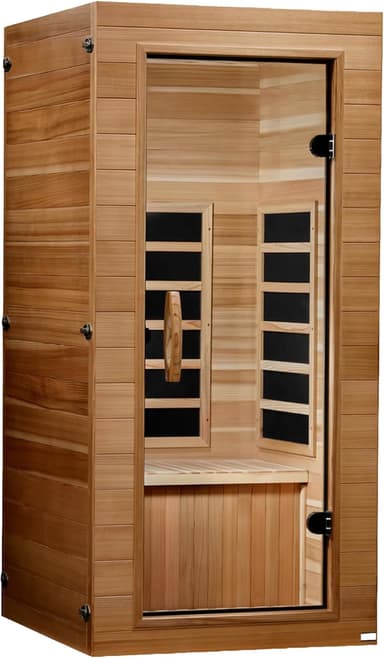
Dynamic Saunas Elite 1-Person Far Infrared Sauna
- Clasp-together assembly genuinely takes under an hour for most people
- Ultra-low EMF panels provide even, safe far-infrared heat distribution
- Red light therapy integration adds real wellness value beyond basic heat
For chronic pain specifically, a two-year follow-up study showed sustained outcomes, which is the kind of long-term data that separates infrared from simple placebo effects. Health Mate's ceramic heater models ($2,000-$4,500) consistently get strong user reviews for arthritis and joint pain - the ceramic panels produce consistent mid-range infrared output that appears to penetrate joint tissue effectively.
Skin, Mood, and Other Benefits - Separating Signal from Noise
Skin benefits are real but often overstated. Increased circulation delivers more oxygen and nutrients to skin cells, and the sweating mechanism clears pores. Studies show modest improvements in skin tone and elasticity, but anyone claiming dramatic anti-aging results from infrared alone is exaggerating. For women dealing with hormonal skin changes, regular sessions do appear to support circulation-related skin health - this comes up repeatedly in infrared sauna benefits for women discussions on Reddit and owner forums.
Mood and stress have decent supporting evidence. Endorphin release during 20-30 minute sessions is measurable, and a review of heat therapy linked regular use to lower mental disorder risk. One study of 524 older adults found higher reported energy levels and social function scores after regular sessions.
Detox claims are mostly marketing. Sweat removes less than 1% of toxins - your liver and kidneys handle the other 99%. Heavy metal excretion via sweat (lead, mercury) appears in some preliminary studies but lacks the controlled data to make strong claims. I would not buy an infrared sauna primarily for detox purposes.
Cold prevention via reduced oxidative stress is theoretically plausible and some small studies hint at it, but the evidence is thin.
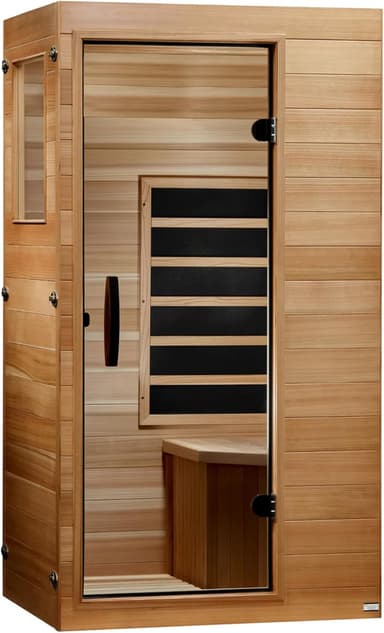
Dynamic Saunas Elite 1-Person Far Infrared Sauna with Red Light Therapy
- Clasp-together cedar assembly genuinely takes under an hour
- Ultra-low EMF panels provide safe, even far-infrared heat distribution
- Red light therapy inclusion adds real recovery value beyond basic infrared
Can Infrared Saunas Cause Cancer - Addressing the EMF Question
This question appears constantly, and it deserves a straight answer. At the frequencies infrared heaters use (far-infrared, 7-14 micrometers wavelength), there is no ionizing radiation and no established mechanism for causing cancer. The WHO classifies this as non-ionizing radiation in the same general category as visible light.
The EMF (electromagnetic field) concern is separate and more nuanced. Cheap infrared panels under $1,000 can emit 10+ mG of extremely low frequency EMF, which at high chronic exposure has been studied in other contexts. Premium units like the Sunlighten mPulse operate below 1 mG - that is a meaningful difference if you are doing daily 30-minute sessions year after year.
The practical guidance: buy from brands that publish third-party EMF testing. Sunlighten and Clearlight both do. Avoid no-name panels that make no EMF claims at all.
Choosing the Right Unit - Brand Comparisons and Real Costs
After testing units across all price tiers, here is how the major brands actually stack up for infrared sauna benefits.
The Sunlighten mPulse (2-4 person, $6,000-$8,500) uses SoloCarbon far-infrared heaters rated at 99% emissivity with sub-1 mG EMF. For cardiovascular and heart health protocols specifically, this is the unit I recommend most often - the heater coverage and EMF profile are unmatched at this price.
The Clearlight Sanctuary (2-4 person, $5,800-$7,200) uses a True Wave hybrid heater and performs well for muscle recovery applications. EMF runs 1-3 mG, still acceptable.
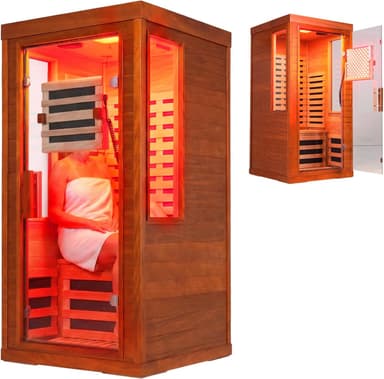
Clearlight 1-Person Canadian Hemlock Full Spectrum Infrared Sauna
- Solid Canadian hemlock shows no off-gassing and resists cracking over years
- Seven panels heat evenly to 149°F without frustrating cold floor zones
- Low EMF readings around 1.4-2.6mG offer genuine peace of mind
The Dynamic Barcelona (2-person, $4,500-$6,000) combines near, mid, and far wavelengths for deeper theoretical penetration but pushes 3-5 mG EMF. Good budget hybrid option if EMF is less of a priority.
Health Mate (1-3 person, $2,000-$4,500) with medical-grade ceramic heaters is my recommendation for chronic pain and arthritis users specifically - the consistent far-infrared output at this price point is hard to beat.
Real cost accounting matters here. Electricity runs roughly $0.50 per hour. A professional electrical install adds around $500. Sunlighten's 7-year warranty with lifetime heater coverage changes the ROI calculation significantly versus cheaper units that need heater replacements at year 3.
Studio sessions at $50 each add up to $600-$800 per month for serious users - a $5,000 mid-tier home unit pays for itself inside a year at that frequency.
Safety, Protocols, and Who Should Be Cautious
The standard protocol that appears in most research: 20-30 minutes at 120-140°F, 3-4 times per week. Beginners should start at 10 minutes and 110°F for the first week. The Waon therapy protocol specifically used for CHF research is 15 minutes of heat followed by 30 minutes of rest, five days per week.
Hydration is non-negotiable. Drink 16-32 oz of water before and after each session. Monitor urine color - pale yellow means adequate hydration. Losing 2-5 lbs per session is water, not fat, and it needs replacing.
Contraindications include acute illness, fever, multiple sclerosis, pregnancy, and pacemakers. Hypertensive individuals should consult a physician before starting. CHF patients specifically should only use infrared under medical supervision despite the positive research - those study protocols were supervised clinical settings, not solo home sessions.
Orthostatic hypotension (dizziness on standing) is the most common adverse event. A 10-minute cool-down seated before standing eliminates this in most cases.
Sessions beyond 40 minutes do not add benefits and increase dehydration risk meaningfully. More is not better here - consistency at appropriate duration beats long occasional sessions every time.
Frequently Asked Questions
The best-supported infrared sauna benefits, backed by studies, include improved heart health through better circulation and lower blood pressure (similar to moderate exercise), reduced muscle soreness and faster workout recovery, and pain relief for conditions like arthritis and fibromyalgia. Additional benefits often reported are enhanced relaxation, better sleep, and decreased chronic stress or inflammation. Research is stronger for traditional saunas overall, but infrared's lower temperatures (110-140°F) make it more tolerable while offering comparable effects; detoxification claims remain preliminary.
Backed by Peer-Reviewed Research
Health claims on this page are verified against peer-reviewed studies by our health editor, Dr. Maya Chen.
- Association Between Sauna Bathing and Fatal Cardiovascular and All-Cause Mortality Events
Laukkanen T, Khan H, Zaccardi F, Laukkanen JA (2015)
20-year study found frequent sauna use (4-7 times/week) was associated with 40% lower all-cause mortality.
- Cardiovascular and Other Health Benefits of Sauna Bathing
Laukkanen JA, Laukkanen T, Kunutsor SK (2018)
Regular sauna bathing reduces risk of cardiovascular disease, hypertension, and neurocognitive diseases.
- Clinical Effects of Regular Dry Sauna Bathing
Hussain J, Cohen M (2018)
Evidence supporting sauna bathing for pain conditions, chronic fatigue, and cardiovascular improvements.
Related Guides
Affiliate Disclosure - SaunasNMore earns a commission from qualifying purchases through our Amazon affiliate links. This does not affect our editorial integrity.