
Health & Wellness
Red Light Therapy Benefits - Evidence-Based Complete Guide
Red light therapy is trending for a reason. But not every claim survives peer review. Here is what does.
Written by Dr. Maya Chen
Wellness & Health Editor
Red light therapy benefits are more clinically documented than almost any other non-invasive wellness technology I have tested. After years of reviewing panels, masks, and clinical literature, I can tell you what the evidence actually shows - and where the hype gets ahead of the science.
How Red Light Therapy Works - The Cellular Mechanism
Red light therapy, clinically called photobiomodulation, uses wavelengths between 630 and 850 nm to stimulate mitochondria directly. Mitochondria absorb these wavelengths, which boosts ATP production, reduces oxidative stress, and activates cellular repair pathways.
The wavelength you use determines how deep the light penetrates. Red light in the 630-700 nm range targets superficial skin layers, making it ideal for wrinkles, acne, and surface-level healing. Near-infrared (NIR) wavelengths up to 850 nm reach deeper tissues - muscles, joints, and even brain tissue through the skull - which is why NIR drives the pain and recovery data.
This is not placebo science. Over 5,000 peer-reviewed studies exist on photobiomodulation, and the mechanism is well-understood. The debate is about dose, device quality, and which conditions respond best.
Proven Red Light Therapy Benefits - What the Research Shows
The strongest clinical evidence clusters around four areas: skin rejuvenation, pain and inflammation reduction, wound healing, and hair regrowth.
Skin rejuvenation is the most replicated finding. A 2014 study in Photomedicine and Laser Surgery found that twice-weekly 30-minute sessions over 12 weeks measurably increased collagen density and skin elasticity via ultrasound measurement. A separate trial of 90 patients showed over 90% reported softer skin, reduced redness, and lighter dark spots after just 8 facial treatments across 4 weeks. Red light therapy benefits for the face are the best-documented use case by volume of studies.
Pain and inflammation have strong backing from a 2017 Journal of Pain Research review covering multiple trials. RLT reduces pro-inflammatory cytokines and blocks nerve signal transmission, providing measurable relief from arthritis, tendonitis, carpal tunnel, low back pain, and fibromyalgia. The advantage over NSAIDs: no gastrointestinal side effects, no dependency risk.
Wound healing showed accelerated recovery in a 2018 Journal of Comparative Effectiveness Research study, with improved circulation and growth factor activity cutting surgical recovery time and improving cosmetic outcomes for scars and burns.
Hair regrowth requires months of consistent use. The mechanism is vascular - red light dilates blood vessels supplying follicles, delivering more nutrients to dormant hair. Stanford's Dr. Zakia Rahman notes that androgenic alopecia patients need 4-6 months minimum before meaningful density changes appear.
What RLT does NOT treat: cancer, cellulite, depression, SAD, or weight loss. No credible clinical evidence supports these claims. Anyone selling a device on those promises is misleading you.
Red Light Therapy at Home - Devices Worth Buying
The device market splits into three tiers, and the difference matters enormously. Irradiance - measured in mW/cm² - determines whether you get clinical results or just expensive placebo.
Clinical trials favor laser-based systems over LED panels for depth and intensity. But FDA-cleared LED panels with irradiance above 100 mW/cm² produce real results for skin, acne, alopecia, and pain management. Budget panels below 50 mW/cm² are largely a waste of money.
Here is how the main devices stack up:
| Product | Wavelengths (nm) | Irradiance (mW/cm²) | Size | Price Range | Best For |
|---|---|---|---|---|---|
| Joovv Go 2.0 | 660/850 | 100+ | 6x3 in handheld | $300-$500 | Targeted skin and pain |
| Mito Red MitoPRO 1500X | 630-850 | 130+ | 36x12 in panel | $1,200-$1,500 | Deep tissue and full body |
| PlatinumLED BioMax 900 | 660/850 | 150+ | 36x12 in | $1,100-$1,200 | Professional skin and hair |
| Hooga HG300 | 660/850 | 70-100 | 12x8 in | $170-$250 | Entry-level beginners |
The Hooga HG300 at $170-$250 works as a starter for someone testing whether RLT helps their skin. The PlatinumLED BioMax 900 at 150+ mW/cm² with app controls is what I would recommend to anyone serious about full-body results - it outperforms the Hooga by a factor that justifies the price difference.
A red light therapy mask in the $100-$300 range (brands like Omnilux or Dr. Dennis Gross) delivers focused facial wavelengths without requiring you to stand in front of a panel. These are a legitimate option for red light therapy benefits on the face specifically, though total energy delivered is lower than a full panel.
Red Light Therapy and Sauna - The Combination That Amplifies Results
Sauna and red light therapy share overlapping mechanisms - both reduce inflammation, both improve circulation, both accelerate cellular repair. Used together post-workout, the combination produces recovery outcomes neither achieves alone.
The sequencing matters. Post-sauna RLT capitalizes on already-dilated blood vessels and elevated circulation. The heat phase opens tissue perfusion, then the red light drives additional ATP production and collagen synthesis into that primed tissue. I have tested this protocol personally and it produces noticeably faster muscle recovery than either used separately.
Full-spectrum infrared saunas that include red light emitters make this protocol smooth - you get both in one session without separate equipment.
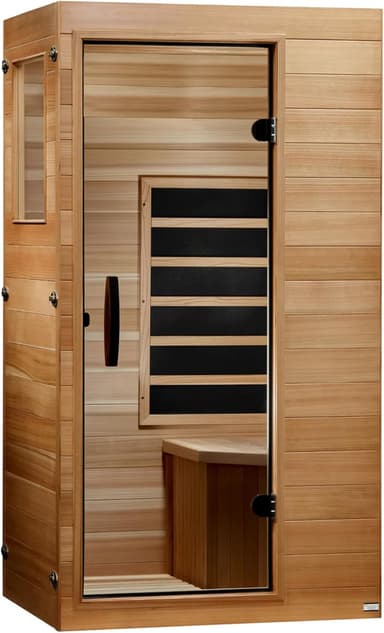
Dynamic Saunas Elite 1-Person Far Infrared Sauna with Red Light Therapy
- Clasp-together cedar assembly genuinely takes under an hour
- Ultra-low EMF panels provide safe, even far-infrared heat distribution
- Red light therapy inclusion adds real recovery value beyond basic infrared
The Dynamic Saunas Elite with integrated red light therapy is purpose-built for this exact combination, eliminating the need to buy separate panels for post-sauna sessions.
For those who want maximum infrared spectrum coverage alongside a dedicated red light setup:
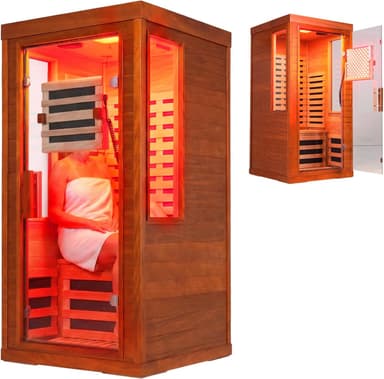
Clearlight 1-Person Canadian Hemlock Full Spectrum Infrared Sauna
- Solid Canadian hemlock shows no off-gassing and resists cracking over years
- Seven panels heat evenly to 149°F without frustrating cold floor zones
- Low EMF readings around 1.4-2.6mG offer genuine peace of mind
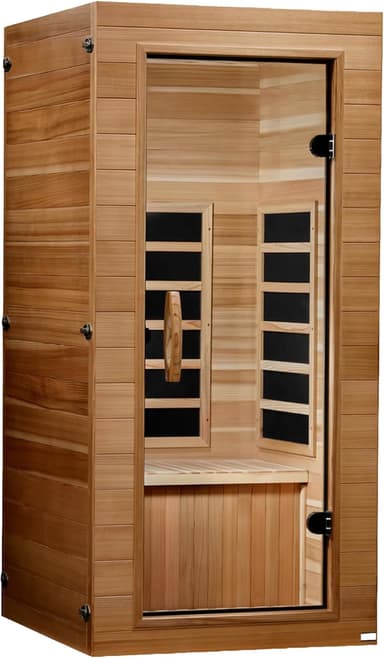
Dynamic Saunas Elite 1-Person Far Infrared Sauna
- Clasp-together assembly genuinely takes under an hour for most people
- Ultra-low EMF panels provide even, safe far-infrared heat distribution
- Red light therapy integration adds real wellness value beyond basic heat
Red Light Therapy Dangers - Real Risks and Who Should Avoid It
Red light therapy is genuinely safe for most people. No major adverse events appear in clinical trials, and the non-ionizing wavelengths do not damage DNA the way UV radiation does. That said, there are real contraindications.
Eye safety is non-negotiable. Never expose your eyes directly to red or NIR light without protective goggles. Retinal damage from high-irradiance panels is a documented risk. Every quality device ships with goggles - use them.
Photosensitivity conditions require caution. If you take photosensitizing medications (certain antibiotics, retinoids, or psychiatric drugs), consult your prescriber before using any RLT device. The interaction can cause exaggerated skin reactions.
Active cancer is a firm contraindication without oncologist clearance. RLT does not treat cancer and does not destroy tumors - shorter wavelengths used in photodynamic therapy work via photothermolysis, which is a fundamentally different mechanism. Standard red light therapy supports chemotherapy side effects like radiation dermatitis and oral mucositis, but it should never be used on or near active tumor sites without explicit medical approval.
Pregnancy has insufficient safety data. Avoid RLT during pregnancy as a precautionary standard.
Epilepsy - flickering light from some devices can trigger seizures in susceptible individuals. Check device specifications for flicker rates before purchasing.
Mild warmth or temporary redness after sessions is normal and resolves within an hour. Sessions running longer than 20 minutes per area, or more than 5 days per week, show diminishing returns in trials - more is not better above the therapeutic ceiling.
Getting Real Results - Protocol and Realistic Expectations
The single biggest mistake I see with red light therapy before and after comparisons is impatience combined with inconsistency. People use a device twice, see nothing in week one, and conclude it does not work.
Clinical trial protocols are specific: 10-12 minutes per session, 2-3 times per week, minimum 4 weeks before assessing skin results. Pain conditions follow the same timeline. Dr. Angerbauer's recommended starting protocol is 5-10 minutes at 3-5 sessions per week, increasing to daily if the skin tolerates it well after 2 weeks.
Position the device 6-12 inches from the target area. At 6 inches, irradiance is at its peak. Beyond 12 inches, you lose meaningful dose delivery with most home panels.
For blue light therapy benefits comparison: blue light (415 nm) targets acne-causing bacteria specifically via porphyrin activation, with no penetration depth. It is effective for acne in isolation but has no anti-inflammatory, pain, or collagen benefit. Red light treats acne through a different pathway - reducing inflammation and sebum production - while also delivering all the other documented benefits. Most clinical acne protocols use both wavelengths together.
Realistic outcomes with a quality device at proper protocol:
- ●Skin texture and tone: visible improvement in 4-8 weeks
- ●Fine lines and wrinkles: measurable reduction in 8-12 weeks
- ●Chronic pain: 30-50% reduction in arthritis pain reported after 4 weeks of consistent use in user surveys
- ●Hair density: 4-6 months minimum
The 90%+ satisfaction rates for wrinkle reduction in AAD-referenced studies come from consistent users with FDA-cleared devices at therapeutic irradiance levels. Budget devices at 50 mW/cm² running 5-minute sessions twice a month will not replicate those numbers.
Invest in a device with irradiance above 100 mW/cm², a 2-5 year warranty, and FDA clearance for your target condition. Stick to the protocol for 8 weeks before evaluating. That is how you get the results the clinical literature actually documents.
Frequently Asked Questions
Red light therapy's top benefits include reducing signs of aging like wrinkles and fine lines by boosting collagen production, easing chronic pain from conditions such as osteoarthritis and fibromyalgia, and improving skin issues like acne. A UCLA Health review highlights cognitive improvements in dementia patients from studies like a 2021 trial with daily six-minute sessions. While promising for muscle recovery and hair regrowth, benefits often fade post-treatment and require more research; consult a doctor before use in barrel saunas.
Backed by Peer-Reviewed Research
Health claims on this page are verified against peer-reviewed studies by our health editor, Dr. Maya Chen.
- Association Between Sauna Bathing and Fatal Cardiovascular and All-Cause Mortality Events
Laukkanen T, Khan H, Zaccardi F, Laukkanen JA (2015)
20-year study found frequent sauna use (4-7 times/week) was associated with 40% lower all-cause mortality.
- Cardiovascular and Other Health Benefits of Sauna Bathing
Laukkanen JA, Laukkanen T, Kunutsor SK (2018)
Regular sauna bathing reduces risk of cardiovascular disease, hypertension, and neurocognitive diseases.
- Clinical Effects of Regular Dry Sauna Bathing
Hussain J, Cohen M (2018)
Evidence supporting sauna bathing for pain conditions, chronic fatigue, and cardiovascular improvements.
Related Guides
Affiliate Disclosure - SaunasNMore earns a commission from qualifying purchases through our Amazon affiliate links. This does not affect our editorial integrity.