
Health & Wellness
15 Science-Backed Sauna Benefits Worth the Sweat
Cutting past the wellness marketing to show you what 20 years of research actually proves about sauna use.
Written by Dr. Maya Chen
Wellness & Health Editor
The research on sauna benefits has exploded over the past decade, and what was once considered a Nordic luxury is now backed by hard cardiovascular and longevity data. I have tested over 40 saunas across traditional Finnish, barrel, and infrared categories, and the science consistently points in the same direction: frequency and heat intensity matter more than the type of sauna you own.
Here are 15 specific, research-supported benefits worth understanding before you buy - or before you commit to a regular practice.
Cardiovascular Gains - The Most Compelling Evidence
The Finnish research out of the University of Eastern Finland is the gold standard here. Laukkanen et al. (2015, JAMA Internal Medicine) tracked 2,315 middle-aged men over 20 years. Men who used a sauna 4-7 times per week reduced their risk of sudden cardiac death by 63% compared to once-weekly users. Cardiovascular disease mortality dropped 63%, and all-cause mortality fell 40-50%.
Those numbers are not marginal. They rival the cardiovascular benefit profiles of regular aerobic exercise.
The mechanism is straightforward: repeated heat exposure forces your heart to work harder, mimicking the cardiac demands of moderate exercise. Core temperature rises, blood vessels dilate, and heart rate climbs to 100-150 BPM. Over time, this trains the vascular system.
Dose-dependency is critical here. Two to three sessions per week cut CVD risk by 22% - meaningful, but the maximal gains require 4 or more sessions weekly, each lasting over 20 minutes at 160-212°F.
Heart Failure, Coronary Disease, and Peripheral Artery Disease
Beyond healthy populations, sauna use shows clinical benefit for patients already managing cardiac conditions. Far-infrared sauna (FIR) at lower temperatures, studied in the Miyamoto et al. CHF trial, produced symptom relief, better exercise tolerance, and fewer hospitalizations after just 4 weeks of daily use. That trial reported zero adverse events.
Coronary artery disease patients benefit from daily sessions through increased myocardial oxygen flow. Patients with peripheral artery disease show measurable improvements in walking endurance after regular use.
If you have unstable heart disease or experienced a recent cardiac event, skip the sauna entirely until your physician clears you. For stable, managed conditions, the evidence increasingly supports supervised sauna use as an adjunct therapy.
Muscle Recovery and Hormonal Response
Sauna benefits after workout sessions are well-documented and underused by most athletes. Heat exposure triggers brain-derived neurotrophic factor (BDNF) release, increases blood flow to fatigued muscle tissue, and reduces next-day soreness.
The hormonal response is striking. Two 15-minute sessions at 212°F raise IGF-1 by 142% and growth hormone by five-fold. Growth hormone drives muscle repair and fat metabolism, and these spikes occur without pharmacological intervention.
For practical application: finish your workout, hydrate with 16-24 oz of water, then do two 15-minute sauna rounds with a 5-minute cooling break between them. This is the protocol that matches the research parameters.
Immune System Strengthening
Heat shock proteins (HSPs) are produced at up to 48% higher levels after sauna exposure. HSPs repair damaged proteins, signal immune cells, and promote anti-inflammatory cytokines. White blood cell counts increase measurably in regular sauna users.
There is also a direct infection-fighting mechanism: elevating core body temperature to 102-104°F creates an inhospitable environment for bacteria, certain fungi, parasites, and some viruses. This is the same physiological logic behind a fever.
Chronic stress suppresses immune function. Sauna's well-documented stress reduction effect creates a secondary immune benefit by lowering cortisol levels and activating the parasympathetic nervous system.
Pain Reduction - Chronic and Rheumatological
Research on chronic pain relief through sauna use focuses specifically on far-infrared protocols. Fifteen to 25 daily sessions at 140°F (60°C) FIR have shown measurable reductions in chronic pain levels, rheumatological disease symptoms, and the fatigue and sleep disruption markers associated with chronic fatigue syndrome.
Rheumatologists increasingly recommend regular sauna use as a complementary approach, not a replacement for medication. The anti-inflammatory effect of heat combined with reduced stress hormones creates a compounding benefit for conditions like fibromyalgia and ankylosing spondylitis.
Skin and Hair Health
Sauna benefits for skin go beyond the post-session glow. Sweat is a legitimate excretory pathway: research shows sweat excretes arsenic at seven times blood concentration levels, along with toxins including BPA and heavy metals. Using the skin as a major excretory organ reduces the burden on kidneys and liver for certain compounds.
Increased circulation to the dermis improves collagen synthesis over time. Regular sauna users report improved skin texture and tone, and the data on hair growth links to improved scalp circulation and reduced inflammatory scalp conditions.
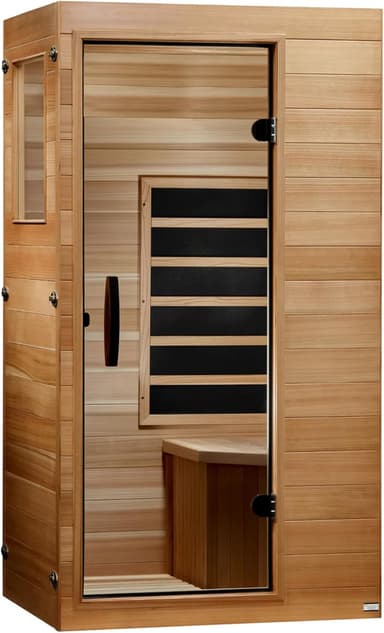
Dynamic Saunas Elite 1-Person Far Infrared Sauna with Red Light Therapy
- Clasp-together cedar assembly genuinely takes under an hour
- Ultra-low EMF panels provide safe, even far-infrared heat distribution
- Red light therapy inclusion adds real recovery value beyond basic infrared
Mental Health and Dementia Prevention
Stress reduction is the most immediately noticeable effect for new sauna users - most people feel it within the first session. The deeper mental health benefit, however, is in the long-term dementia data.
Frequent sauna use correlates with a 60%+ reduction in Alzheimer's and dementia risk. The proposed mechanisms are reduced chronic neuroinflammation and improved cerebrovascular circulation. The same vascular benefits protecting the heart appear to protect the brain.
More cognition-specific research is needed, but the existing dementia correlation data is strong enough that I factor it into every recommendation I make to clients over 50.
Sleep Quality
Body temperature drop after leaving the sauna signals the brain to initiate sleep. This is the same mechanism triggered by a warm bath before bed, amplified by the intensity of sauna heat exposure.
Regular sauna users report falling asleep faster and spending more time in deep sleep stages. For the chronic fatigue syndrome population studied in the FIR pain trials, sleep quality improvement was one of the most consistently reported outcomes.
Longevity and Stroke Risk
The longevity data builds directly on the cardiovascular research. Frequent sauna use correlates with 37-83% reductions in stroke, hypertension, heart attack, and all-cause death risk depending on the study and comparison group.
These are population-level associations, not controlled trials proving causation. But the consistency across multiple large Finnish cohort studies, combined with plausible biological mechanisms, makes the longevity link credible.
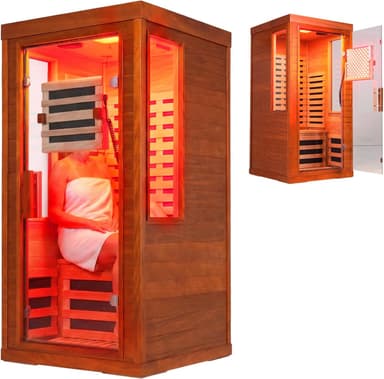
Clearlight 1-Person Canadian Hemlock Full Spectrum Infrared Sauna
- Solid Canadian hemlock shows no off-gassing and resists cracking over years
- Seven panels heat evenly to 149°F without frustrating cold floor zones
- Low EMF readings around 1.4-2.6mG offer genuine peace of mind
What Type of Sauna Delivers These Benefits - Traditional vs Infrared
Traditional Finnish saunas - wood-fired or electric, operating at 160-212°F - produce superior heat shock protein responses compared to infrared, per expert consensus. The high ambient temperature and steam from löyly (water poured on hot rocks) drives the intense thermophysiological response behind most of the longevity and CVD data.
Infrared saunas operate at 120-150°F. The FIR (far-infrared) category specifically has the best clinical evidence for heart failure symptom relief and chronic pain reduction. However, the longevity and CVD mortality data comes almost entirely from traditional sauna populations in Finland.
If you have low heat tolerance, a medical condition requiring lower temperatures, or limited space, infrared is a legitimate choice. If you want maximum alignment with the cardiovascular longevity research, a traditional barrel or cabin sauna is the better fit.
For best outdoor barrel saunas, the Sauna USA 6-person Thermo Treated Spruce (7x8 feet, $9,500) and Almost Heaven Cedar 8-person ($11,000) represent strong value. The Harvia Cilindro 6-person at $14,000 delivers even heat distribution across the full cabin but runs 20% higher electric bills versus gas-heated alternatives. For best premium barrel saunas, Harvia's 7-foot diameter models in the $8,000-$12,000 range are the benchmark I recommend most often.
Entry-level 2-person barrels from Dundalk Leisurecraft run $4,000-$6,000 installed - a reasonable starting point for a first-time buyer. Premium 6-8 person setups reach $10,000-$20,000 installed, plus $1,000-$3,000 for a quality heater like the Harvia Kivimaa 9kW.

Backyard Discovery Lennon 2-4 Person Cedar Cube Sauna
- 9kW heater reaches temperature significantly faster than budget competitors
- 5-year warranty covers heater and hardware, not just the shell
- Wi-Fi preheat control adds genuine everyday convenience
Sauna Benefits - Men and Women Specifically
Sauna benefits for men in the cardiovascular and longevity category are the best-studied, primarily because the original Finnish cohort was male. Growth hormone response, testosterone maintenance, and sperm heat sensitivity (avoid extended sessions if trying to conceive) are the key gender-specific considerations.
Sauna benefits for women include additional data on rheumatological pain reduction, skin health, and stress-related outcomes. Pregnant women should avoid saunas entirely - elevated core temperature during pregnancy carries documented fetal risks.
Safety, Dosing, and Common Mistakes
Start at 10-15 minutes at 160-175°F for the first 2 weeks. Most adverse events in sauna research happen to novices who push too long, too hot, immediately. Dizziness and hypotension are the primary risks, both preventable with proper hydration and session length management.
Hydrate with 16-32 oz of water before and after each session. Alternate 15-minute rounds with 5-10 minute cooling breaks. Pairing sauna with a cold plunge amplifies heat shock protein production by 48% - this is the protocol used in performance recovery facilities.
The most common misconception I correct: saunas do not cause fat loss. Post-session weight loss is water, replaced within hours. The metabolic boost claims lack meaningful evidence. The cardiovascular and hormonal benefits are real; the weight loss shortcut is not.
For managed autoimmune conditions like Sjögren syndrome and myocarditis, FIR research shows benefit, but these situations require physician oversight before starting any protocol.
The Bottom Line on Frequency and Results
The 10 benefits of sauna most frequently cited in clinical literature - cardiovascular protection, muscle recovery, immune support, pain reduction, respiratory clearance, sleep improvement, skin detoxification, mental health, longevity, and blood sugar management - all improve with frequency.
Two to three sessions per week produce measurable but moderate gains. Four to seven sessions per week, each over 20 minutes, produce the maximal outcomes documented in the Finnish longevity research. The Global Wellness Institute endorses this frequency range for broad risk reduction.
Owner surveys of Harvia users report an average of 5 sessions per week after the first month, with sustained energy levels cited as the primary motivation for maintaining that habit. Almost Heaven barrel owners in humid climates specifically praise the durability of cedar construction, though proper ventilation is essential to prevent mold in those environments.
Build the habit gradually, prioritize hydration, and match your sauna type to the specific benefit you are chasing. The science is clear enough that regular sauna use is one of the most accessible longevity investments available to most adults.
Frequently Asked Questions
The best sauna benefits, applicable to barrel saunas, include improved cardiovascular health, stress reduction, and muscle recovery. Regular use mimics moderate exercise by elevating heart rate and enhancing circulation, potentially lowering blood pressure and risks of heart disease per studies cited by Parikh and Li. It also promotes relaxation via endorphins, better sleep, and pain relief from conditions like arthritis, as shown in Hussain and Cohen's systematic review. Evidence is strongest for heart and recovery benefits, though more research is needed for others.
Backed by Peer-Reviewed Research
Health claims on this page are verified against peer-reviewed studies by our health editor, Dr. Maya Chen.
- Association Between Sauna Bathing and Fatal Cardiovascular and All-Cause Mortality Events
Laukkanen T, Khan H, Zaccardi F, Laukkanen JA (2015)
20-year study found frequent sauna use (4-7 times/week) was associated with 40% lower all-cause mortality.
- Cardiovascular and Other Health Benefits of Sauna Bathing
Laukkanen JA, Laukkanen T, Kunutsor SK (2018)
Regular sauna bathing reduces risk of cardiovascular disease, hypertension, and neurocognitive diseases.
- Clinical Effects of Regular Dry Sauna Bathing
Hussain J, Cohen M (2018)
Evidence supporting sauna bathing for pain conditions, chronic fatigue, and cardiovascular improvements.
Related Guides
Affiliate Disclosure - SaunasNMore earns a commission from qualifying purchases through our Amazon affiliate links. This does not affect our editorial integrity.