
How-To Guide
Sauna After Workout - Benefits, Timing, and Protocol
Post-workout sauna is having a moment. Done right, it accelerates recovery. Done wrong, it hurts your gains.
Written by Dr. Maya Chen
Wellness & Health Editor
This guide walks you through the exact protocol for using a sauna after your workout to maximize muscle recovery, reduce soreness, and build long-term cardiovascular health. You will learn the optimal timing, temperature targets, hydration requirements, and session structure used by professional athletes and physical therapists. Follow these steps precisely and you will feel a measurable difference in next-day stiffness within the first two weeks.
Before You Start
What you need:
- ●A traditional sauna (160-195°F) or infrared sauna (120-140°F)
- ●32-64 oz of water or electrolyte drink on hand
- ●A towel, clean change of clothes, and a timer
- ●A baseline fitness level - beginners should cap first sessions at 10 minutes
Time required: 20-45 minutes total, including cool-down periods
Who should consult a doctor first: Anyone with heart conditions, low blood pressure, or pregnancy should get medical clearance before starting any heat therapy protocol. Avoid sauna use entirely if you have an acute injury with active swelling or inflammation.
When to schedule it: Plan your sauna session for immediately after your workout. Waiting longer than 30 minutes reduces the recovery synergy between post-exercise blood flow and heat-driven nutrient delivery.
Step 1 - Hydrate Before You Enter
Drink 16-32 oz of water or an electrolyte drink before stepping into the sauna. Your body loses roughly 1 liter of fluid per hour in a traditional sauna at 180°F, and you have already lost significant fluid during your workout. Going in dehydrated is the single fastest way to cut your session short with headaches, cramping, or nausea.
Do not rely on thirst as your guide here. Post-exercise, your thirst mechanism lags behind your actual hydration deficit by 15-20 minutes. Drink proactively.
Electrolytes matter more than plain water for post-workout sauna use. Sodium, potassium, and magnesium are lost through sweat during both exercise and sauna sessions. A product like Liquid IV, LMNT, or even a small pinch of sea salt in your water will help maintain fluid balance and prevent muscle cramps during the session.
If your urine is dark yellow before your workout ends, hydrate aggressively and consider shortening your first sauna session to 10-12 minutes instead of the standard 15-20. Clear to pale yellow urine is your green light to proceed with a full session.
Keep your water bottle outside the sauna or in a cup holder if your unit has one. Sip 4-6 oz every 8-10 minutes during the session, not in one large drink at the end.
Pro tip: Mix a ratio of 2 parts water to 1 part electrolyte drink for post-workout sauna recovery. This ratio is what physical therapist John Gallucci, Jr. recommends for MLS athletes during recovery protocols.
Step 2 - Set the Right Temperature for Your Sauna Type
Traditional and infrared saunas require completely different temperature targets, and using the wrong setting wastes your recovery session.
For a traditional Finnish-style or barrel sauna, set your target between 160-185°F for beginners and 185-195°F for experienced users. The Almost Heaven Saunas Barrel Sauna with its 6 kW Harvia heater reaches 190°F in about 30 minutes, making it practical for home post-workout use. Preheat while you shower and cool down from your workout.
For an infrared sauna, target 120-140°F. Carbon panel infrared units like the SunRay Infrared Barrel penetrate muscle tissue at a deeper level than surface heat, which is why they produce measurable improvements in nerve recovery and lower-body power output at lower ambient temperatures. The Clearlight 1-Person Canadian Hemlock Full Spectrum Infrared Sauna is a strong option here, offering full spectrum infrared wavelengths that cover both surface and deep tissue recovery.
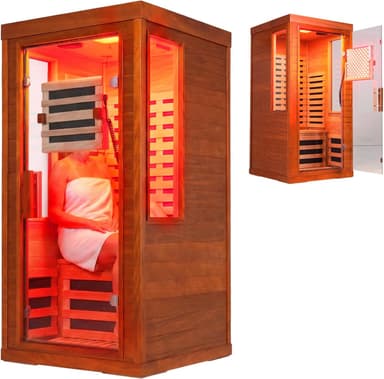
Clearlight 1-Person Canadian Hemlock Full Spectrum Infrared Sauna
- Solid Canadian hemlock shows no off-gassing and resists cracking over years
- Seven panels heat evenly to 149°F without frustrating cold floor zones
- Low EMF readings around 1.4-2.6mG offer genuine peace of mind
Do not crank the temperature higher thinking you will get faster results. At temperatures above 195°F, the cardiovascular strain outpaces the recovery benefit for most users. Stick to the ranges above.
Allow 25-40 minutes of preheat time. Entering a cold or partially heated sauna disrupts the session timing and reduces the heat shock protein response that drives recovery.
Warning: If your sauna thermometer reads above 200°F, exit and ventilate. Consumer-grade units are not designed for sustained use above that threshold.
Step 3 - Time Your Entry Immediately After Exercise
Walk into the sauna within 30 minutes of finishing your last set or your cooldown run. This timing window is critical because your blood vessels are already dilated from exercise, and the heat extends that dilation rather than forcing it from a cold baseline.
A 2006 study documented 47% less muscle soreness at the 24-hour mark when heat therapy was applied in this immediate post-exercise window compared to delayed or no heat application. That number drops substantially when you wait 60 minutes or more.
Do a 3-5 minute light stretch or walk after your workout before entering. You want your heart rate below 120 bpm when you step in. Entering with a heart rate above 130 bpm adds unnecessary cardiovascular load on top of the heat stress.
If you train in a gym, this is where a home sauna provides a major practical advantage. Gym saunas require travel, locker room time, and availability - all of which push you past that 30-minute window. Barrel sauna owners using models like the Northern Lights Cedar Barrel (which heats to 175°F in 25 minutes) report they routinely hit the 10-15 minute post-workout window simply by preheating before they train.
Pro tip: Start your sauna preheat timer when you begin your workout cooldown. By the time you change and hydrate, the unit is at temperature.
Step 4 - Structure Your Session in Rounds
Do not sit in the sauna for one unbroken 30-minute block, especially in your first four weeks. Structure your session in 2-3 rounds with cooling breaks between them.
Beginner protocol (weeks 1-4):
- ●Round 1 - 10 minutes in sauna
- ●5-minute cool-down outside
- ●Round 2 - 10 minutes in sauna
- ●Total heat exposure: 20 minutes
Intermediate protocol (weeks 5-12):
- ●Round 1 - 15 minutes in sauna
- ●5-minute cool-down
- ●Round 2 - 15 minutes in sauna
- ●Total heat exposure: 30 minutes
Advanced protocol:
- ●Up to 3 rounds of 10-15 minutes each
- ●5-10 minute cool-downs between rounds
- ●Maximum 45 minutes total heat exposure per session
The cool-down period between rounds is not optional recovery time - it serves a specific purpose. Allowing core temperature to drop slightly before re-entering drives a stronger heat shock protein response than one continuous session. Heat shock proteins are what trigger the muscle protein synthesis that rebuilds tissue damaged during training.
During cool-downs, stand or sit in a cool room or take a brief cool shower. Do not plunge into ice water between rounds post-workout, as the extreme cold contracts blood vessels and counteracts the heat-driven circulation benefit you are building.
Step 5 - Monitor Your Body Signals During the Session
Your body gives specific warning signals during sauna use, and you need to know exactly what each one means.
Normal sensations: Sweating heavily within 5-8 minutes, elevated heart rate (110-140 bpm), warmth across the chest and shoulders, mild relaxation or drowsiness after 15 minutes.
Exit immediately if you experience: Dizziness, visual changes, nausea, heart rate above 150 bpm, or sudden chills. These indicate overheating or a blood pressure drop that will not resolve by sitting still inside the sauna.
Keep a pulse oximeter or use your sauna's built-in thermometer as a reference point, but the most reliable monitor is your own perceived exertion. A session that feels like a 6 out of 10 in intensity is productive. A session that feels like a 9 out of 10 is too aggressive.
The Dynamic Saunas Elite 1-Person Far Infrared Sauna with Red Light Therapy includes integrated chromotherapy and red light panels that some users find help them stay relaxed and aware during sessions, making it easier to notice early warning signs without distraction.
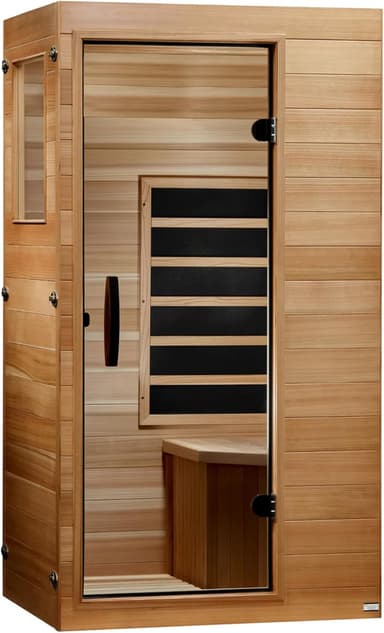
Dynamic Saunas Elite 1-Person Far Infrared Sauna with Red Light Therapy
- Clasp-together cedar assembly genuinely takes under an hour
- Ultra-low EMF panels provide safe, even far-infrared heat distribution
- Red light therapy inclusion adds real recovery value beyond basic infrared
Pro tip: Lie down or sit low in the sauna if you feel your heart rate climbing too fast. Heat rises, so the lowest position in the unit is always the coolest. Drop 6-8 inches in height and you lose 10-15°F of effective temperature exposure.
Step 6 - Cool Down and Rehydrate After Your Final Round
After your last round, give your body a structured cool-down rather than jumping straight to a cold shower. Spend 5 minutes in a cool room or standing outside in mild weather. This allows your cardiovascular system to begin returning to baseline before you shock it with cold water.
Then take a cool (not ice cold) shower to close pores and rinse sweat. Water between 65-75°F is the target range. This also signals your nervous system that the recovery stimulus is complete, which supports the parasympathetic response that drives deep tissue repair during sleep.
Rehydrate immediately with 16-24 oz of water or electrolyte drink. Eat a recovery meal or snack with 25-40 grams of protein within 45 minutes of finishing your sauna session. The heat therapy has primed your muscle cells for amino acid uptake, and feeding that window compounds the recovery effect.
The Dynamic Saunas Elite 1-Person Far Infrared Sauna (standard model) is a practical option for solo home users who want reliable post-workout infrared sessions without the premium price of full-spectrum units.
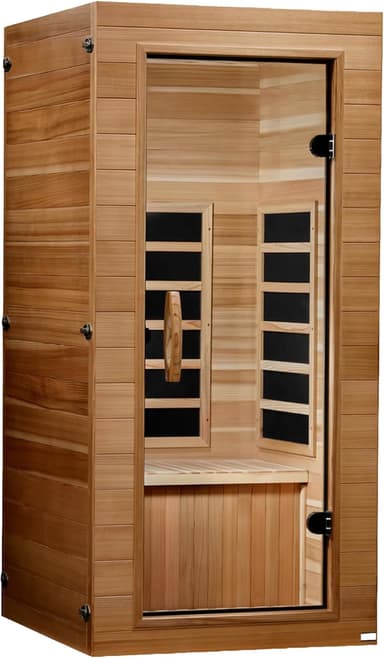
Dynamic Saunas Elite 1-Person Far Infrared Sauna
- Clasp-together assembly genuinely takes under an hour for most people
- Ultra-low EMF panels provide even, safe far-infrared heat distribution
- Red light therapy integration adds real wellness value beyond basic heat
Track how you feel 24 hours later. Most users using a consistent protocol report 15-25% less next-day stiffness within the first 2 weeks.
Step 7 - Build a Weekly Sauna Schedule
Start with 2 sessions per week tied to your two hardest training days. Do not use the sauna after every workout in week one. Your body needs time to adapt to the combined stress of exercise and heat before you layer in more frequency.
Weeks 1-4: 2 sessions per week, 20 minutes total heat exposure each
Weeks 5-8: 2-3 sessions per week, 30 minutes total heat exposure each
Long-term maintenance: 3 sessions per week, aligned with Finnish research linking this frequency to measurably lower cardiovascular disease and stroke risk over 20-year follow-up periods
Pair sauna days with leg training, HIIT sessions, or long endurance workouts - the training modalities that produce the most muscle damage and the most to gain from enhanced recovery. Save your rest days as actual rest days without heat exposure.
Common Mistakes to Avoid
Using the sauna before your workout - This raises core temperature prematurely, reduces exercise output, and increases injury risk. Heat exposure belongs after training, not before.
Staying in longer than 30 minutes as a beginner - Sessions beyond 30 minutes produce diminishing recovery returns and exponentially higher dehydration risk. Beginners should cap at 20 minutes total for the first month.
Confusing water weight loss with fat loss - A 20-minute session drops 1-2 lbs of water weight. This is not fat. Expecting permanent weight loss from sauna sessions alone leads to disappointment and overuse.
Skipping the cool-down between rounds - Moving directly from round to round without cooling builds heat load faster than your cardiovascular system can manage safely.
Using a sauna with an acute injury - Active swelling and inflammation respond poorly to heat in the first 48-72 hours after an acute injury. Use ice and compression first, then introduce heat once the acute phase passes.
Assuming infrared and traditional saunas are interchangeable - They produce different physiological effects. Traditional saunas better replicate cardiovascular stress and acute heat shock. Infrared penetrates deeper for nerve and chronic muscle recovery. Choose based on your training type, not convenience alone.
Next Steps
Start your first session this week on your hardest training day. Run the beginner protocol - two 10-minute rounds with a 5-minute cool-down - and log how your legs feel 24 hours later.
After four consistent weeks, reassess your protocol and increase to 15-minute rounds if you tolerated the shorter sessions without dizziness or excessive fatigue.
If you are shopping for a home unit, measure your available outdoor space before committing to a barrel sauna. Standard 4-person barrel models run approximately 7 feet in length and 6 feet in diameter. A 10x10 foot patio area is the minimum practical footprint when you include entry clearance.
Read our full comparison of infrared vs. traditional saunas for recovery to identify which technology matches your specific training goals. And review our home sauna buyer's guide before making a purchase decision on any unit above $3,000.
Frequently Asked Questions
The best post-workout benefit of a barrel sauna is accelerated muscle recovery, as its wood-fired heat boosts blood flow to deliver oxygen and nutrients while flushing waste, reducing soreness by up to 47% within 24 hours per a 2006 study. It also relieves muscle tension, cuts inflammation, and enhances endurance markers like VO2max, similar to infrared saunas in studies by Dalleck. Sessions of 20-30 minutes maximize these effects without drawbacks for most users.
Related Guides
Affiliate Disclosure - SaunasNMore earns a commission from qualifying purchases through our Amazon affiliate links. This does not affect our editorial integrity.