
How-To Guide
How to Use a Sauna - Complete Beginner's Guide
Your first sauna session should not be stressful. This guide walks you through every step with confidence.
Written by Erik Nordgren
Senior Sauna Reviewer
This guide walks you through your first sauna session from preheat to post-session recovery. Follow these steps and you will build heat tolerance safely, avoid the most common beginner mistakes, and set yourself up for long-term sauna practice.
Before You Start
Time required: 60-90 minutes total, including preheat, your session, and recovery
What you need:
- ●Two large towels (one to sit or lie on, one for drying)
- ●16-32 oz of water to drink before entering
- ●Flip flops or sandals for the floor outside the cabin
- ●A timer or watch
Prerequisites: No prior experience needed. If you have cardiovascular conditions, low blood pressure, or are pregnant, check with your doctor before your first session. Do not use a sauna after drinking alcohol or taking sedatives.
Plan for your first full session to run about 60 minutes when you include preheat time, the session itself, cooling rounds, and rest. Budget more time rather than less - rushing defeats the purpose.
Step 1 - Preheat the Cabin
Set your sauna to 150-160°F for your first session. Most modern saunas with a digital control panel or app need 30 minutes to reach target temperature, so start the preheat before you shower or prep anything else.
Do not skip this step or cut it short. Stepping into an under-heated sauna feels uncomfortable in a different way - the air feels humid and stale rather than clean and dry. A fully preheated cabin produces the consistent, enveloping heat that makes the experience work.
If you are using a traditional Finnish-style barrel sauna, preheating may take slightly longer due to the dense wood mass. Canadian hemlock and cedar barrel saunas like the Smartmak models retain heat extremely well once up to temperature, so the wait pays off. Check your manufacturer's manual for the specific preheat window for your unit.
Set a timer so you are not guessing. Walk away, drink a glass of water, and let the cabin do its work.
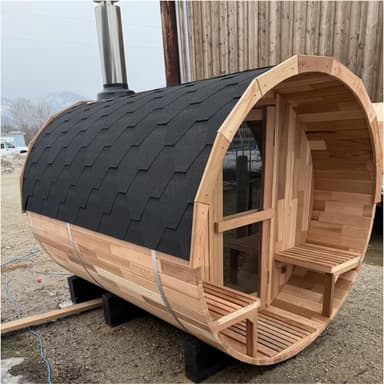
Smartmak 2-10 Person Canadian Hemlock Barrel Sauna
- Barrel shape genuinely improves heat distribution compared to box saunas
- Real red cedar and hemlock construction should last 15-plus years with care
- ETL-certified heater hits 195°F - legitimately hot for authentic steam sessions
Pro tip: Place your towel inside the cabin during preheat so it is warm when you enter. A cold towel on a hot bench feels jarring.
Step 2 - Shower and Hydrate Before Entering
Take a quick warm shower and dry your skin completely before entering the cabin. This is not optional hygiene theater - dry skin sweats faster and more efficiently than moist skin. The rinse opens your pores and removes lotions, deodorants, and skin oils that would otherwise burn off inside the cabin and create unpleasant smells.
After drying, drink one to two glasses of water (8-16 oz). This establishes your hydration baseline before you start sweating. You will lose more fluid than you expect in even a short session.
Do not eat a large meal in the 90 minutes before your session. A light snack is fine. A full stomach combined with intense heat forces your body to redirect blood flow in competing directions, which causes nausea faster than heat alone.
Leave your phone outside the cabin. The heat damages electronics, and the whole point of this practice is to be away from screens for 10-20 minutes.
Warning: Never enter a sauna after drinking alcohol. Alcohol impairs your ability to recognize overheating signals and significantly increases cardiovascular risk.
Step 3 - Enter and Choose Your Position
Step inside quickly and shut the door behind you in one smooth motion. Every second the door is open drops the cabin temperature and forces the heater to work harder to recover. Get in, get seated, close the door.
For your first session, sit on the lower bench. Heat rises, so the upper bench in a two-tier cabin can run 20-30°F hotter than the lower bench at the same thermostat setting. Lower bench at 150°F is a completely different experience from upper bench at 150°F.
Place your towel down before sitting. Direct skin contact with the wood is uncomfortable and unhygienic. The towel also protects the wood from sweat buildup over time.
If you have room to lie down on the lower bench, do it. Lying flat distributes heat evenly across your body and reduces the cardiovascular load compared to sitting upright. This is the gentlest position for beginners.
Pro tip: Keep your feet elevated at bench level rather than dangling toward the floor. Feet on the floor experience significantly cooler temperatures, which throws off your body's ability to regulate heat evenly.
Step 4 - Run Your First Session - 5 to 10 Minutes
Set a timer for 8 minutes and stay in until it goes off - or exit earlier if your body tells you to. First sessions should run 5-10 minutes. Full stop. You do not need to push to 20 minutes on day one to get the benefits.
Practice slow, deep breathing throughout. The hot air will feel sharp at first on your airways. Breathe through your nose when possible - it conditions the air slightly before it reaches your lungs. Your body will adapt within 2-3 minutes and the breathing will normalize.
Watch for these exit signals: dizziness, nausea, heart pounding uncomfortably hard, or a sudden feeling of weakness. Any of these means exit immediately and cool down. These are not signs to push through.
In the last 2 minutes before your timer goes off, move to the lowest bench or floor level if you were higher up. This lets your circulatory system adjust to the upright position before you stand and open the door. Standing too fast from a hot upper bench causes blood pressure drops and dizziness.

Customizable 1-6 Person Canadian Cedar Infrared Steam Barrel Sauna
- Genuine Canadian cedar delivers fragrance, durability, and natural corrosion resistance
- Barrel shape eliminates cold corner dead zones for even heat distribution
- Wide size range accommodates solo sessions or full family use comfortably
Warning: Do not lock or latch the sauna door from inside. You need to be able to exit immediately if needed.
Step 5 - Cool Down Between Rounds
Exit the cabin and cool down for 5-10 minutes before your next round. This cooling phase is not a break between the "real" parts of the session - it is half the session. The contrast between heat and cold drives the circulatory response that produces most of the physical benefits.
Start cooling from the extremities and work toward the core. The traditional method starts with cold water at the right ankle, moves up the legs, then the arms, then the torso. This gives your cardiovascular system time to adjust rather than hitting your chest with cold water while your heart rate is still elevated.
Cold water is better than lukewarm. Lukewarm water diminishes the physiological response. A cold shower, outdoor air exposure, or a plunge pool all work. If you are outdoors and it is winter, standing in cool air is enough for beginners.
Do not rush back into the cabin. Sit, rest, and let your heart rate drop close to normal before the next round.
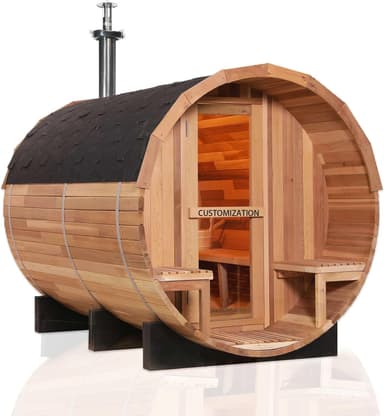
Smartmak 2-8 Person Outdoor Barrel Sauna
- Genuine customization across size, wood species, and heater brand
- Barrel geometry heats evenly and efficiently to 195°F
- Premium wood options including aromatic red cedar justify the price
Pro tip: Outdoor barrel saunas make this step easier - you step outside directly into cooler air. The contrast is built into the setup.
Step 6 - Complete 2 to 3 Rounds
A full beginner session consists of 2-3 rounds of heat exposure, each separated by a cooling and rest period. Your structure should look like this:
- ●Round 1: 8-10 minutes in the cabin, lower bench
- ●Cooling: 5-10 minutes
- ●Round 2: 10-12 minutes, try the upper bench briefly if comfortable
- ●Cooling: 5-10 minutes
- ●Round 3 (optional): 10-15 minutes
Multiple short rounds beat one long round every time. A single 30-minute session without breaks overloads your cardiovascular system and produces more exhaustion than benefit. The round structure gives your body time to process the heat load and respond.
By round two, you can experiment with ladling water onto the sauna rocks to create steam (called löyly in Finnish). Start with a small ladle - about 2-3 oz of water. The steam spike raises perceived heat significantly even if the thermostat temperature stays the same.
Experienced practitioners also use a vihta - a bundle of birch, eucalyptus, or oak twigs - to lightly beat and massage the skin. This increases circulation to the skin surface and leaves a pleasant scent. Skip it for your first session and add it in week two or three once the basic routine feels comfortable.
Step 7 - Finish and Rehydrate
After your final cooling period, take a full warm shower to rinse sweat from your skin. Then dry off, dress, and sit somewhere comfortable for 15-20 minutes before resuming normal activity.
Drink at least 1 liter (32 oz) of water or an electrolyte drink in the hour after your session. Plain water works fine. If you feel flat or fatigued after sessions consistently, add electrolytes - you may be losing more sodium and potassium than water alone replaces.
Eat a light meal within 1-2 hours if you are hungry. Sauna use increases metabolism temporarily, and your body will want fuel for recovery.
Do not plan strenuous exercise immediately after a session. Your cardiovascular system has already done significant work. A walk is fine. A max-effort workout is not.
Common Mistakes to Avoid
Starting too long and too hot. 150°F for 8 minutes is not inadequate - it is correct for week one. Beginners who push to 190°F for 25 minutes on their first visit feel terrible afterward and do not come back.
Sitting through warning signs. Dizziness, nausea, and heart pounding are exit signals, not milestones to outlast. Ignoring them puts real strain on your cardiovascular system.
Skipping the cool-down rounds. The contrast between heat and cold is the mechanism. Doing heat-only sessions and skipping the cooling phase cuts the benefit in half.
Not drinking water before the session. Entering dehydrated means you hit your limit faster and feel worse in recovery. Drink before, not just after.
Opening the door slowly. A long, slow door open dumps heat. Enter and exit in one quick motion and close immediately.
Drinking alcohol before or during a session. This one is worth repeating because it is the most dangerous mistake on the list.
Next Steps
For your first two weeks, stick to once or twice per week. Let your body adapt between sessions. After 4-6 sessions, your heat tolerance will increase noticeably and you can start extending round durations toward 15-20 minutes.
At the one-month mark, 3-4 sessions per week is a reasonable target if your schedule allows. Many regular users settle at 4 sessions per week as their long-term practice.
As you get more comfortable, experiment with upper bench positioning, steam rounds with the ladle, and different cooling methods like cold plunge pools or outdoor immersion. The basic structure stays the same - heat, cool, rest, repeat - but the variables keep the practice interesting over years of use.
Your first session will feel like a lot. By session five, it will feel like a habit.
Frequently Asked Questions
Start with a shower and hydration before entering, then spend 5-15 minutes on a lower bench for your first round, focusing on slow breathing as your body adjusts to the heat. After exiting, cool down with a cold shower and rest for 30-45 minutes, then repeat for 1-2 additional rounds of similar duration. Maximize benefits by staying hydrated throughout, lying down to expose your whole body evenly to heat, and exiting immediately if you experience dizziness or nausea.
Related Guides
Affiliate Disclosure - SaunasNMore earns a commission from qualifying purchases through our Amazon affiliate links. This does not affect our editorial integrity.