
How-To Guide
How Often Should You Use a Sauna - Frequency Guide
Laukkanen found a dose-response effect. More sessions per week, more benefits - up to a point. Here is the sweet spot.
Written by Dr. Maya Chen
Wellness & Health Editor
This guide walks you through building a sauna routine that matches your experience level and health goals. You will learn exactly how often to use a sauna based on the research, your body's current tolerance, and what you want to achieve. By the end, you will have a clear weekly schedule and the knowledge to adjust it safely over time.
Before You Start
What you need:
- ●Access to a sauna (home barrel, gym, or spa)
- ●A reliable thermometer to verify cabin temperature
- ●A 500ml water bottle minimum per session
- ●A timer or watch
- ●A journal or app to log sessions (optional but recommended)
Time to build your routine: Allow 4-6 weeks to progress from beginner to intermediate frequency.
Prerequisites: If you have a heart condition, low blood pressure, or are pregnant, stop here and consult your physician before any sauna use. Healthy adults with no cardiovascular contraindications can follow this guide as written.
Step 1 - Assess Your Current Experience Level
Before setting a weekly frequency, you need to place yourself honestly in one of three categories. Getting this wrong in either direction, either underestimating your tolerance or overestimating it, leads to poor results or safety risks.
Beginner means you have fewer than 8-10 total sauna sessions under your belt, or you have not used one in more than six months. Your target is 1-2 sessions per week at 70-80°C (160-175°F), with each session lasting only 5-10 minutes. This is not a place to push through discomfort. Heat tolerance is a physiological adaptation that takes real time.
Intermediate means you use a sauna consistently and can sit comfortably at 80-90°C (175-195°F) for 15-20 minutes without feeling dizzy or exhausted. Your target range is 2-4 sessions per week.
Experienced means you have been using a sauna regularly for at least six months, handle 80-100°C (175-212°F) easily, and complete 2-3 rounds with cooling breaks between them. Four to seven sessions per week is appropriate at this level.
Write down your category before moving to Step 2. Be honest. Jumping from zero to daily use is one of the most common mistakes people make, and the Finnish researchers behind the Laukkanen et al. 20-year cohort study built their frequency recommendations around adapted, regular users, not newcomers.
Step 2 - Match Your Frequency to Your Primary Goal
Frequency is not one-size-fits-all. The right number of sessions per week depends heavily on what you are actually trying to accomplish.
Cardiovascular health and longevity demand the highest frequency. The Laukkanen et al. data from a 20-year Finnish cohort shows that using a sauna 4-7 times per week cuts cardiovascular mortality risk by 40-70% compared to once-weekly use. If this is your goal, work toward 4-7 sessions weekly at 15-20 minutes each.
Muscle recovery for athletes is best supported by 3-5 sessions per week, scheduled post-workout. Heat exposure in this range reduces delayed onset muscle soreness (DOMS) and systemic inflammation. Pair every session with aggressive hydration.
Stress reduction and sleep improvement respond well to 2-4 sessions per week, ideally in the evening. Heat exposure lowers cortisol and triggers the drop in core body temperature after cooling that signals deep sleep onset.
General wellness with no specific target is well served by 2-3 sessions per week. A 2015 European Journal of Preventive Cardiology study confirmed that this frequency alone produces measurable reductions in cardiovascular disease risk.
Use the table below as your reference:
| Goal | Weekly Frequency | Duration Per Session |
|---|---|---|
| Cardiovascular - Longevity | 4-7x | 15-20 min |
| Athlete Recovery | 3-5x | 15-20 min |
| Stress - Sleep | 2-4x | 15-20 min |
| Beginner - Adaptation | 1-2x | 5-10 min |
Step 3 - Build Your First Four Weeks
Progression matters more than starting frequency. Four to six weeks of gradual adaptation protects you from dehydration, dizziness, and cardiovascular strain while building genuine heat tolerance.
Week 1-2: One session per week, 8-10 minutes, at 70-75°C (160-167°F). No exceptions, even if you feel fine and want more. Your body is adapting at a cellular level regardless of how you feel on the surface.
Week 3-4: Move to two sessions per week. Extend duration to 12-15 minutes. Raise temperature to 80°C (175°F) if your body is responding well, meaning no headaches, no unusual fatigue, and no dizziness after sessions.
Week 5-6: Intermediate users can now move to 3 sessions per week at 15-20 minutes. Those targeting cardiovascular benefits long-term can begin adding a fourth session.
Drink 500ml of water before every session and another 500ml within 30 minutes after. Weigh yourself before and after one session to understand your sweat rate. Most people lose 0.5-1kg per 20-minute session at 90°C.
Log each session. Note temperature, duration, how you felt during, and energy levels 2-3 hours later. This data becomes valuable in Step 5.
Step 4 - Structure Each Session Correctly
Frequency only produces results when individual sessions are structured properly. A poorly run daily session is less effective than a well-run session three times per week.
For intermediate and experienced users, the Finnish multi-round format produces the best outcomes. Enter the sauna for 15-20 minutes. Exit and cool down with cold water immersion, a cold shower, or simply sitting in cool air for 5-10 minutes. Re-enter for a second round. Two to three rounds per session is standard for experienced users targeting cardiovascular and recovery benefits.
Keep total session time, including cooling breaks, under 90 minutes. Maximum single-round duration is 30 minutes, even for experienced users. The Laukkanen data showing 40-70% cardiovascular mortality reduction was built on 15-20 minute sessions, not marathon 45-minute stretches.
Temperature matters. Most barrel saunas in the 6-person range hold 90-100°C (194-212°F) with a quality heater. If your sauna is not reaching and holding target temperature, you are not getting the thermal load the research was built on. For high-frequency users running 4+ sessions per week, a well-built cedar barrel with a rated heater is not optional equipment, it is the foundation of your routine.

Panoramic 6-Person Canadian Red Cedar Barrel Sauna
- Triple waterproofing system meaningfully outperforms single-layer barrel competitors
- Barrel design circulates heat evenly and reaches 195°F in 30 minutes
- Canadian red cedar construction resists humidity-driven warping reasonably well
Step 5 - Read Your Body's Signals and Adjust
No weekly schedule survives contact with real life and real physiology without adjustment. Learning to read your body's feedback is what separates people who sustain a long-term sauna practice from those who burn out or get hurt.
Green signals - you are recovering well and can maintain or increase frequency:
- ●Normal energy levels 2-3 hours post-session
- ●Quality sleep the night of a sauna session
- ●Muscle soreness resolving faster than without sauna use
- ●No headaches during or after sessions
Yellow signals - hold frequency, do not increase:
- ●Mild fatigue the day after a session
- ●Slightly elevated resting heart rate in the morning
- ●Thirst that is hard to manage
Red signals - reduce frequency immediately and take 2-3 rest days:
- ●Persistent headaches during or within 2 hours after sessions
- ●Dizziness on standing after a session
- ●Deep fatigue lasting into the following day
- ●Nausea during heat exposure
Finnish sauna culture, which the Laukkanen research specifically studied, includes rest days built into the weekly schedule. Even experienced users who sauna 4-5 times per week treat the remaining days as genuine recovery time. You do not earn extra benefit from pushing through red signals.
Step 6 - Scale Up to Your Target Frequency Over 8-12 Weeks
Once you have completed the four-week foundation in Step 3 and your body signals are consistently green, you can scale toward your goal frequency from Step 2.
Add one session per week every two weeks. This pacing allows cardiovascular and thermoregulatory adaptation to keep up with your schedule. Moving from 2 sessions to 4 sessions per week should take four weeks, not four days.
For those targeting 4-7 sessions per week for cardiovascular benefits, 8-12 weeks of total build time from beginner to that frequency is realistic. Athletes already in strong cardiovascular condition progress faster, closer to the 8-week end. Sedentary beginners should target the 12-week end.
At 4+ sessions per week, your equipment matters significantly. Portable or entry-level barrel saunas rated for occasional use will degrade faster under high-frequency use. Owners running 4-7 sessions weekly consistently report that 8-foot thermowood or Canadian red cedar barrels in the $6,000-$8,000 range hold temperature reliably and tolerate daily use without structural degradation over 10+ years. The cost amortizes to roughly $10 per session for 4 sessions weekly over five years, which is competitive with gym sauna access.
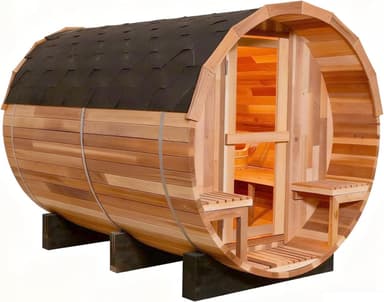
TOULE 6-8 Person Canadian Red Cedar Barrel Sauna
- Barrel shape eliminates uneven heat and shortens warm-up time noticeably
- Canadian Red Cedar resists moisture, rot, and handles temperature swings well
- Triple waterproofing system is more thorough than most competitors offer
For users who prefer an indoor or square-format sauna for high-frequency use, a fixed installation with a premium heater like the Harvia produces the consistent 175-195°F range that research-backed sessions require.

Cedar Square 6-Person Outdoor Sauna with Harvia Heater
- Canadian Red Cedar resists rot, warping, and holds up beautifully outdoors
- Harvia heater is a trusted, ETL-certified brand worth having in any sauna
- Six-person capacity with real usable floor space, not just a claimed number
Step 7 - Maintain Consistency and Prevent Frequency Fatigue
Reaching your target frequency is only half the work. Maintaining it over months and years requires deliberate strategy to prevent the burnout that sauna forum users consistently report at 7 sessions per week without structured breaks.
Schedule your sessions in advance, the same way you schedule workouts. Decide whether each session is a post-workout recovery session, an evening wind-down for sleep, or a morning cardiovascular session. Varying the purpose keeps the practice from becoming monotonous.
Take one planned rest day per week minimum, even at the 6-7 session frequency level. The Finnish studies showing maximum cardiovascular benefit did not specify that all seven days required sauna use. They tracked users who sauna bathed 4-7 times weekly, and many of those users had natural off days built in.
Every 8-10 weeks, drop back to 2-3 sessions per week for one week. This deload period prevents accumulated fatigue and resets your sensitivity to heat. Users who skip deload weeks report the sluggishness and diminishing enjoyment that pushes people to abandon the practice entirely.
Rehydration is not negotiable at any frequency level. Exceeding five sessions per week without consistent pre- and post-session hydration raises genuine risk of chronic mild dehydration, which undermines the cardiovascular benefits you are trying to build.
Common Mistakes to Avoid
Starting at full frequency - Going straight to 5-7 sessions per week with no adaptation period is the single most common error. Heat tolerance takes weeks to develop. Starting slow is not weakness, it is physiology.
Treating all sessions equally - A 30-minute single session once per week is not equivalent to four 15-minute sessions. The Laukkanen data is explicit: frequency produces dose-dependent benefits that duration alone does not replicate.
Skipping hydration because you feel fine - Dehydration from sauna use is cumulative. You do not feel it acutely in a single session. At 3+ sessions per week without deliberate rehydration, it adds up fast.
Ignoring rest days at high frequency - Forum reports from sauna enthusiasts repeatedly document sluggishness, disrupted sleep, and reduced performance at unbroken 7-day weekly schedules. Build rest in deliberately.
Using temperature as a status symbol - Sitting at 100°C (212°F) when 80°C (175°F) is your genuine limit produces discomfort, not better results. The research benefits are tied to sustained heat exposure at a safe individual threshold, not the highest temperature available.
Comparing your frequency to others - A sedentary 55-year-old and a trained endurance athlete do not have the same starting tolerance. Individual response to heat stress varies significantly. Use your own body signals as the primary guide.
Next Steps
Start this week with an honest assessment of your experience level and write down your primary goal from Step 2. Block your first 1-2 sessions on your calendar as fixed appointments, not optional extras.
At the four-week mark, review your session log from Step 3. If your body signals have stayed green consistently, add one session per week and continue adding every two weeks until you reach your target frequency.
If you are planning to increase your session frequency significantly, evaluate your current sauna setup. Equipment that cannot hold consistent temperature or that degrades under regular use will limit your results and cost more in repairs than a quality build would have upfront.
The research behind sauna frequency recommendations is some of the most consistent in preventive health literature. A 20-year cohort study does not leave much room for doubt. The only variable left is showing up regularly, building the habit systematically, and maintaining it long enough for the dose-dependent benefits to compound.
Frequently Asked Questions
For barrel saunas (traditional hot air types), use 3-7 times per week for 15-20 minutes per session to optimize cardiovascular benefits, as a Finnish study in JAMA Internal Medicine (Laukkanen et al., 2015) linked 4-7 sessions weekly to 40% lower all-cause mortality risk. Beginners should start with 2-3 sessions of 5-10 minutes at 160-200°F, gradually increasing while staying hydrated and listening to your body. Consult a doctor if you have health conditions, as individual tolerance varies.
Related Guides
Affiliate Disclosure - SaunasNMore earns a commission from qualifying purchases through our Amazon affiliate links. This does not affect our editorial integrity.