
How-To Guide
How Long Should You Sit in a Sauna - Session Duration Guide
Session duration matters more than temperature for most health benefits. Here is how long you should actually stay.
Written by Dr. Maya Chen
Wellness & Health Editor
This guide walks you through exactly how long to sit in a sauna based on your experience level, goals, and the type of sauna you're using. By the end, you'll have a clear session structure - rounds, breaks, and total time - that maximizes benefits without risking heat exhaustion or dehydration.
Before You Start
What you need:
- ●A working sauna preheated to your target temperature (150-195°F for dry sauna, 110-120°F for steam)
- ●At least 1 liter of water nearby for post-session hydration
- ●A timer (phone works fine)
- ●A towel and dry skin before entering - showering beforehand speeds up sweating, but dry off completely first
Time estimate: 30-90 minutes total depending on experience level and number of rounds
Prerequisites: No acute illness, no pregnancy, no unmanaged heart conditions. If you're on medications or have cardiovascular concerns, clear sauna use with your physician before starting.
Know your experience level before you begin. Someone who has done 1-5 sessions responds very differently to heat than a regular user with months of consistent sessions under their belt.
Step 1 - Identify Your Experience Level
Before you set a timer, you need an honest assessment of where you fall on the experience spectrum. The three tiers are beginner (1-5 total sessions), intermediate (5-10+ sessions with consistent use), and advanced (regular sessions, multiple times per week for months or longer).
This matters because sauna tolerance is physiological, not just mental. Your cardiovascular system, sweat glands, and core temperature regulation all adapt over repeated exposure. A beginner who ignores this and targets 20-minute rounds is not getting more benefit - they're inviting dizziness, nausea, and heat exhaustion.
Here's the baseline target for each level:
- ●Beginners - 5-10 minutes per round, 2-3 rounds, 15-30 minutes total
- ●Intermediate - 10-15 minutes per round, 3 rounds, 30-45 minutes total
- ●Advanced - 15-20 minutes per round, 3-4 rounds, 45-60 minutes total
If you're unsure, default to beginner. You can always add time in your next session.
Pro tip: Round 1 of any session is always shorter than later rounds, regardless of experience. Corso Saunamanufaktur's protocol specifically starts at 8-10 minutes for round one, then extends to 15 minutes in subsequent rounds once the body is acclimated to that session's heat load.
Step 2 - Preheat to the Right Temperature
Session duration and temperature are directly linked. Hotter saunas require shorter rounds. Cooler saunas allow longer stays without the same cardiovascular strain.
For a dry sauna, target 150-195°F (66-91°C). Finnish-style protocols from Sauna House typically run 176-212°F (80-100°C). Never exceed 212°F. Steam rooms run much cooler at 110-120°F but operate at 100% humidity, which intensifies perceived heat and limits safe duration to 10-15 minutes per round regardless of your experience level.
Allow 30-45 minutes for a quality heater to fully saturate the room. A Harvia heater - standard in many mid-to-high-range models - reaches target temps reliably within that window and holds them steady.
Warning: Entering an underheated sauna and waiting inside while it climbs to temperature adds uncontrolled time to your heat exposure. Always preheat fully before your session clock starts.
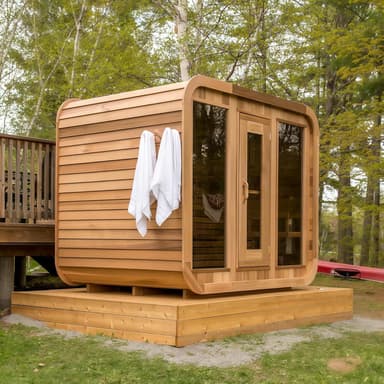
Cedar Square 6-Person Outdoor Sauna with Harvia Heater
- Canadian Red Cedar resists rot, warping, and holds up beautifully outdoors
- Harvia heater is a trusted, ETL-certified brand worth having in any sauna
- Six-person capacity with real usable floor space, not just a claimed number
Step 3 - Structure Your Session in Rounds, Not One Long Block
The single most important structural change most beginners get wrong is treating a sauna session as one continuous block of time. It's not. It's rounds with intentional cooling breaks between them.
This structure matters for two reasons. First, it lets your core temperature drop enough between rounds to safely re-enter and continue. Second, contrast therapy - alternating heat with cold exposure via cold shower, cold plunge, or simply cool air - adds measurable recovery benefits including improved circulation and reduced muscle soreness.
A standard 3-round session looks like this:
- ●Round 1 - Shorter than your target max (e.g., 8-10 minutes for intermediates)
- ●Cooling break - 5-15 minutes outside the sauna; cold shower optional but recommended
- ●Round 2 - At your target duration (e.g., 12-15 minutes for intermediates)
- ●Cooling break - Same as above
- ●Round 3 - At your target duration or slightly shorter if fatigue sets in
Rest for 30-45 minutes after the final round before any strenuous activity.
Pro tip: The Rhonda Patrick-referenced Finnish cardiovascular research links rounds exceeding 19 minutes to significantly stronger all-cause mortality reductions compared to rounds under 11 minutes. This only applies to intermediate and advanced users who have built genuine heat tolerance - not to beginners who push duration without acclimation.
Step 4 - Set and Watch Your Timer
Once you're inside, set a hard timer for your round target. Do not guess. Heat impairs time perception - 10 minutes can feel like 5 or 25 depending on fatigue and hydration status.
For beginners, set your timer for 5 minutes on the first session and add 1-2 minutes per subsequent session until you reach 10 minutes comfortably. Do not push to 10 minutes in session one because you feel fine. Heat stress accumulates and you may not feel the effects until after you exit.
Intermediate users working toward cardiovascular benefits should target rounds of 10-15 minutes. Research from the Kuopio Ischemic Heart Disease study, which tracked Finnish men over years, showed that sessions of 19+ minutes done 4-7 times per week were associated with a 40% reduction in all-cause mortality versus short, infrequent sessions.
Hard cap: 20-30 minutes is the ceiling for any single round per both Healthline's review of American College of Sports Medicine guidelines and the American Sauna Society. Beyond 30 minutes, dehydration, electrolyte loss, and cellular heat stress outweigh any additional benefit.
Exit immediately if you feel dizzy, lightheaded, or nauseous - do not wait for your timer.
Step 5 - Hydrate Before, During, and After
Hydration is not optional and it directly affects how long you can safely sit in a sauna. Insufficient water intake cuts your safe session time and increases the risk of heat exhaustion even within normal time ranges.
The baseline rule is simple: drink at least 1 liter of water after each session. For longer 3-4 round sessions totaling 45-60 minutes, bump that to 1.5-2 liters and consider an electrolyte supplement since you're losing sodium and potassium alongside fluids.
Do not bring alcohol into the sauna. Alcohol accelerates dehydration and masks the warning signs of heat stress that would normally prompt you to exit.
Timing: Drink 500ml of water in the 30 minutes before your session. Avoid large meals in the 1-2 hours prior - digestion and sauna heat compete for blood flow in ways that cause discomfort.
Step 6 - Match Duration to Your Specific Goal
Not all sauna sessions have the same purpose, and your goal should shape your duration targets within the safe limits for your experience level.
Cardiovascular health and longevity: Aim for 3 rounds of 15-20 minutes at 176-212°F, 4-7 times per week. This frequency and duration range maps directly to the 27-50% cardiovascular risk reduction findings in the research literature.
Post-workout recovery: 15-20 minutes after training reduces muscle soreness and supports recovery. One round is sufficient here - you don't need a full multi-round session after an already demanding workout.
Growth hormone release: This protocol is demanding and not for beginners. It calls for 4 rounds of 30 minutes at 80-100°C, once per week. This is the ceiling of safe sauna use and should only be attempted by advanced users with established heat tolerance.
General relaxation and stress reduction: 2 rounds of 10-15 minutes is enough. No need to push duration when the goal is parasympathetic activation and mental recovery.
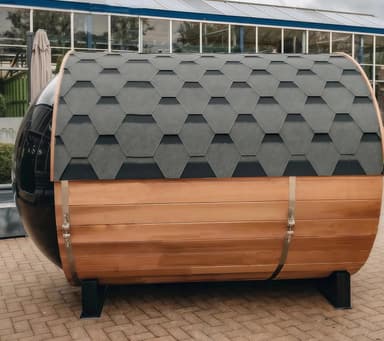
Panoramic 6-Person Canadian Red Cedar Barrel Sauna
- Triple waterproofing system meaningfully outperforms single-layer barrel competitors
- Barrel design circulates heat evenly and reaches 195°F in 30 minutes
- Canadian red cedar construction resists humidity-driven warping reasonably well
Step 7 - Adjust Duration for Your Sauna Type
If you're using a barrel sauna specifically, you'll likely find you can sustain your target round durations more comfortably than in a box-style unit. Barrel geometry creates more even heat distribution with fewer hot spots near the heater, which means your body heat load is more consistent throughout the round.
Forum reports from sauna owners consistently note sessions running about 20% longer in barrel units before fatigue sets in, attributed to better ventilation and heat circulation. Premium barrel models from brands like Redwood Outdoors ($12,000+) also hold heat longer between rounds, reducing re-preheat time and keeping your total session tighter.
Entry-level barrel saunas in the $2,000-$3,000 range sometimes produce uneven heat that creates hot spots, which can cut safe round duration down to 10 minutes or less. Budget options in the $4,000-$7,000 range from brands like Almost Heaven are reliable for 10-15 minute intermediate sessions. Models in the $8,000-$15,000 range with Harvia heaters and quality cedar construction are the ones that genuinely support 15-20 minute advanced rounds.
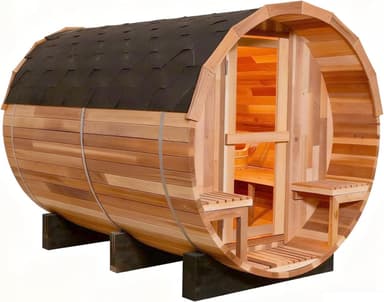
TOULE 6-8 Person Canadian Red Cedar Barrel Sauna
- Barrel shape eliminates uneven heat and shortens warm-up time noticeably
- Canadian Red Cedar resists moisture, rot, and handles temperature swings well
- Triple waterproofing system is more thorough than most competitors offer
Common Mistakes to Avoid
Treating longer as automatically better. Past 20 minutes per round, benefits plateau for most users. Thirty-plus minute single rounds cause headaches in roughly 1 in 3 users per sauna community reports - not because those users are weak, but because the dose-response curve flattens and risk rises.
Skipping cooling breaks. Sitting in a sauna for 45 consecutive minutes without breaks is not the same as 3 rounds of 15 minutes with cooling breaks. The latter is safer, more effective, and something the research supports. The former is an endurance test with diminishing returns.
Pushing beginner rounds to 20 minutes. New users building to 5-minute sessions and adding 1-2 minutes per visit will reach safe intermediate durations within a few weeks. Rushing this process causes the exact negative experiences - dizziness, headaches, nausea - that make people quit sauna use entirely.
Confusing steam room and dry sauna rules. A steam room at 110-120°F and 100% humidity is not more forgiving than a dry sauna just because the temperature reads lower. Saturated air prevents evaporative cooling from working, which means your core temperature rises just as fast. Cap steam room sessions at 10-15 minutes regardless of your dry sauna tolerance.
Entering without hydrating. Coming in already dehydrated from exercise or simply not drinking enough beforehand compresses your safe session window significantly.
Next Steps
Start your first session at 5-8 minutes if you're new, track how you feel during and after, and add 2 minutes the next time. Keep a simple log - date, rounds, duration, temperature, how you felt - for your first 10 sessions.
Once you're consistently comfortable at 10-12 minute rounds, introduce contrast therapy with a cold shower between rounds. This is where the recovery and cardiovascular benefits compound.
After 3-4 weeks of consistent use at intermediate durations, reassess your experience level and adjust your targets upward if sessions feel manageable. The goal is 3 rounds of 15 minutes at 176°F or above, 3-4 times per week, which puts you squarely in the range that research connects to meaningful long-term health outcomes.
If you're building a home sauna setup, prioritize a heater that holds temperature accurately - consistent heat at 180°F matters more for session quality than raw square footage. A quality barrel sauna with a reliable heater is the most practical foundation for a sustainable, long-term sauna practice.
Frequently Asked Questions
For barrel saunas, which are typically traditional wood-fired types operating at 160-200°F (70-93°C), the best session length is 5-20 minutes for beginners, extending to 30 minutes maximum for experienced users if well-hydrated. Start shorter and listen to your body to avoid dehydration or overheating, taking cooling breaks as needed. A Finnish study links frequent short sessions (4-7 times weekly) to cardiovascular benefits.
Related Guides
Affiliate Disclosure - SaunasNMore earns a commission from qualifying purchases through our Amazon affiliate links. This does not affect our editorial integrity.