
Installation
DIY Barrel Sauna Build - From Kit to First Burn
Kits save $2,000-$4,000 vs pre-built. They also take a full weekend and specific tools. Here is the full play-by-play.
Written by Jake Morrison
Installation & DIY Expert
This guide walks you through building a DIY barrel sauna from a kit or raw lumber, all the way to lighting your first fire. Follow these steps and you will have a fully functional cedar barrel sauna reaching 160-195°F in under 45 minutes.
Before You Start
Time Required: 6-10 hours for a kit build with two people. A scratch build from raw lumber runs 20-40 hours solo, spread across multiple weekends.
Tools - Kit Build: Rubber mallet, cordless drill, tape measure, 6-foot level, ladder, adjustable wrench, come-along straps.
Tools - Scratch Build: Everything above plus a router table with bead-and-cove bits, table saw, and clamps rated for 500 lbs or more.
Materials: For a kit, your package includes pre-cut staves, steel bands, floor panels, benches, and door hardware. For a scratch build, source 43 pieces of 1x6x12-foot western red cedar (roughly $1,500 at most lumber yards), wire rope, turnbuckles, stainless screws, and a pressure-treated 2x12 for your base.
Budget: Kit builds from brands like Haven of Heat run $5,000-$12,000. A scratch build lands at $2,500-$5,000 total including a Harvia wood stove and all hardware. Add $500-$1,000 for foundation materials either way.
Prerequisites: You need a level outdoor surface, access to either a 220V circuit (electric heater) or a clear overhead path for chimney pipe (wood stove), and a helper for the stave assembly phase. Pull any required permits before breaking ground - most municipalities require one for permanent outdoor structures.
Step 1 - Prepare and Level Your Foundation
A solid, level foundation is the single most important factor in how long your barrel sauna lasts. Skipping this step causes settling and cracking within two years.
Choose between two foundation types. The first is a gravel pad with patio blocks: excavate 4 inches of topsoil, lay a 4-inch compacted gravel base, and set six to nine 16-inch square patio blocks in two parallel rows spaced to match your cradle width. Use a 6-foot level across all blocks and a tamper to pack gravel beneath any low spots. The second option is two pressure-treated 2x12 skids laid parallel, elevated 6 inches off the ground on patio blocks for drainage.
The cradles - the curved saddles that hold the barrel off the ground - sit on top of these skids or blocks. Most kits include two pre-built cradles. For scratch builds, cut two cradles from 2x12 stock using a jigsaw, matching the curve of your barrel diameter (typically 6 feet). Space them 18-24 inches from each end of your barrel length.
Pro Tip: Run a string line across both cradle tops before placing any lumber. A cradle that is even 1/4 inch off will throw your stave alignment out by the time you reach the top of the barrel arc.
Check drainage direction. Water should run away from the cradle base at a minimum 2% slope. A barrel sauna sitting in pooled water loses 30-40% of its lifespan regardless of wood species.
Step 2 - Lay the Floor and Set the First Staves
For kit builds, the floor panel ships as two or three pre-cut sections that lock together inside the barrel frame. Lay them inside the cradles before any walls go up - you cannot install the floor once the staves are assembled.
For scratch builds, cut your floor from 2x6 cedar boards running perpendicular to the barrel length. Leave 1/8-inch gaps between boards for drainage and air circulation. Secure the floor to two cedar floor joists using stainless steel screws - standard fasteners rust through in 12-18 months in a high-humidity sauna environment.
Once the floor sits in the cradles, begin placing staves. Kit staves are pre-cut with tongue-and-groove profiles. Scratch build staves require a 1/2-inch bead-and-cove router pass on both long edges before assembly - do all 50 staves before starting the barrel.
Start at the bottom center of the barrel. Place the first stave flat on the floor's centerline and work outward in both directions simultaneously, tapping each stave into the previous one with a rubber mallet. Use only a rubber mallet - metal hammers split the tongue profile and cause gaps that leak heat.
Check level with a 4-foot level every three staves. Correct now, not later.
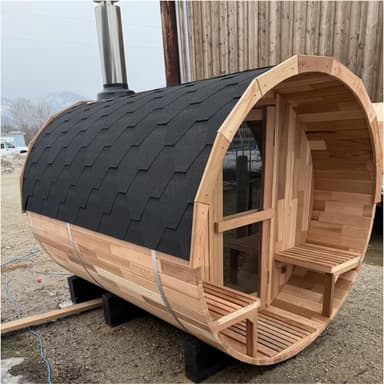
Smartmak 2-10 Person Canadian Hemlock Barrel Sauna
- Barrel shape genuinely improves heat distribution compared to box saunas
- Real red cedar and hemlock construction should last 15-plus years with care
- ETL-certified heater hits 195°F - legitimately hot for authentic steam sessions
Step 3 - Complete the Stave Assembly and Set the Bands
This is the most physically demanding phase. You need two people - one holding tension on the assembly with come-along straps while the other drives staves into place.
Work up both sides of the barrel arc simultaneously, alternating left and right to keep the assembly balanced. As the staves approach the top of the arc, use a come-along strap looped around the entire barrel circumference to hold everything tight while you fit the final top staves. Kit builds typically use 20-30 staves per barrel; scratch builds run 48-55 depending on stave width.
Once all staves are in place, slide the steel bands over the barrel. Most kits include three to four bands. Position the first band 12 inches from one end, the last band 12 inches from the other end, and space remaining bands evenly between them.
Tighten bands incrementally - three full turns on each turnbuckle or adjustment bolt, then move to the next band. Never fully tighten one band before touching the others. Uneven band tension is the primary cause of stave gaps, which produce 20-30% heat loss and allow moisture intrusion.
Pro Tip: Tap the stave surfaces with a rubber mallet as you tighten. The sound changes from hollow to solid when the joints are fully seated. Target that solid sound across the entire barrel before calling the bands done.
For scratch builds using wire rope and turnbuckles, torque each turnbuckle to hand-tight plus one full turn. Over-tightening warps individual staves.
Step 4 - Install the Door and End Walls
End walls close off both ends of the barrel. The door end gets a pre-hung door assembly; the back end gets a solid panel.
For kit builds, the end wall panels arrive pre-cut in pie-slice sections that assemble like a puzzle inside the barrel opening. Fit them from the bottom up, using the provided fasteners. The door frame sits in the bottom half of the front opening and bolts to the floor and two side staves.
For scratch builds, cut end wall boards from 1x6 cedar using a jigsaw, tracing the circular profile of the assembled stave ring. Work from the bottom, securing each board to a horizontal nailer using stainless screws. Leave a 1/4-inch gap between boards for expansion.
Hang the door using spring hinges rated for exterior use. A properly hung door should swing closed on its own from a 45-degree open position - this matters for heat retention during sessions. Adjust hinge tension with the set screws until the door closes firmly without slamming.
Install a 4x6-inch adjustable cedar louver vent in the back end wall, positioned 6 inches above floor level. This is your combustion air intake and ventilation control - do not skip it. A sealed barrel sauna with a wood stove creates CO buildup risk.
Step 5 - Install the Roof and Weatherproofing
The barrel shape sheds water naturally, but the roof section still needs protection.
Most kits include pre-bent sheet metal roofing panels that overlap by 3 inches and fasten to the top staves with self-tapping screws. Start at the low end of your roof pitch and work toward the high end, overlapping each panel over the one below it. Apply butyl tape under each overlap seam before fastening.
For scratch builds, use either corrugated metal roofing (26-gauge minimum) or cedar shingles. Cedar shingles add weight but match the aesthetic and last 20-25 years. Metal roofing is faster to install and lighter.
Seal all band penetration points and end wall perimeter joints with exterior-grade caulk rated for 300°F minimum - standard silicone fails at sauna temperatures. Apply a single coat of exterior wood oil (linseed or tung) to all exposed outer stave surfaces. This is your primary weatherproofing layer; reapply annually.
In sub-zero climates, staple a foil vapor barrier to the interior face of the staves before assembly. This adds roughly 15% thermal efficiency and prevents moisture from migrating into the wood during freeze-thaw cycles.
Step 6 - Install the Heater
Heater installation is where most DIY builds get into trouble with code compliance. Do this phase carefully.
Wood Stove Installation: Position the stove on a fire-rated cement board hearth pad extending 12 inches on all sides of the stove base. The stove body needs 18 inches of clearance to all combustible walls. Install a heat shield - 24-gauge stainless steel with a 1-inch air gap - on the wall behind the stove if clearance is tighter than 18 inches.
Run a 6-inch insulated black stovepipe through the barrel wall using a listed metal thimble rated for your pipe diameter. The thimble maintains the required 2-inch clearance between pipe and combustible wood. Continue with 7-inch chimney pipe (always one size larger than stovepipe) above the roofline, extending 24 inches above the highest point of the barrel roof.
Install a CO detector rated for high-humidity environments inside the sauna, positioned 12 inches below the peak of the roof.
Electric Heater Installation: Run a dedicated 220V, 60-amp circuit from your main panel. This is not a DIY task unless you are a licensed electrician - hire one. Budget $300-$800 for the electrical work. The circuit requires a GFCI breaker and a weatherproof disconnect within sight of the sauna. Most 6-9 kW heaters (the right range for a 6-foot barrel) wire directly to the circuit with no plug.
Mount sauna rocks (kiln-dried alder or olivine) on the heater according to the manufacturer's stacking pattern. Loose or incorrectly stacked rocks reduce heat output by 25-35%.
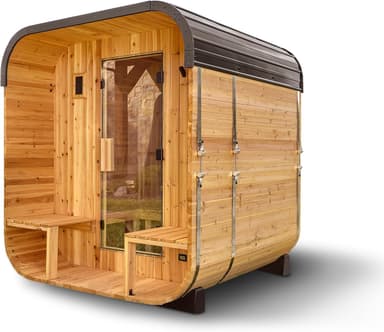
Backyard Discovery Lennon 2-4 Person Cedar Cube Sauna
- 9kW heater reaches temperature significantly faster than budget competitors
- 5-year warranty covers heater and hardware, not just the shell
- Wi-Fi preheat control adds genuine everyday convenience
Step 7 - Install Benches and Run Your First Burn
Benches are the last interior component before the first fire.
Cut two L-shaped bench frames from 2x4 cedar. The upper bench sits at 18 inches from the floor, the lower at 10 inches. Attach bench legs to the end wall and to L-brackets screwed into the barrel staves using stainless screws. Cut bench slats from 1x4 cedar with 1/2-inch spacing between slats for airflow and drainage.
Sand all interior surfaces to 120 grit. No finishes, stains, or sealers on interior wood - they off-gas toxic fumes at sauna temperatures.
First Burn Procedure:
Run your first session empty - no people inside. For electric heaters, set to 100°F and run for 45 minutes to cure the wood and drive off any resin. For wood stoves, build a small fire using dry kindling only and let it burn down naturally. This first burn may produce light smoke from the wood as it cures - this is normal and stops after the first two sessions.
Your second session can be a full heat session. Target 160-180°F for a 4-6 person barrel with a 6 kW heater or a 16,000 BTU wood stove. Preheat 30-45 minutes before entering. First session: 10-15 minutes maximum, then step out and cool down for at least 5 minutes.
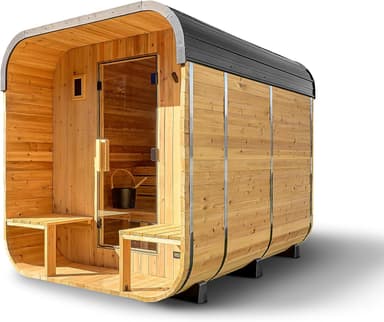
Backyard Discovery Lennon 4-6 Person Cedar Cube Sauna
- 9kW heater reaches target temperature significantly faster than competitors
- Tongue-and-groove cedar construction eliminates cold spots effectively
- Wi-Fi preheat lets you walk into a ready sauna every time
Common Mistakes to Avoid
Rushing band tightening. Tighten all bands incrementally in three passes, never one band fully at a time. Gaps from uneven tension cause 20-30% heat loss and are nearly impossible to fix without disassembling the barrel.
Skipping the foundation level check. A cradle that is 1/4-inch off produces a door that gaps at the bottom and staves that drift out of alignment within one season.
Using non-stainless fasteners. Standard zinc screws rust through in 12-18 months. Buy stainless steel from the start - the price difference is $30-$50 and saves a full rebuild of bench and floor hardware.
Installing a wood stove without a heat shield or thimble. This violates most local building codes and risks fines up to $5,000. More importantly, it is a fire hazard. Use listed components and follow clearance requirements exactly.
Finishing interior wood. Stains, polyurethane, and paint off-gas at 160-180°F. Leave all interior cedar raw.
Skipping the cure burn. New wood contains resins that produce unpleasant, sometimes irritating smoke during the first heat cycle. Always run one empty session before inviting anyone inside.
Next Steps
Once your first burn is complete and the sauna holds temperature at 160°F within 40 minutes, you are ready for regular use. Limit sessions to 10-20 minutes at 160-195°F with hydration before and after each use. Research by Laukkanen et al. (2018, JAMA) linked 4-7 weekly sauna sessions to a 40% reduction in cardiovascular disease risk - but check with a physician if you have hypertension or are pregnant before starting a regular practice.
Maintenance is straightforward: tighten bands with two turns of each turnbuckle each spring and fall, apply a fresh coat of linseed oil to exterior staves annually, clean interior benches weekly with mild soap and water, and inspect chimney pipe joints before each wood stove season. A well-maintained cedar barrel sauna built from quality materials lasts 15-20 years with kit builds and 10-15 years for scratch builds with consistent weatherproofing.
If this build felt too involved, a pre-assembled unit might better fit your situation - but for most people who follow these steps carefully, the DIY route saves $3,000-$8,000 and produces a sauna that performs as well as anything you can buy ready-made.
Frequently Asked Questions
The best DIY barrel sauna depends on your needs, but Western Red Cedar is the recommended material choice due to its natural mold and rot resistance and pleasant aroma when heated. For most homeowners, pre-cut kits with 38-40mm thick staves offer the best balance, as they provide sufficient insulation without additional materials and can accommodate 2-4 people with flexible heating options (electric or firewood). If you prefer building from scratch, expect to budget around $3,000 and use standard tools, though pre-assembled kits offer easier installation if budget allows.
Related Guides
Affiliate Disclosure - SaunasNMore earns a commission from qualifying purchases through our Amazon affiliate links. This does not affect our editorial integrity.